









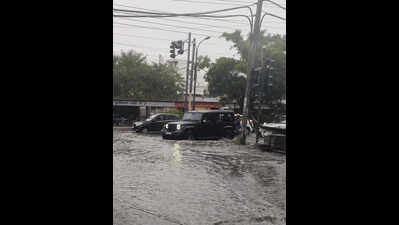
Ludhiana: The city applies pre-monsoon band-aids while its crumbling, decades-old drainage system continues to submerge entire suburbs.Cash-strapped municipal authorities are turning to university-designed underground retention cells to combat chronic monsoon flooding, but residents face another year of chaos before the trial goes live.Fund crisis has blocked the construction of a city-wide storm water network for more than a decade. While civic authorities claim to be intensifying sewer-cleaning operations ahead of the monsoon, sewer networks are limited to isolated stretches, including parts of Gill Road, Shivpuri, Malhar Road, Dugri, and sections near Fortis Hospital.To address chronic waterlogging at notorious bottlenecks like Dholewal Chowk and Ferozepur Road, the civic body will launch a pilot project using underground retention cells. Developed in partnership with the Punjab Water Regulation and Development Authority, the wells will feature specialised filtration systems designed by Punjab Agricultural University to prevent groundwater contamination.However, the pilot project will not be operational until next year’s rainy season. Senior municipal officials acknowledged that expanding the traditional storm sewer network is unfeasible for now “due to high capital costs and the logistical requirement of a nearby natural water body to receive the runoff”.Officials hope the retention cells, if successful, will offer a scalable alternative for other flood-prone sectors.Local residents criticised the piecemeal approach, arguing that the city’s aging, dual-purpose sewer system collapses routinely under heavy downpours.“The main Hambran Road converts into a swimming pool every rainy season,” said local resident Ashok Sharma, noting that authorities failed to utilise the nearby Buddha Nullah stream for drainage. “If authorities had actually worked on the ground over the past years, the situation would be different.”Another resident, Jasbir Singh of Gill Road, said annual official assurances offered little relief. “Every year we see the same picture of neglect,” he said. “Before the rains, officials make tall claims, but the system is simply too old to handle the extra burden of monsoon water.”