








Noida: The Supreme Court-appointed amicus curiae on Yamuna pollution has recommended forming a nodal agency to plan and implement a multipronged strategy for cleaning the river, warning that fragmented state-level efforts have left the decades-long crisis without a unified response.In a 41-page submission responding to the court’s April 29 directive seeking a comprehensive plan for treating effluent and sewage discharge into the Yamuna, amicus curiae K Parmeshwar said additional secretary-level officers in the ministries of home, environment, forest and climate change, and Jal Shakti should urgently convene a stakeholder meeting with representatives from UP, Delhi and Haryana to deliberate on forming the agency.“The proposed structure (of the nodal agency) must reflect the planning, budgetary, technical and coordination gaps and challenges involved in cleaning up the Yamuna with regard to treating effluents discharged and the drains that flow into it,” Parmeshwar said.
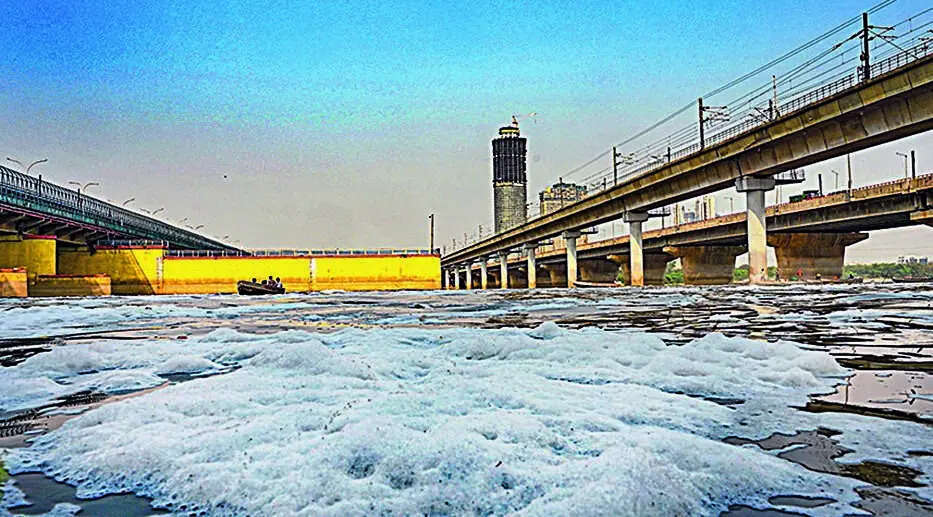
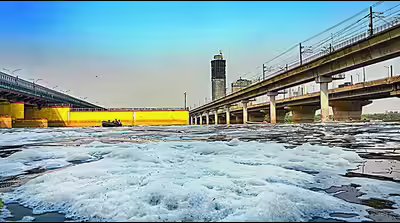
Frothing in parts of the river in Delhi
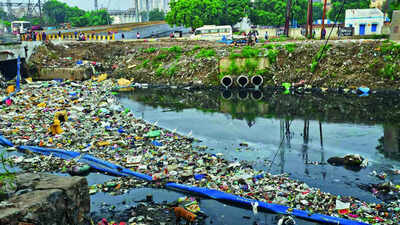
He stressed that at least some members of the nodal agency must work full-time on coordination and implementation, and that the body must produce a full-fledged action plan — with timelines and actionable points — covering the river’s entire stretch across the three states.Parmeshwar’s submission follows two consultative meetings his office convened on May 8 and 17 with officials and counsels from Haryana, UP, Delhi, Delhi Jal Board, Noida Authority, UP Jal Board and UPPCB, after a questionnaire was circulated among all parties following the April 29 order.At those meetings, Parmeshwar asked authorities whether a master plan or vision document existed for cleaning the Yamuna. He was told each state maintains its own rejuvenation plan, with no single overarching framework in place.Authorities also briefed him on drain conditions in their jurisdictions. Noida confirmed all its drains have been geotagged. The Delhi Jal Board said it is expanding sewage treatment capacity and has initiated tendering for new STPs to meet discharge standards. DJB clarified it does not manage drains — Delhi has approximately 3,700 km of drains, of which the public works department manages around 55% and the irrigation and flood control department the remainder.Beyond the nodal agency, Parmeshwar called on stakeholders to enumerate cities and towns discharging effluents into the river, identify polluting industries, and conduct a gap analysis of industries along the entire Yamuna stretch. He recommended the construction of additional STPs, with states required to confirm land availability, ensure geo-tagging and put in place monitoring mechanisms.He also asked states to share data on gram panchayats and revenue villages on the riverbanks, wetlands and water bodies along the river, and details of municipal solid waste, biomedical waste, hazardous waste, e-waste and industrial waste management. River water quality data, he said, should be uploaded publicly alongside municipal solid waste improvement action plan timelines for urban local bodies across the three states.Parmeshwar additionally proposed impleading the National Council for Rejuvenation, Protection and Management of River Ganga as a respondent in the present appeals.The Supreme Court’s intervention centres on the Kondli drain — a 17-kilometre drain originating in Delhi’s Kondli village that flows through Noida before merging with the Yamuna — and the resulting contamination of the irrigation canal in Noida’s Sector 137.The appeals before the court arise from a National Green Tribunal order that, after monitoring the matter for four years, found persistent non-compliance by the authorities concerned and directed Noida to deposit Rs 100 crore and the Delhi Jal Board Rs 50 crore as interim environmental compensation toward restoration.The case originated from an application filed by environmentalist Abhisht Kusum Gupta before the NGT in 2018, alleging the Kondli drain was being used to discharge heavily contaminated water into the Sector 137 irrigation canal.The Supreme Court bench of justices Manoj Mishra and Joymalya Bagchi, which appointed Parmeshwar on April 29, had noted that areas adjoining Delhi are hydrologically interlinked, and that the risk of effluent discharge from Delhi, Noida and surrounding districts reaching the Yamuna and Ganga made a comprehensive sewage treatment plan urgently necessary to protect what the court called “national assets”.