









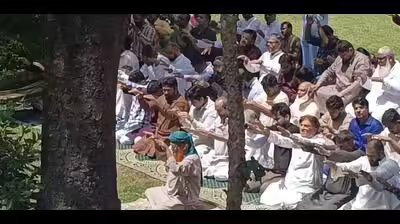
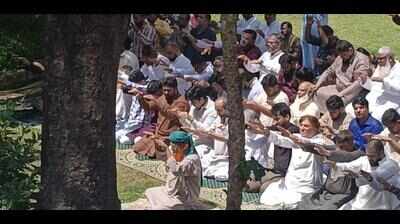
Mumbai: Even as many in the city keep their eyes peeled for rain, some have closed theirs in fervent prayer. Braving punishing humidity and heat, communities from Manori to Mohammed Ali Road have been congregating around Catholic crosses, fire temples and on close-cropped lawns, imploring their gods for rain.Last Saturday evening, East Indian Christians of Kurla embarked on a procession, halting briefly at five community crosses to sing and pray for precipitation. Organised by the Kurla unit of the Mobai Gaothan Panchayat (MGP), the ‘Prayer for Rains Procession & Rosary’ revived a centuries-old ritual that has been the community’s recourse to delayed rain. Prayers are typically accompanied by rain-themed hymns, such as ‘Jesus, pani de, pani nay tar maran de’, which translates, starkly, as ‘Jesus, bless us with rains; if not rains then give us death’.Several other East Indian gaothans in Manori, Thane, Uttan and Gorai have organised similar processions this year because of the delayed monsoon, says Gleason Barretto, coordinator of the MGP. “In some gaothans, people carry stones on their heads or in their hands, striking them as they walk.” The stone symbolises sin: its carriage, atonement.As June draws to a close on a dry note, more pray. From June 26 to 30, the Sri Sankara Mattham in Matunga is set to conduct a sacred five-day fire ritual called ‘Ishti’, with 10 Vedic pundits arriving all the way from Satara to perform it, says S Sivasubramanian, secretary of the Mattham. The ritual includes an invocation to Lord Parjanya (the rain god) to bring rain and ensure agricultural prosperity.Drought, drought-like conditions — or El Niño as modern meteorology calls it — have been traditionally viewed as God’s heavy hand of retribution, which only prayers of forgiveness and appeasement can lift.Last week, Muslims in Mahim, Mohammed Ali Road and Nerul in Navi Mumbai gathered in droves to conduct the namaz-e-istaska, or prayers for rain.“This special namaz is traditionally recited in an open maidan, with the namazis, or faithful, praying barefoot and in old clothes,” says Irfan Machiwala, who coordinated several of these gatherings.At a thanksgiving service to mark a newly restored hall in the Mody Sorabjee Vatchaghandy Agiary at Hughes Road, the Tishtrya Yazad was recited along with prayers of gratitude. “We believe that Testar Tir Yazad is the divinity that helps make the clouds and bring rain,” says Ervad Hormuz Asphandiar Dadachanji, Panthaky at the agiary. The prayer, he says, gives the deity power to vanquish the cloud-burning demon Aposh.Although the festival of Tir Yazad falls in the month of Dec, according to the Parsi calendar, a jashan invoking Tishtrya is even performed in a late or meagre monsoon.(With inputs by Mohammed Wajihuddin & Bella Jaisinghania)