







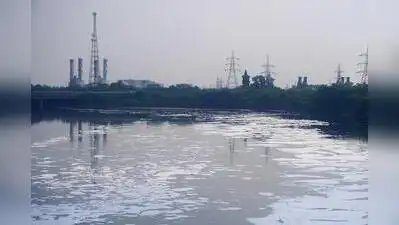
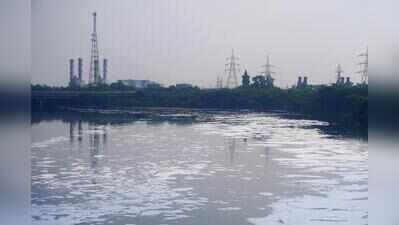
Noida: Groundwater in Yamuna floodplains of Noida is contaminated with dangerous levels of nitrate. In at least two samples of the underground water tested by Central Ground Water Board in 2025, these levels were almost double the permissible limits. According to Bureau of Indian Standards, the permissible limit of nitrate in drinking water is 45 mg/L, whereas the water samples in Choroli, Jewar and Dadri in the same block tested at 95.4 mg/L and 74 mg/L for nitrates, indicating that the water is not at all safe for consumption or any other usage.Data released by the Lucknow office of CGWB reveals that nitrate levels have often breached the safe limits in different parts of the district over the years. Responding to an RTI application filed by environmentalist Amit Gupta, the CGWB office has released the report of tests conducted at 13 sites in GB Nagar during 2025, while the study for the current year is in progress.According to the data released for the years 2019, 2021, 2022, 2023, 2024 and 2025, the tests were conducted at different numbers of sites in the district–the maximum being 13–and only twice–in the years 2023 and 2025–were samples tested from all these sites. At both the sites where the nitrate levels breached safe limits in the 2025 study, even higher concentrations were reported during the 2023 study, and they were found to be 160 in Choroli, Jewar and 72 in Dadri.According to BIS, higher levels of nitrate in drinking water can result in methaemoglobinaemia (Blue Baby Syndrome), and there is no relaxation in terms of the permissible limit and acceptable limit. “When a chemical compound is considered highly potent to cause damage to human health, no relaxation is given in terms of permissible limit,” said one of the officials of BIS. While a range of 0.1 to 0.3 mg/L for manganese and 0.3 to 1.0 mg/L for iron is permissible–in the case of nitrates and chromium, this limit is fixed at 45 and 0.05 mg/L of water.Higher levels of nitrate in underground water can be linked to sewage and industrial chemicals leaching into the underground water through rivers, which carry a huge load of effluents. Gupta said that he also suspected the role of chemical fertilisers and pesticides being used in an unmindful way. “I sought to know from CGWB about their study on agrochemicals and pesticides but the board confirmed that no study is conducted considering the agrochemicals and pesticides by the Lucknow office of CGWB,” he said.