








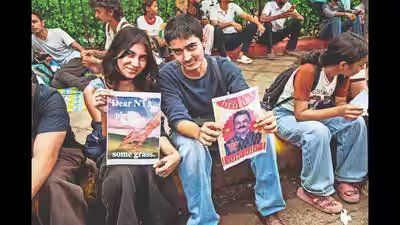

For a generation often dismissed as ‘too online’, showing up IRL at a protest is becoming its own form of expression. But the interesting part isn’t simply that Gen Z is protesting. It’s what being at a protest means to them.A protest can begin with a post, a group chat or a meme. But once people step onto the street, it becomes about more than slogans and placards. It is also about figuring out who needs a ride home, sharing water and supplies, looking out for strangers — and sometimes leaving with new friends.For 25-year-old dog trainer Tara James, showing up at a recent protest in Bengaluru meant coming prepared. She carried ORS, electrolyte water, tampons, sanitary pads, pain-relief patches and first-aid supplies. When it was over, she drove fellow protesters home. For 22-year-old student Ekta Pal, the decision is even more instinctive. “I want to go. I want to join them,” she says. For 29-year-old lawyer Ananditha Reddy, protest is also about the realities of becoming an adult now. Housing costs, financial insecurity and the pressure to hit traditional milestones can make the future feel increasingly uncertain.More than a postThe line between online and offline activism has become increasingly blurred. Instagram and social media can be where people first hear about an issue, find out where a protest is happening or organise what to bring. But for many young protesters, posting is only one part of participating. Memes can become slogans. Film references can become placards. Satire can become protest art. The internet gets people in the same place; the street gives them a reason to stay there.And turning up isn’t necessarily about being confident or fearless. “We are not fearless. We absolutely are afraid. But we’re just not letting that keep us silent,” says Tara. For her, knowing that a protest could be uncomfortable or uncertain isn’t enough reason to stay away. Social media, she adds, has also exposed her to how people elsewhere respond to political and social issues, widening her sense of what is possible.
I think older generations have always been patronising towards the youth, just in different ways. Gen Z is often dismissed as wasting time on phones, but we use them to research, stay informed and amplify our activism. Even reading and research shape how we engage with issues. We’re using the very things we’re criticised for to make our voices heard
Kishan Ramamurthy, 28-year-old public servant
Protests have always used creativity to draw attention to a cause — from street plays and rallies to music and effigy burning. Memes are doing the same today. They appeal to an entire generation while keeping others intrigued, and the recent agitation shows just how powerful they can be
Adithya Suresh, 23-year-old theatre artist
For a long time, Gen Z protests were seen as attention-seeking. But when people kept showing up and the issues refused to die down, they became harder to dismiss. We may use memes and social media differently, but that doesn’t make our concerns any less serious
Sanjana S, 26-year-old IT professional
A protest may last a few hours. The reasons for being there can be much bigger: the right to question, the need to be heard and the feeling that sitting this one out is also a choice.It’s about the rest of our lives. It’s the whole rest of our lives that’s going to be determined by politics and … how all these things pan out – Tara James, 25-year-old pet trainerThe Gen Z protest playbookMeme → Satire → Share → Mobilise → Street → Sustained pressure → AccountabilityGen Z’s protest languageMeme — gets attentionPop culture — makes it relatableInstagram — spreads the messagePlacard — takes it offlineCrowd — makes it impossible to ignore