










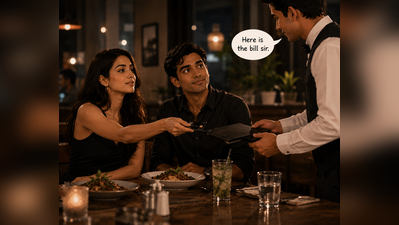
Every time I go out to a restaurant or cafe with my male friend(s), I wonder if I am invisible. It has happened so often that I have started noticing a very significant pattern before we have even placed our order. It goes on like this – We enter a restaurant, and the waiter cheerfully says, ‘Welcome, sir.’ We settle down, and it is followed by, ‘House water or bottled water, sir?’ The woman at the table is blatantly ignored.The amusing part is that I usually pick the restaurant, decide what to order, ask questions about the menu and place the order. Yet almost every word from the waiter is directed at the man across the table. ‘Sir, today’s special is…’, ‘Would you like to try our signature drink, sir?’ Even though I am the one responding to the questions, the waiter continues to make eye contact with him as though I am just relaying information on someone’s behalf.It doesn’t end there; midway through the meal, when someone comes over to check on the table, the question always goes like this – ‘How was the food, sir?’ ‘Do you need anything else, sir?’ And then comes the part that is evergreen and never seems to change. The bill arrives, and without a second thought, it is handed to the man at the table. It doesn’t matter if I have already opened my scanner to pay. Somehow, the assumption has already been made.This isn’t about insisting that every bill should be handed to the woman or demanding any special treatment at restaurants or cafes. The issue is assumption – be it ordering food, giving feedback or paying the bills – that the man at the table is going to decide everything. The best service isn’t only about quick service and good food; it is also about making every guest feel equally seen. Hospitality, at its very core, is about making every guest feel acknowledged; that means speaking to the person placing the order, asking everyone at the table how the meal was and simply placing the bill in the middle of the table instead of already deciding who should receive it.These might be tiny gestures, but they are the ones that shape how people experience a public space. I don’t need the conversation to revolve around me; I need it to include me.— This rant comes from Mehwash Hussain, who would like to stop feeling invisible every time she dines out.