







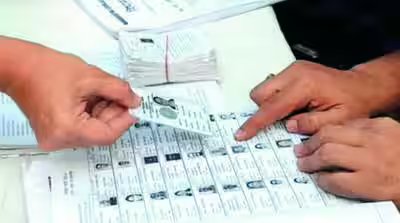
Pune: Election authorities have directed electoral registration officers to ensure that ‘marked electors’ are included in the draft rolls to prevent any inadvertent deletion. The draft electoral roll will be published on Aug 31..The directive covers members of the judiciary, public representatives, holders of declared public offices and prominent personalities from fields including arts, culture, journalism, sports and public services who have been identified as marked electors in the electoral database.“Electoral registration officers (EROs) have been told to check the names of marked electors. Only if they fall under the unmapped or logical discrepancy categories will further action be required,” a senior election official said.The instruction assumes significance as 2.07 crore of Maharashtra’s 9.8 crore electors were categorised as uncollectable at the end of the door-to-door SIR exercise. Of the total electorate, 7.71 crore electors, or 78.9%, submitted their enumeration forms, while the remaining 21.1% were categorised as uncollectable.According to the State CEO office, 75.5 lakh electors (7.72%) were categorised as absent/not found, 76.8 lakh (7.9%) as permanently shifted, 34.8 lakh (3.6%) as deceased, 17.6 lakh (1.8%) as already enrolled elsewhere/duplicate, and 2.23 lakh (0.23%) under the ‘others’ category. The uncollectable list was published four days before the close of the door-to-door exercise.“These electors will not be included in the draft roll publication but that does not mean they do not have a chance. They can check and reapply if they are not there in the draft rolls,’’ officials said.The directive also calls for prominent persons and their family members in each assembly constituency to be appropriately identified as ‘marked electors’. The Election Commission of India’s instructions issued in May provide for such electors to be retained in the draft roll and appropriately flagged in the electoral database to prevent wrongful deletion.Election officials said the ‘marked elector’ provision was a safeguard and did not give such voters any special status. “No genuine elector will be left out,” a senior election official said.The draft roll will be followed by a month-long claims and objections period from Aug 31 to Sept 30. Officials said electors whose names do not figure in the draft roll should apply through Form 6 for inclusion.New electors who attain the age of 18 years on or before Oct 1, 2026, can also apply through Form 6, along with the prescribed declaration and supporting documents. After verification by the ERO, names of eligible applicants will be included in the final roll, officials said.During the claims and objections period, Form 6 can be submitted for inclusion, Form 8 for correction of entries and Form 7 by an elector seeking objection to deletion of an entry.Officials also cautioned that any person making a false declaration or statement while applying for inclusion, correction or deletion of an electoral-roll entry is liable for punishment under Section 31 of the Representation of the People Act, 1950, which provides for imprisonment of up to one year, or fine, or both.Under the revised SIR schedule, rationalisation or rearrangement of polling stations will be completed by Monday, followed by the publication of the draft roll on Aug 31. The claims and objections period will continue till Sept 30, while notices and disposal of claims and objections will run till Oct 29. The final electoral roll is scheduled to be published on Nov 4.