








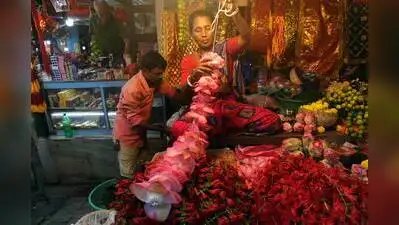
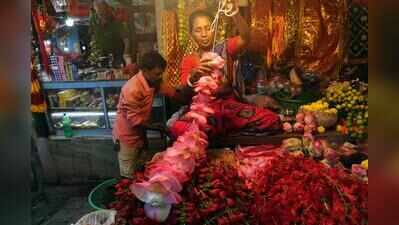
Kolkata: The lotus — or padma — is in full bloom this Kali Puja season in Bengal, edging out the red hibiscus from its traditional place of pride on the deity’s floral platter.From Dakshineswar to Kalighat and Bishnupur to Kankalitala, priests and devotees are increasingly bringing lotuses to Kali temples, marking a shift from the tradition of offering red hibiscus, or jaba, to the goddess.The change, which has gathered pace over the past few months, coincides with a sharp rise in lotus production in Bengal, a consequent fall in price and BJP’s victory in the April assembly elections.The surge in demand has proved a boon for lotus growers, with farmers in Bankura, Hooghly, Birbhum, East Midnapore and North 24 Parganas reporting a bumper crop and almost doubling of profits than last year. Narayan Chandra Nayak, general secretary of All Bengal Flower Growers and Flower Traders Association, attributed the plentiful harvest to the fact that the flower-growing districts did not suffer widespread flooding this year.Among the temples where the change is visible is the one in Dakshineswar. “With higher production, lotus prices have fallen. Lotus, a bulkier flower, is sold for Rs 2-Rs 3 apiece, while a packet of 100 hibiscuses costs around Rs 50. Demand has increased, prompting us to make lotus a permanent part of our offering. It gives the dala (the offering) a voluminous look. Some are asking for dalas of mostly lotuses,” said Sanjay Dutta, a dala seller at the temple.Anuradha Banerjee, who visited the Kankalitala temple in Birbhum recently, said she was surprised to see worshippers carrying stacks of lotuses instead of hibiscus garlands, which is a common sight at the shrine.In Bishnupur, priests are recommending lotus to devotees. “We are advising devotees to offer lotus because gods and goddesses like it,” said Bapi Banerjee, a priest.The supply chain reflects the geographical spread of the spurt in demand. Lotus sellers in Bankura source their flowers from Pokaband in Bishnupur and Ramsagar in the district. Pandua in Hooghly is another major production centre, from where flowers are transported to Kolkata.The changing preference, however, has triggered a debate among priests over whether the shift is purely religious or has a political overtone. Many priests linked the growing emphasis on the flower to a willingness to align with Bengal’s new governing party.Asim Mukhopadhyay, a priest at a Kali temple in Tarakeswar, said the practice of worshipping Kali with red hibiscus started during the time of Ramprasad Sen, the 18th-century Shakta poet and devotee. “Later, many pandits advised the use of lotus,” he said.The economic significance of Bengal’s lotus trade extends beyond the state’s temples. Samarendranath Khara, former joint director of horticulture in Bengal, said the state is the highest producer of lotus in the country.Asit Santra, a vendor at the Mullickghat flower market, noted that the demand for lotus rose immediately after the change in govt as BJP workers and supporters bought huge quantities of the flower for rallies and decoration.With many pujas now being controlled by BJP functionaries, lotus is set to be a vital offering at a number of community Kali pujas. “Lotus has always been an important item in any sanatani puja. We will stick to all rituals here,” said Raja Chakraborty, an organiser of the Salt Lake BF block Kali Puja. Known till 2025 as former Trinamool MLA Sabyasachi Dutta’s puja, it will be inaugurated this year by CM Suvendu Adhikari and state panchayat minister Dilip Ghosh.