








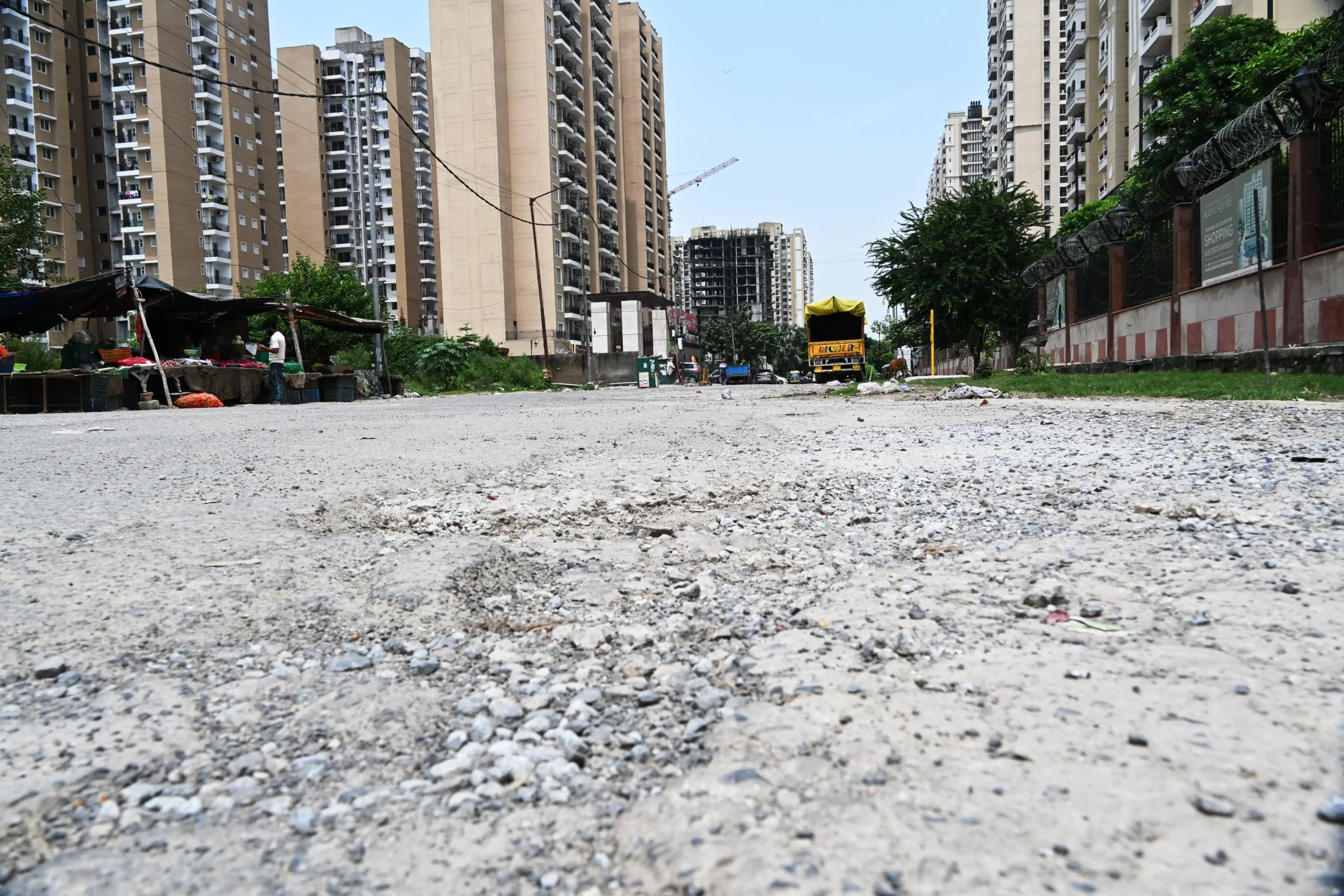
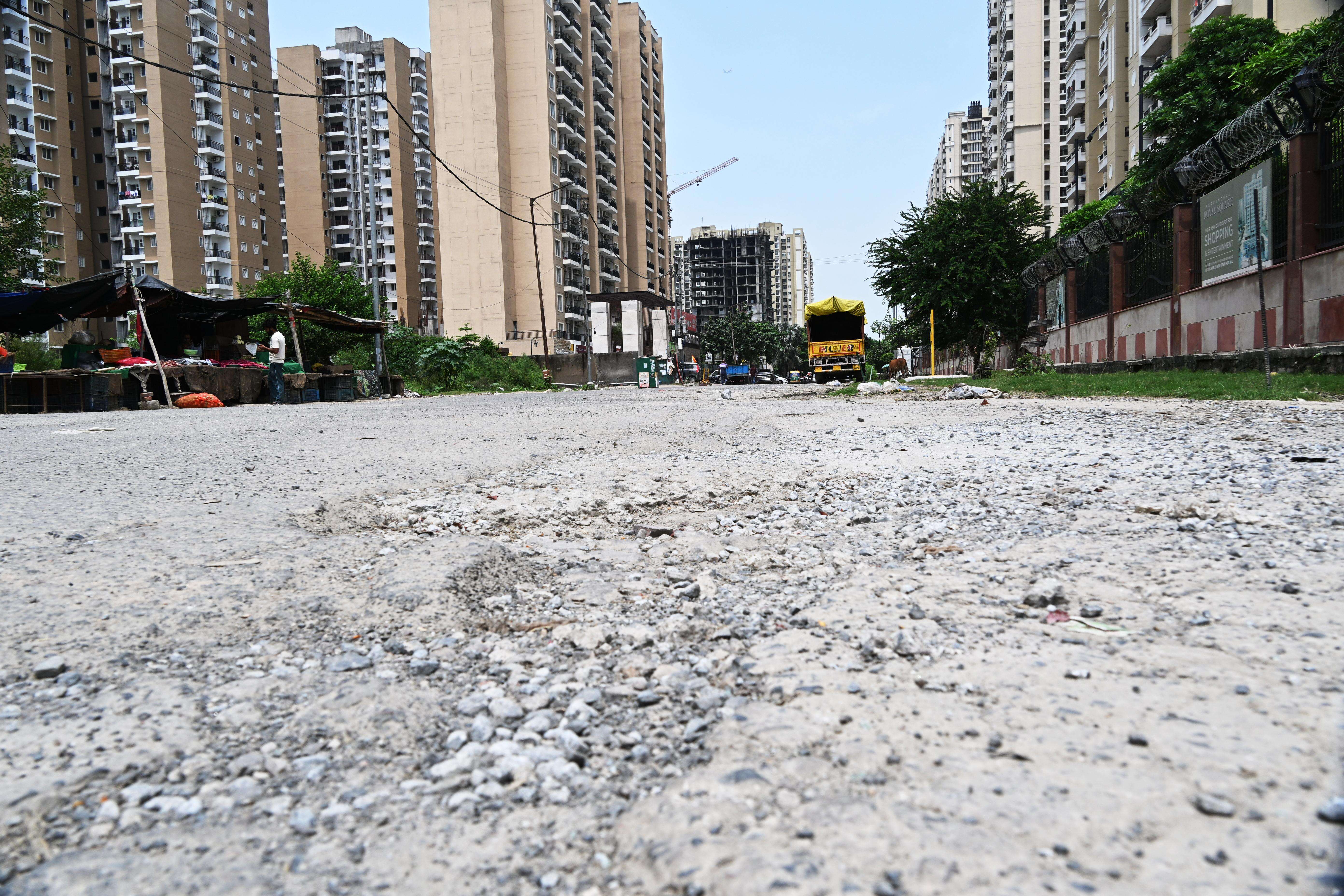
Noida: Along its length of 500 metres or so, the surface of the road near Purvanchal Royal City in Sector Chi 5 is pockmarked with dozens of cracks, patches, divots and holes. In some spots where the surface has worn away entirely, three or more layers of road lie exposed.The stretch, which runs under Yamuna Expressway bridge, is one of many across Greater Noida that residents said have deteriorated significantly this monsoon, exposing years of civic neglect.While several high-speed corridors and major infrastructure projects are planned across the city, on the ground, several internal and residential roads remain riddled with potholes, waterlogging and slippery stretches — some in poor condition for as long as five years, residents claimed.“This area is home to 5,000 residential properties, but there are craters and stray animals everywhere,” said Rajiv Srivastava, a resident of the sector.Around the DFCC flyover, Tilapta Chowk and Makoda roundabout, water has collected in scores of craters beneath the underpasses. “Hundreds of people take the stretch to commute to their offices, but a large section of the road surface here has been washed out, and the rest is pockmarked with craters,” Vinod Pahlawat, a resident of Paramount Golf Foreste in Sector Zeta 1, said. He accused the Greater Noida Authority and UPSIDA of ignoring repeated complaints.In sectors Beta 1 and Gamma 1, residents said commuting had become dangerous. The service road between Gate No. 2 and Gate No. 5 in Beta 1 has been broken for over a year, with rainwater now collecting in the potholes. In Gamma 1, choked drains have left the sector waterlogged. “Instead of planting new saplings during the rainy season, the Authority has started repairing a dilapidated road. This work should have been done much before the onset of the monsoon,” resident Nidhi Sharma said.In Sector Alpha 2, roads facing the metro station, less than 500 metres from the GNIDA office, have remained broken for nearly two years, residents said, with bikers frequently skidding on loose gravel. “Officials don’t even bother to come out and inspect the sectors,” said Subhash Bhati, RWA president of the area. In adjoining Alpha 1, Alok Singh, a resident, said fresh potholes had appeared with each bout of rain and called for stricter quality checks on road construction.More than 20,000 residents across Omicron 1A, 2 and Delta 1 face similar conditions, residents said. Omicron 2 has had no repairs for five years despite the main road leading to the sector deteriorating soon after construction, said Tilakram Bhati, a former RWA president of the area. In Delta 1, current RWA president Pramod Bhati said the sector’s internal streets and service roads remained in poor condition with no repairs carried out.The disrepair has also affected religious tourism during the monsoon. The 300-metre approach road to the Ravan temple in Bisrakh remains pothole-ridden and covered in mud. Devotees travelling 30km to 67km from Delhi, Baghpat, Ghaziabad and nearby areas to offer Ganga water at the temple have had to navigate the stretch on successive Mondays this month, said Ambrish Bhati, a former block head in Bisrakh. Residents claimed GNIDA had approved tenders for repairs in the area, but work had not yet begun.GNIDA officials, meanwhile, said repair work had started at some locations, while estimates were being prepared for others, with construction to follow after the monsoon. Prabhat Shankar, senior manager for roads and drains at GNIDA, told TOI that an estimate had been framed for the Bisrakh temple road and that work would begin soon.Residents, meanwhile, called for a transparent audit of contractors responsible for substandard roads in the Omicron and Alpha sectors, along with urgent deployment of the water and sewer department to clear blocked drains in Gamma 1 and near the industrial roundabouts, saying the neglect could otherwise cost a life.