











Ahmedabad: A regulatory red flag raised in United States has helped expose a suspected fake plasma racket operating across Gujarat and Maharashtra, bringing into focus a supply chain that feeds some of the world’s most critical medicines. Four people were arrested on Monday for allegedly using saline water and chemical colouring agents to manufacture counterfeit plasma and sell it to doctors and pharmaceutical companies.Police are now trying to determine the scale of the racket and if patients were affected. Pharmaceutical companies use human blood plasma to manufacture life-saving plasma-derived medicinal products. These are used to treat rare and chronic diseases, including primary immunodeficiencies, bleeding disorders such as haemophilia, liver cirrhosis, and autoimmune neurological conditions.The alleged racket surfaced after the US Food and Drug Administration rejected certain plasma samples supplied to a pharmaceutical company based in Ahmedabad. “The adverse findings prompted the company to investigate the source of the material. After determining it was substandard, they filed a complaint with Changodar police on May 30,” Ahmedabad rural SP Omprakash Jat told TOI.The alleged mastermind was identified as Dinesh Chaudhary, a 32-year-old resident of Banaskantha and a former plasma collection executive.The second key accused, Mohan Gaikwad, a 32-year-old from Washim in Maharashtra, operated a blood bank and allegedly supplied substandard plasma as a replacement for genuine plasma. Police said Gaikwad holds a BSc degree and a diploma in medical laboratory technology. He earlier worked as a blood bank technician.
Police said the alleged racket took shape after Chaudhary lost his job
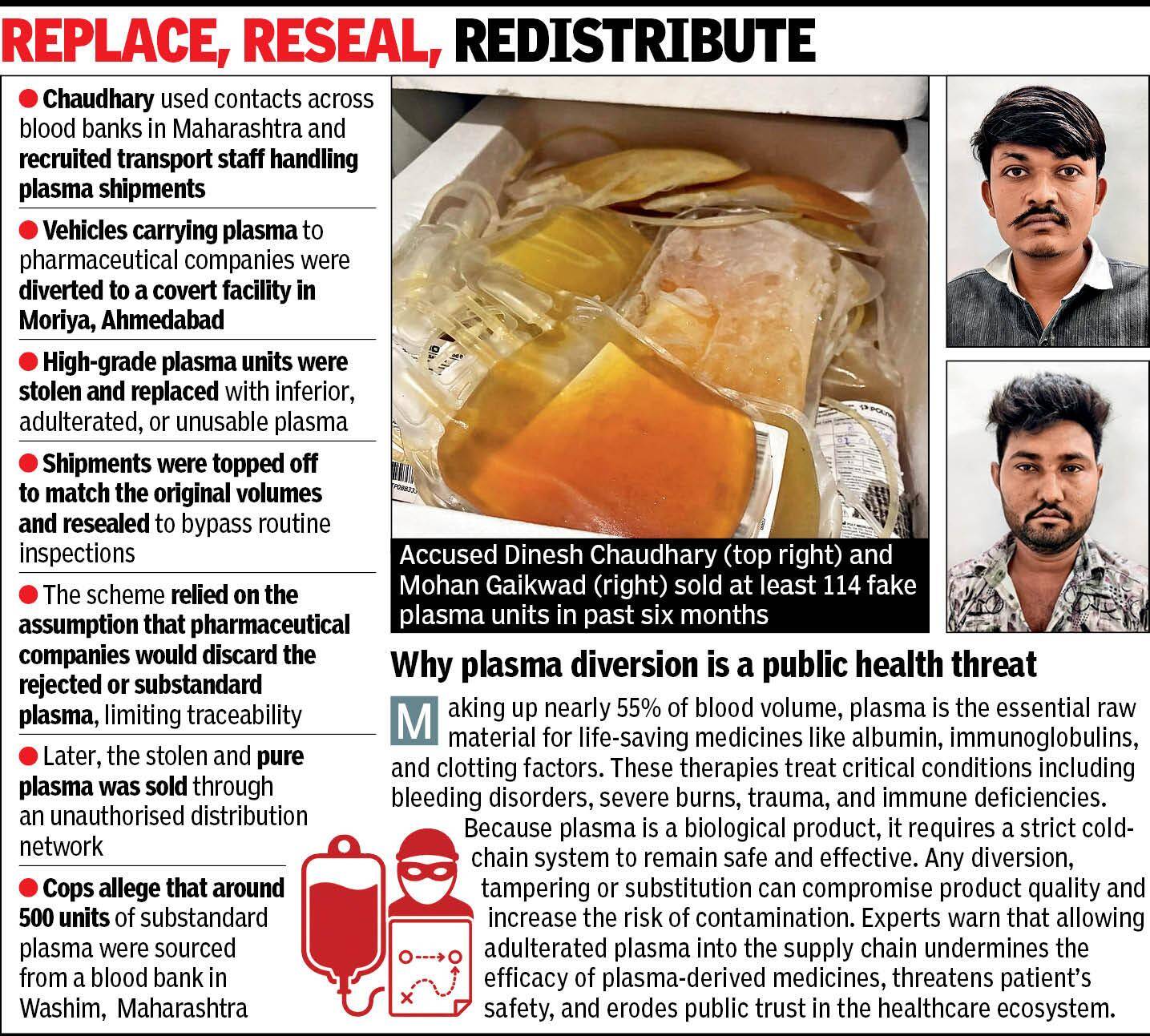
Police said the alleged racket took shape after Chaudhary lost his job. “Chaudhary’s previous work in plasma collection, blood bank operations, and logistics gave him detailed knowledge of how the system functioned. Gaikwad obtained the plasma and worked with Chaudhary to sell the units in large numbers,” said Jat.The accused sold at least 114 units of fake plasma during the past six months, and each unit was allegedly sold for around Rs 5,000, the SP added.The other two accused arrested in the case were identified as Rafik Khalifa, 28, and Jitendra Solanki, 27, both from Dholka in Gujarat. Investigators said they worked as drivers for Chaudhary and Gaikwad and allegedly assisted in transportation and logistics.Police are now trying to determine how many doctors, hospitals, and pharmaceutical companies purchased the suspected fake plasma and whether it eventually reached patients. “We are also trying to establish whether any patients, particularly those undergoing treatment for autoimmune disorders or haemophilia, may have been affected by the use of adulterated plasma during the past six months,” said Jat.Officials said further arrests and additional charges are possible as the probe expands across multiple states.Pointers:Replace, reseal, redistributeChaudhary used contacts across blood banks in Maharashtra, recruited transport staff handling plasma shipmentsVehicles carrying plasma to pharma companies were diverted to a covert facility in Moriya, AhmedabadHigh-grade plasma units were stolen and replaced with inferior, adulterated, or unusable plasmaShipments were topped off to match original volumes and resealed to bypass routine inspectionsThe scheme relied on the assumption that pharma companies would discard the rejected/substandard plasma, limiting traceabilityThe stolen, authentic plasma was sold through an unauthorised distribution networkAround 500 units of substandard plasma were sourced from a blood bank in Washim, Maharashtra, allege copsBox:Why plasma diversion is a public health threatMaking up nearly 55% of blood volume, plasma is the essential raw material for life-saving medicines like albumin, immunoglobulins, and clotting factors. These therapies treat critical conditions, including bleeding disorders, severe burns, trauma, and immune deficiencies. Because plasma is a biological product, it requires a strict cold-chain system to remain safe and effective. Any diversion, tampering, or substitution can compromise product quality and increase the risk of contamination. Experts warn that allowing adulterated plasma into the supply chain undermines the efficacy of plasma-derived medicines, threatens patients’ safety, and erodes public trust in the healthcare ecosystem.