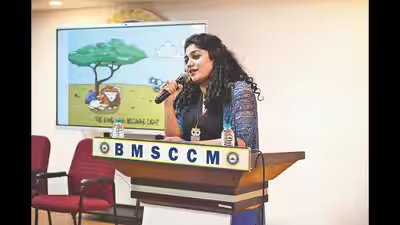









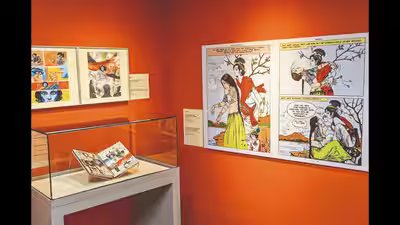
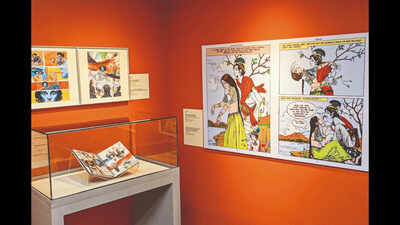
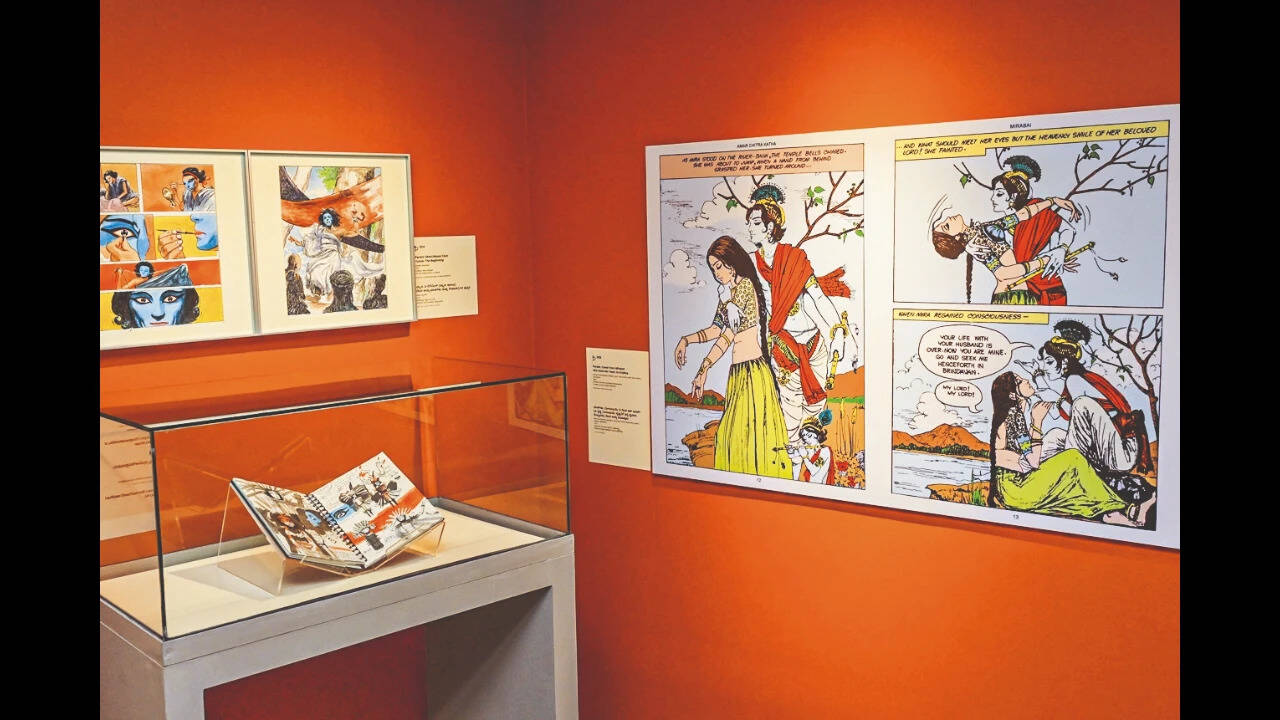
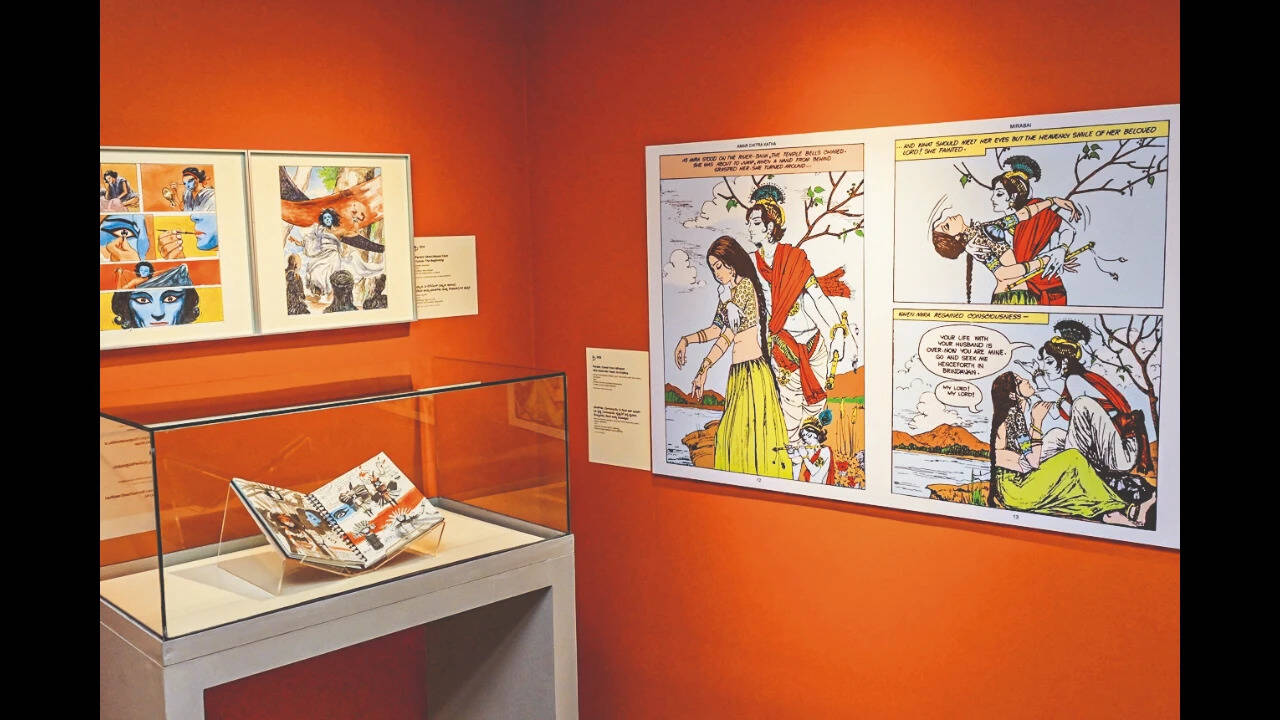
“India has always been a nation of storytellers,” says Amruta Patil, one of India’s acclaimed graphic novelists and the curator of A Moving Line, an exhibition that gathers more than 250 works to trace 1500 years of Indian storytelling at the Museum of Art and Photography (MAP), Bengaluru. “Long before comic books, graphic novels and social media, stories travelled through painted scrolls, temple walls and travelling performers. A Moving Line aims to bring together the unbroken thread of Indian storytelling that spans ancient tales, comics and digital narratives,” she adds.Where it all beganThe exhibition opens with ancient traditions such as Kaavad and Pattachitra. Unlike Western comics, these storytelling forms reveal themselves in layers, inviting viewers to travel through the narrative at their own pace. Mythology, trade, religious patronage and history have all shaped Indian visual culture, and these stories transcended language and regional boundaries, creating a visual vocabulary long before print arrived.How comics became a part of Indian cultureOne of the exhibition’s most engaging sections revisits the birth of Indian comics. “And at the heart of this section is Amar Chitra Katha (ACK) whose creator, Anant Pai, silently birthed a cultural revival in Udupi. Fondly known as Uncle Pai, he used Amar Chitra Katha to break free from the postcolonial mindset of the era and reconnect India to its forgotten myths, folklore and stories. Comics became more than just children’s entertainment. They became cultural ambassadors,” she says, adding that as society evolves, so do its stories. “Contemporary creators are revisiting mythology through a fresh lens — feminist, queer and socially conscious — without dismissing the originals.”When cartoons became politicalAnother interesting section explores India’s long history of political cartoons. Beginning with early Bengali cartoons inspired by Punch magazine, the exhibition traces how satire became one of the country’s most effective forms of public commentary. Political cartoons, editorial illustrations and graphic satire emerge here not merely as humour, but as powerful tools of dissent and social criticism. “It was primarily to challenge the bourgeois mindset,” points out Amruta.The works of India’s foremost female cartoonist, Sukhalata Rao — aunt of Satyajit Ray — also find a place here. What’s also noteworthy is the influence of Bollywood in shaping popular culture through comics like Bahadur and Supremo. Bahadur is an orphan who grows up to become a courageous man as the series champions education, women empowerment and rural development. Amitabh Bachchan features as a superhero in Supremo. The character was conceived by Pammi Bakshi with Gulzar serving as a script consultant for early issues. Even M G Ramachandran featured as a character in Tamil comics. “Comics have been strong allies of journalism; they allow you to sneak in even where cinema can’t,” observes Amruta.The rise of the graphic novelBy the late 1990s, Indian graphic storytelling had begun to move far beyond superheroes and adventure tales. The medium evolved into a powerful tool for social commentary, tackling themes that mainstream publishing often shied away from — love and relationships, body image, feminism, sexuality, postpartum depression, domestic abuse, and the aspirations of women, including those from rural India. Among the most influential voices was Manjula Padmanabhan, whose work challenged conventional representations of women. Through characters such as the unconventional Sukhi — an oversized, unapologetically lazy woman — Padmanabhan explored themes such as motherhood, postpartum blues, and emotional abuse.A significant turning point came with publisher V K Karthika, who helped bring the graphic novel into India’s mainstream publishing landscape. “Under her editorial vision, graphic narratives were no longer relegated to a niche readership and the stories became more diverse and inclusive, featuring queer voices, androgynous protagonists, and narratives that reflected contemporary Indian society,” says Amruta, whose own work Kari features in the exhibition. It follows a queer woman navigating with love, loss and loneliness in Mumbai. Another landmark was Orijit Sen’s River of Stories, widely regarded as India’s first graphic novel. It demonstrated the medium’s potential for activism, weaving together environmental concerns, the struggles against large dams, mining, long before climate change became part of everyday discussion.Can AI tell stories?The exhibition concludes with a pressing question at the centre of creative conversations today: What happens when artificial intelligence enters the artistic process? “The answer is measured rather than alarmist. While technology will undoubtedly transform how stories are produced, creativity, lived experience, empathy and critical thinking will remain uniquely human qualities that no tool can fully replace,” shares Amruta.STANDOUT WORKS:
– Visual traditions of Gond and Madhubani art– Rajkumari’s indigenous literature in Chota Nagpuri– G. R. Santosh’s work on tribal exploitation and artistic independence– Suits, a graphic novel where Mumbai sewage workers wear suits