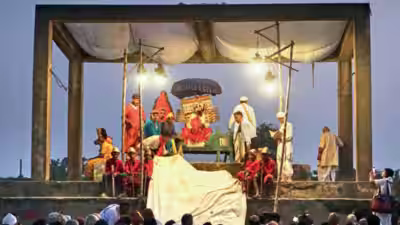











Varanasi: The two-day Brics Culture Working Group meeting concluded in Varanasi on Friday with 11 member nations reaffirming their commitment to deeper cultural cooperation, heritage protection and stronger people-to-people ties. Delegates from the Brics countries wrapped up the discussions with a visit to the sacred Kashi Vishwanath Temple, immersing themselves in the spiritual and cultural essence of one of the world’s oldest living cities.The concluding visit to the revered Jyotirlinga shrine offered delegates a glimpse into India’s enduring civilizational traditions. Combined with cultural programmes showcasing the vibrant heritage of Kashi, the experience served as a fitting finale to the international gathering.The meeting, hosted under India’s Brics presidency initiatives, brought together representatives from member nations to deliberate on safeguarding cultural heritage, facilitating the return of cultural property, promoting joint heritage nominations and positioning culture as a key driver of sustainable development beyond 2030.The proceedings had commenced on Thursday with an inaugural address by Arvind Kumar, joint secretary, Ministry of Culture, Government of India. Discussions over the next two days reflected a shared resolve among Brics nations to strengthen cultural collaboration and advance common priorities in the cultural sector.One of the key sessions focused on institutional strategies for cultural heritage protection and the return of cultural property. Moderated by Prof. Ramesh C. Gaur, Dean of the Indira Gandhi National Centre for the Arts, the discussion enabled member countries to exchange experiences and best practices on preservation, protection and repatriation of cultural assets. Delegates stressed that safeguarding heritage is a collective responsibility and underlined its role in strengthening identity, protecting community rights and fostering intercultural understanding.Another significant session explored collaborative approaches for protecting shared heritage through joint nominations under Unesco’s World Heritage Convention, Intangible Cultural Heritage and Memory of the World Programme. Chaired by Arvind Kumar, the discussion examined how joint nominations among Brics nations could enhance international recognition and ensure the preservation and transmission of shared cultural traditions across generations.The final session, led by Amrita Sarabhai, additional secretary, Govt of India, examined culture’s growing role as an enabler of sustainable development. Delegates highlighted the links between culture, social inclusion, environmental sustainability, economic resilience and community welfare, while also exploring ways to integrate cultural dimensions into the global development agenda beyond 2030.The meeting concluded with renewed enthusiasm for expanding cultural partnerships among Brics countries, reinforcing the belief that cultural diplomacy remains a powerful bridge connecting nations, communities and civilizations.