









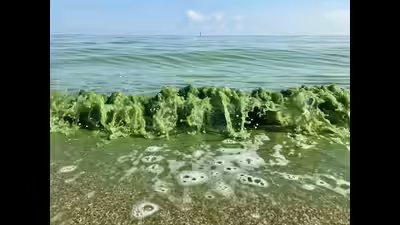
Hyderabad: Researchers at the CSIR-Centre for Cellular and Molecular Biology (CSIR-CCMB) have found that cyanobacterial communities in Chilika Lagoon, Odisha, undergo seasonal genetic shifts. This discovery could improve monitoring of harmful algal blooms and guide conservation planning in vulnerable water bodies.The study, published in Environmental Advances by Manisha Ray and Govindhaswamy Umapathy, reconstructed 83 cyanobacterial metagenome-assembled genomes (MAGs) from water-based environmental DNA samples collected across different seasons. It identified salinity as the primary factor shaping both community mix and functions such as nitrogen cycling, carbon fixation, and toxin production.According to the study, the risk of cyanobacterial blooms increases under low nitrogen-to-phosphorus ratios, conditions that favour toxin-producing genera. The researchers also identified five cyanobacterial genomes carrying a previously undocumented complete metabolic pathway, suggesting a possible unknown carbon-fixation roleThe work involved scientists from CSIR-CCMB, Lacones, and the Academy of Scientific and Innovative Research (AcSIR), Ghaziabad.Cyanobacteria play a crucial role in aquatic ecosystems as they perform photosynthesis, fix nitrogen, contribute to carbon sequestration, and form symbiotic relationships. However, their proliferation can trigger harmful algal blooms, posing risks to aquatic biodiversity and public health. The study found that salinity strongly influences both cyanobacterial community structure and functional gene composition in the lagoon.The study was conducted in Chilika Lagoon, Asia’s largest brackish water lagoon, which is a biodiverse yet understudied ecosystem connected to the Bay of Bengal. For the study, researchers collected water samples from nine locations during four expeditions spanning three seasons. In total, 48 samples were analysed (16 collected in triplicate). At each site, at least 10 litres of water were filtered using a 0.4-micron membrane. Environmental DNA was extracted and sequenced using the Illumina NovaSeq 6000 platform with a PCR-free library preparation method. The resulting reads were processed through trimming, filtering, normalisation, and co-assembly, and were taxonomically annotated using the GTDB Toolkit.A key finding was the identification of five MAGs containing the complete phosphate acetyltransferase–acetate kinase (Pta-Ack) pathway. The researchers said the findings could improve understanding of bloom dynamics and toxin risks, and inform conservation and management strategies in coastal ecosystems facing climate variability.