










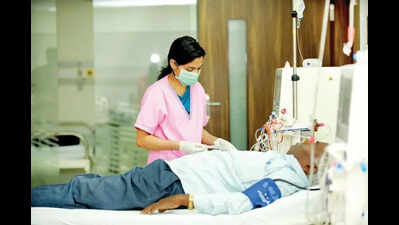
Hyderabad: In a breakthrough for kidney care, Indian Institute of Chemical Technology (IICT) scientists have developed two indigenous technologies that can sharply reduce the cost of dialysis and expand access to life-saving treatment, particularly in rural and smaller health care centres. So far, nearly 20,000 patients have benefitted from these technologies in pilot studies.The innovations focus on two critical components of dialysis — haemodialyser filters and high-purity water systems — both of which contribute substantially to treatment costs. According to the scientists, the technologies have the potential to cut consumable expenses by nearly 70%, making dialysis far more affordable for patients with chronic kidney disease.The first breakthrough involves the development of ultra-thin hollow fibre membranes used in haemodialysers, which function as artificial kidneys by filtering toxins from the blood.“Traditionally, India has relied heavily on imported filters, significantly increasing treatment costs. Our hollow fibre membranes have been produced using a novel design and match global standards in performance, but at a fraction of the cost,” a senior IICT scientist told TOI.While imported haemodialyser filters usually cost between 700 and 1,000, the indigenously developed versions could be manufactured for as low as 150 to 200. “This translates to nearly 70% cost savings, which can directly benefit patients undergoing regular dialysis,” the scientist added.The second innovation addresses the need for high-purity water, an essential requirement for safe dialysis procedures. IICT researchers have developed advanced reverse osmosis (RO) and nanofiltration (NF) membrane systems that ensure the removal of contaminants from the kidney while maintaining efficiency.“Dialysis requires large volumes of ultrapure water. Our system not only ensures safety and reliability but also reduces water and electricity consumption,” the scientist said.Pilot deployments of these technologies have already been carried out in Kamareddy and Marredpally, where they were provided to private dialysis players, delivering promising results in real-world settings in nearly 20,000 patients.“The systems have demonstrated consistent performance, and we are now in the process of transferring the technology to private service providers for wider adoption,” another scientist said.He added that these innovations could play a crucial role in reducing India’s dependence on imported medical devices and improving access to affordable dialysis care.“With costs significantly lowered and efficiency improved, IICT technologies are expected to enable high-quality dialysis services to reach dialysis centres in remote areas, especially to those requiring long-term treatment,” the scientist said.