




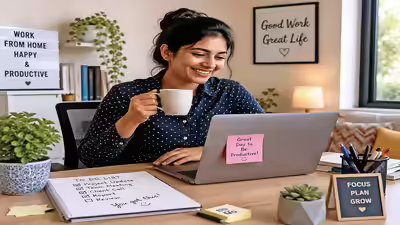
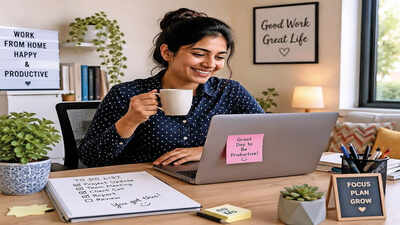
What began as a temporary pandemic adjustment in 2020 has now evolved into a lasting workplace expectation. Six years after COVID-19 forced offices to shut, the work-from-home debate has resurfaced after Prime Minister Narendra Modi urged citizens to adopt fuel-saving measures and Delhi Chief Minister Rekha Gupta announced a mandatory two-day work-from-home policy each week for Delhi government employees, while encouraging private companies to consider similar models. While manufacturing and supply chain sectors still require a strong on-ground workforce, many organisations are exploring hybrid models, selective WFH policies and sustainable commuting practices such as carpooling to reduce fuel consumption. Industry experts say the challenge lies in balancing business continuity, employee well-being and the realities of roles where physical presence remains essential. Companies explore hybrid options Arjun Solanki, board member and vice president of HR at Saurer India, whose manufacturing site is located in Karjan, says, “Team members whose responsibilities do not require physical presence are being encouraged to work remotely, while engineers, supervisors and machine operators continue to operate from manufacturing facilities. For essential staff, carpooling and fuel-efficient travel practices are actively being promoted.” Sudhir Sethi, chief people officer and head legal at INOX India Limited in Vadodara, says, “Nearly 80 per cent of our workforce is required to remain on site, making WFH arrangements impractical for several operational functions. However, departments such as accounts, corporate HR, back-office marketing and communications remain suitable for remote working.”Rajat, manager at a supply company in Rajkot, says, “While WFH may help conserve fuel, it is ultimately only a temporary solution. Offering it to everyone could increase company costs, since we would need to provide systems and infrastructure to all employees. Still, it may prove worthwhile in the long run compared to daily fuel wastage.”
Without a hybrid model, I might have had to quit my job or take something less favourable financially and professionally
– Reshma Trivedi, working mother in Bengaluru
‘Hybrid work is the most practical middle ground’It is evident that work-from home options have been a blessing to many in the work force. Software engineer Ananya Reddy moved from Hyderabad back to her hometown, Warangal, during the lockdown, expecting it to be temporary. But after two years of remote work, she realised how much calmer her life had become. “I was saving nearly three hours every day on commuting, eating healthier meals and spending more time with my parents,” she says, adding, “I don’t think people can fully return to pre-COVID work culture anymore. Work from home changed our idea of what a balanced life can look like.”For Bengaluru-based working mother Resham Trivedi, hybrid work has been life-changing, especially while raising a child without family support nearby. “It has allowed me to continue growing personally and professionally. I spend almost three hours driving to work and back every day, and that can drain you. Without a hybrid model, I might have had to quit my job or take something less favourable financially and professionally,” she says. However, organisations open to remote work say it may not be sustainable as a permanent arrangement. Jaynee Kothari, director of HR at Collabera Talent Solutions Pvt Ltd in Vadodara, says, “Flexibility and business continuity remain central to our operations. Drawing from our successful transition to remote work during the pandemic, we remain prepared to respond swiftly to evolving situations. We have also encouraged employees to maintain reliable home connectivity and adopt sustainable commuting practices such as carpooling, public transport, cycling and walking.”
We have also encouraged employees to maintain reliable home connectivity and adopt sustainable commuting practices such as carpooling, public transport, cycling and walking
Jaynee Kothari, HR professional in Vadodara
‘Remote work can feel isolating’Despite the popularity of remote work, many employees say offices continue to play an important social and emotional role. Hyderabad-based digital marketing executive Rahul Varma, who joined the workforce during the pandemic, says he struggled to build friendships remotely. “Now that I’m back in the office three days a week, I feel more motivated and productive,” he says.
While WFH may help conserve fuel, it is ultimately only a temporary solution
Rajat, manager at a supply company in Rajkot
While experienced professionals value flexibility, many younger employees say remote work comes with emotional challenges. Neha Shetty, a Bengaluru-based fresher who began her career remotely, says work from home initially felt liberating but gradually became isolating. “You suddenly go from college, where life is very social, to sitting alone in front of a laptop every day. Sometimes it feels like you are against the whole world,” she says. According to Neha, mentorship is one of the biggest gaps in remote working environments. “In an office, seniors observe how you work, communicate and approach situations. That personal connection is difficult to build remotely,” she explains.For some employees, however, returning to physical offices improved both motivation and mental well-being. Bengaluru-based professional Rishab Vinay Malde worked remotely for nearly two years before returning to a startup office environment. “After a point, working from home became monotonous. Every day felt like waking up, opening the laptop and repeating the same routine,” he says. He believes office culture also improves visibility and recognition. “You meet people, hear different stories, learn how others work and feel more connected. When people see your work in person, it feels more acknowledged,” he adds.
After a point, working from home became monotonous. Every day felt like waking up, opening the laptop and repeating the same routine
Rishab Vinay Malde, start-up professional in Bengaluru
(Inputs by: Harsh Kashiv, V Nichita, Kanksha Vasavada, Yashaswi Kochar and Shrestha Mukherjee)