








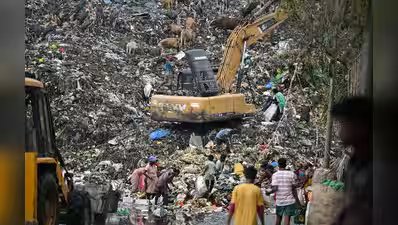
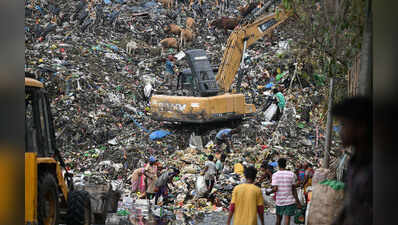
Guwahati: Assam Pollution Control Board (APCB), along with the Swachh Bharat Mission (Urban) and Swachh Bharat Mission (Gramin), has launched a multi-agency strategy to implement the Solid Waste Management Rules, 2026. Four-stream segregation at source and stricter responsibilities for bulk waste generators are at the core of the framework.The Solid Waste Management Rules, 2026, notified by the Union ministry of environment, forest and climate change under the Environment (Protection) Act, 1986, came into effect on April 1, 2026. The rules supersede the 2016 framework and require households, establishments and institutions to segregate waste into four streams: wet biodegradable, dry recyclable, sanitary and special-care waste.APCB said waste management would no longer be the responsibility of pollution control boards alone, but a collective duty involving local bodies, institutions and citizens.APCB chairperson Arup Kumar Mishra said materials such as plastic and discarded tyres had historically posed major environmental challenges. He said the 2026 framework prioritised avoiding landfills and treating organic biodegradable waste as a resource.Under the new rules, bulk waste generators meeting specified thresholds — including a floor area of 20,000 square metres or more, daily water consumption of 40,000 litres or waste generation of 100 kg a day — will have to register on the Central Pollution Control Board’s centralised portal. They will also be required to process wet waste through on-site composting or biomethanation, comply with Extended Bulk Waste Generator Responsibility requirements and submit annual returns.Rule 5(1)(f) prohibits throwing waste into municipal drains, dumping it on roadsides or burning it in the open. The rules also bar wet waste and construction waste from sanitary landfills, reserving landfill space for inert and residual waste. Existing legacy dumpsites must undergo biomining and bioremediation under time-bound action plans.Mishra cited Lakhimpur as a benchmark for the scientific disposal of legacy waste in Assam. Across the state’s urban areas, infrastructure audits are being conducted in all 96 urban local bodies, while 59 ULBs have mapped legacy waste sites.The Swachh Bharat Mission (Gramin) is also deploying digital tracking systems for waste-collection vehicles to support transparent and reliable door-to-door collection across rural habitations.