









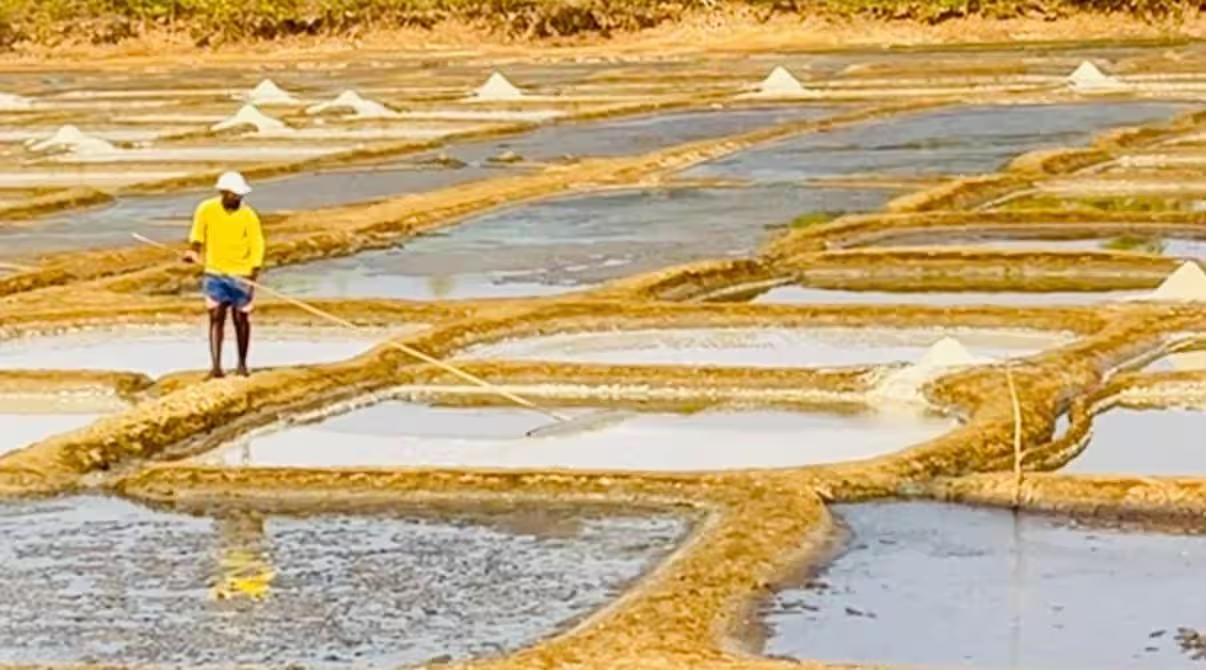
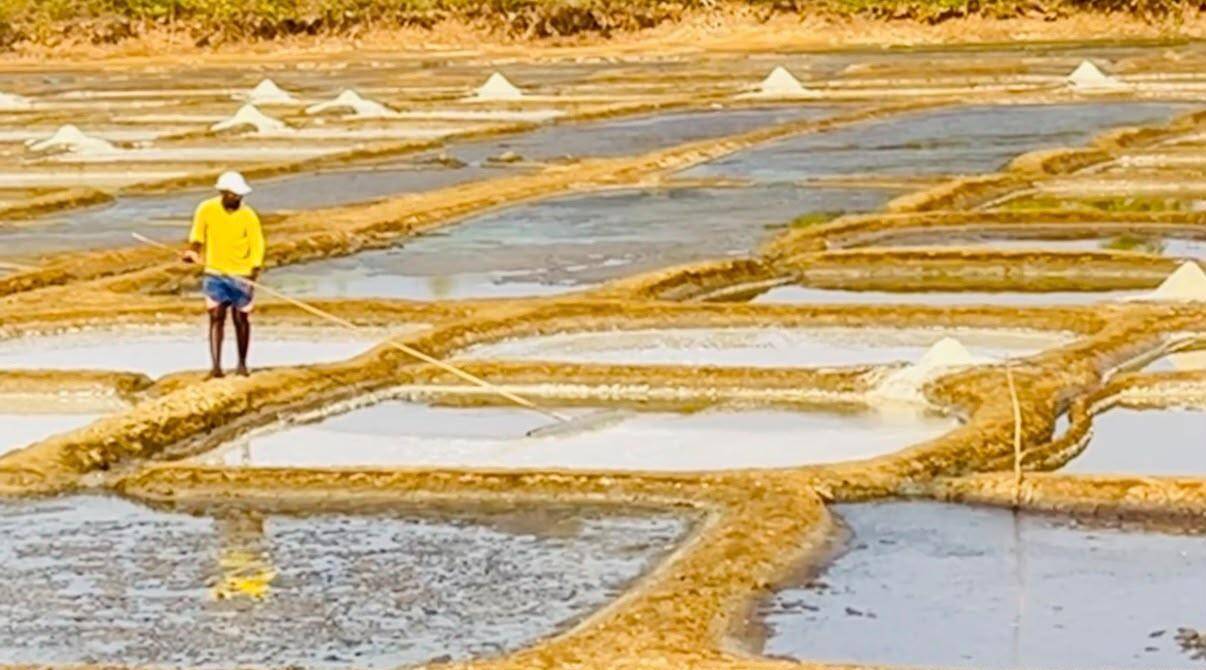
Panaji: Ageing cultivators, an acute shortage of labour, falling returns and neglected salt pans have pushed ‘agarkars’, one of Goa’s oldest traditional farmers, to the brink. Determined to preserve Batim’s centuries-old salt-making tradition, Mazel Fernandes, 32, has spearheaded efforts to support struggling salt cultivators by documenting their challenges, meeting farmers door-to-door and securing govt assistance for them.A total of 48 traditional salt cultivators have received financial assistance of Rs 1 lakh from state govt to help sustain the traditional salt-making industry. Of the beneficiaries, 34 are from Batim, one of the state’s largest surviving salt-producing villages.“Salt pans are what make Batim unique,” Fernandes said. “Batim has nearly 50 families who own or traditionally cultivate salt pans, many of whom have been engaged in the occupation for generations. Today, however, only about 30 cultivators remain active.”One of the biggest obstacles confronting salt producers is the scarcity of skilled labour.“Earlier, families harvested salt themselves. But with cultivators growing older and younger generations migrating overseas, the traditional workforce has dwindled. To continue operations, cultivators depend on workers brought from Karwar, Karnataka. Farmers are often required to pay advances to secure workers, yet they do not always arrive on time. In salt production, timing is critical, and delays can disrupt the entire production cycle,” she said.The laborious work involves repeated preparation of the pans, management of water flow, waiting for ideal weather conditions, harvesting the salt and cleaning the pans for the next cycle.Despite months of labour, returns remain modest.“Many cultivators now earn profits of only around Rs 50,000 to 60,000 a year from salt production. Earlier generations enjoyed better earnings because they could sell directly across Goa at higher prices. Today, many cultivators depend on middlemen who buy salt at low rates,” she said.Wanting to understand the challenges faced by traditional occupations, she conducted a door-to-door survey among salt cultivators, documented their problems, and later convened meetings where farmers collectively discussed problems plaguing them.The findings were subsequently presented to the Goa State Biodiversity Board where member-secretary Pradeep Sarmokadam supported the proposal to assist salt farmers. The recommendations eventually led to govt’s financial assistance programme. The authorities are now planning a separate scheme aimed at reviving abandoned salt pans.“Many traditional ‘agars’ have fallen into disuse after being flooded or left uncultivated due to labour shortages. We want to understand the present condition of every salt pan and help people revive them if they are interested,” Sarmokadam said.Alongside financial assistance, Batim’s salt cultivators may soon look towards technology for long-term sustainability.“Discussions are under way to study mechanised salt production systems already being used in Gujarat. Machinery there can perform many of the labour-intensive processes that currently require manual work. A study visit for a group of Batim cultivators is being planned for the next salt-making season to evaluate whether similar technology can be adopted in Goa,” Fernandes said.