








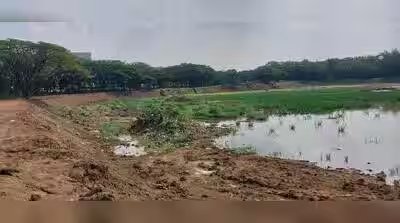
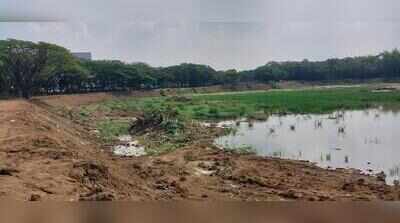
Bengaluru: The sight of a largely dry Hebbal Lake continues to greet commuters on Airport Road and the Outer Ring Road, even as the winter migration season approaches and more than 90 acres of the lake is yet to undergo desilting.Bengaluru: The sight of a largely dry Hebbal lake continues to greet commuters on Airport Road and Outer Ring Road, even as the winter migration season approaches and over 90 acres of the lake are yet to undergo desilting.Greater Bengaluru Authority (GBA) officials in charge of the project told TOI the lake’s inlets are open, but recent rain has not resulted in significant water accumulation in the main waterbody. However, the newly developed wetlands have received water inflow. “Though the catchment area received good rain in the last two weeks, the areas downstream received heavier rainfall; 16 acres of wetlands have filled up and they are looking beautiful,” a senior official said.The lake was dewatered in Jan for desilting and comprehensive redevelopment. The first phase of work, including desilting of over 25 acres and development of wetlands, was completed between Jan and Sept. The second and major phase is yet to begin.GBA is set to open financial bids for the second phase. “We have finished desilting over 25 acres and developing wetlands. Over 90 acres of the waterbody is yet to be desilted. The first phase of the project went on from Jan to Sept, while the next phase might take around six months after awarding of tender,” an official said, adding that the tendering process could take another 2-3 weeks.The Rs 32-crore project covers desilting, pitching (installing stones on the lake embankments), installation of weirs and wetland development. The prolonged dry condition has also raised concern among birdwatchers, particularly with migratory birds expected to arrive during the winter season.Elizabeth S, from Hebbal Nature Society, said Hebbal lake has long been a popular bird-watching hotspot in Bengaluru, particularly for migratory birds. “Several of the migratory species that visit are entitled to high statutory protection,” she said.She said migratory birds travel to Bengaluru from Central Asia, Europe and Africa during winter, with the migration season extending from Oct to March. “We need to see how prolonged drying of the lakebed could have a long-term impact on their habitat,” she added.The project is being implemented by GBA’s Project Implementation Unit, the nodal agency for lake and stormwater drain improvement projects in Bengaluru, under a World Bank loan.