








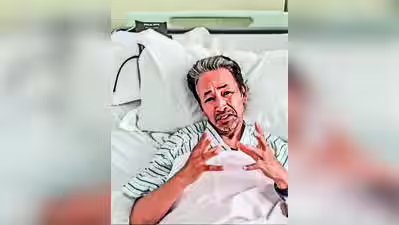
Gurgaon: Climate activist Sonam Wangchuk remained clinically stable on Thursday but continued to be monitored in ICU on the 26th day of his hunger strike.Sources at Medanta said his heart rate was 84 beats per minute, blood pressure 101/63 mmHg, respiratory rate 20 breaths per minute and oxygen saturation (SpO2) 100%. His random blood sugar was normal.Doctors said patients undergoing prolonged fasting require close monitoring regardless of reassuring vitals, since complications can develop rapidly. After nearly four weeks without food, they can be vulnerable to electrolyte disturbances, cardiac rhythm abnormalities and metabolic complications — risks that can intensify when nutrition and fluids are gradually reintroduced, a phase known as ‘refeeding syndrome’.Wangchuk’s earlier medical records have documented persistent pancytopenia — reduced red blood cells, white blood cells and platelets — along with low serum potassium levels of 3.2-3.4 mEq/L and mild-to-moderate dehydration, all of which warrant continued observation, according to sources.“Although prolonged starvation affects virtually every organ system, the heart is among the most vulnerable. Nutritional deprivation gradually weakens the heart muscle, while electrolyte imbalances, particularly involving potassium, magnesium and phosphate, can trigger dangerous rhythm disturbances. These risks become even greater during the refeeding phase, when sudden metabolic shifts may precipitate heart failure or cardiac arrest if nutrition is not reintroduced carefully,” said Dr Samir Kubba, director and unit head of cardiology at Delhi’s Dharamshila Narayana Superspeciality Hospital.Dr Jayanta Thakuria, senior director of internal medicine at Faridabad’s Yatharth Super Speciality Hospital, said the body switches from glucose to fat reserves as starvation continues, leading to weight loss, muscle wasting, weakness, dehydration and vitamin deficiencies.“While a patient may appear stable, the body’s metabolic reserves are largely exhausted. The heart becomes more susceptible to rhythm abnormalities, immunity weakens and organs such as the liver and kidneys are also affected. The biggest risk often comes when normal feeding is restarted, making careful medical supervision essential,” he said.Medanta said Wangchuk was admitted under a multidisciplinary team and that treatment was being administered in accordance with his informed consent. Security remained tight around the hospital on Thursday, with police regulating entry to authorised visitors and patient attendants following his transfer from Safdarjung Hospital on July 21, after the Delhi high court permitted him to be moved to a hospital of his choice for specialised care.