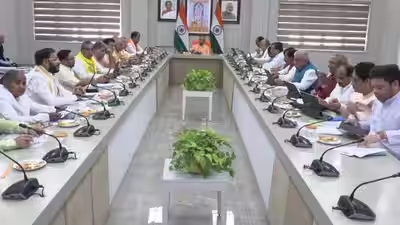




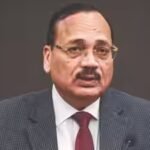


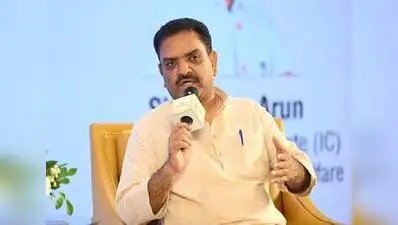
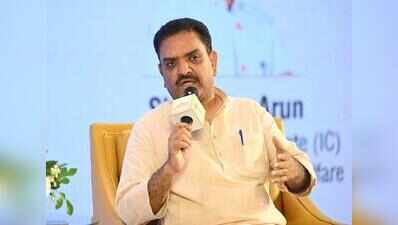
Lucknow: As the Union Public Service Commission marks its centenary, former IPS officer and UP social welfare minister Asim Arun has pitched for a major overhaul of India’s civil services recruitment system, arguing that the existing ‘One exam, 30 services’ model is no longer adequate for the increasingly specialised demands of modern governance.In a detailed social media post coinciding with the UPSC’s 100th anniversary, Arun questioned whether a common examination can effectively identify candidates for vastly different services such as the IAS, IPS, IFS and Audit & Accounts Service. He argued that while the current framework may have served the country well for decades, India’s administrative needs have evolved significantly and now require a more role-oriented recruitment system.His observations come amid a broader debate on examination reforms within the UPSC itself. During the centenary celebrations, UPSC chairman Ajay Kumar emphasised the need to move beyond testing memory and coached responses, stressing greater focus on reasoning, judgment and decision-making in uncertain situations. PM Narendra Modi, too, called for recruitment processes that assess not only what candidates know but also why they wish to enter public service and how they can address future governance challenges.‘Recruitment model stuck in the 1950s’Arun contended that India’s recruitment framework remains rooted in a model developed largely in the early decades after Independence. According to him, the principle of functional hiring was stronger during the pre-Independence era, when different services had distinct recruitment mechanisms.He pointed out that the Indian Civil Service, Imperial Police and various technical services had separate examinations and selection processes because their functions differed substantially. Over the years, however, the system shifted towards a common examination through which candidates are selected for a wide range of services.The former IPS officer argued that such an arrangement assumes a single examination can assess all competencies required across services, despite the fact that the responsibilities of a district police chief, diplomat, auditor and administrator differ considerably.Different services require different expertiseAt the heart of Arun’s proposal is the belief that recruitment should reflect the specialised nature of different govt roles.For instance, he said officers in Audit and Accounts Services are entrusted with public finance and auditing responsibilities and should ideally possess a strong grounding in accounting, commerce and economics. Likewise, officers joining the Indian Foreign Service represent India abroad and deal with geopolitics, diplomacy, international law and global economics, areas that deserve greater weight in the selection process.Similarly, Arun argued that policing demands expertise in criminal law, criminology, forensics, internal security and investigation. He also questioned whether the current examination pattern adequately evaluates qualities such as field leadership, crisis response, decision-making and understanding of ground realities, which are crucial for administrative and policing roles.According to him, recruitment should be driven less by a candidate’s position on a common merit list and more by suitability for a specific service.From rank-based to role-based selectionDrawing a parallel with modern human resource practices, Arun said no large organisation would use a single common test to recruit a chief financial officer, cybersecurity expert, diplomat and legal adviser simultaneously. Applying the same logic to govt recruitment, he advocated a greater focus on three factors: role-specific competence, domain knowledge and aptitude for the responsibilities attached to a particular service.Three-stage recruitment modelRather than replacing the civil services examination altogether, Arun has suggested a three-tier recruitment structure that combines a common screening mechanism with specialised assessment at advanced stages.Stage 1: Common Preliminary ExamThe first step would remain a common preliminary examination based on General Studies and CSAT. Its purpose would be to screen the large pool of applicants and identify serious contenders.Stage 2: Service-Specific Main ExamsThe second stage would introduce separate mains examinations for different service clusters. Candidates shortlisted through the preliminary stage, roughly five times the number of available vacancies, could appear for the mains examination of the service they seek to join.Stage 3: Domain-Based Personality AssessmentThe final stage would involve specialised interviews conducted with greater participation of subject experts. Candidates roughly three times the number of vacancies could be called for personality tests.For example, diplomat-led panels could assess IFS candidates, while senior police officers, criminologists and security experts could evaluate IPS aspirants. Audit and Accounts candidates could be interviewed by experts in finance and public accounting.Arun also suggested that physical-efficiency standards should form part of the IPS recruitment process.Reducing coaching-driven preparationAnother concern highlighted by Arun was the growing influence of coaching-oriented preparation. He argued that examinations built around predictable patterns often reward rehearsed answers rather than independent thinking and practical judgment.His views align with the broader reform discussion initiated during the UPSC centenary celebrations, where policymakers underlined the importance of analytical ability, problem-solving and decision-making in increasingly complex governance environments.Why the debate mattersArun linked recruitment reforms to India’s ambition of becoming a developed nation. He argued that emerging challenges such as AI, cybersecurity, climate change, financial regulation, public health, urban governance and global diplomacy require specialised expertise.As governance becomes more complex, he said, the civil services must move beyond a purely rank-based selection system and place greater emphasis on identifying the competencies required for specific roles.Invoking the traditional description of the civil services as India’s “steel frame”, Arun said its strength should rest not only on merit rankings but also on matching the right talent with the right responsibilities. Using the UPSC’s centenary as a moment for reflection, he has called for a gradual shift towards service-specific mains examinations, domain-oriented interviews and competency-based recruitment.