










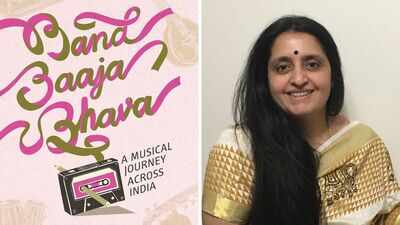
We listen to music on the move, discover songs through reels and build playlists around moods. Yet, in a world where music is always within reach, how often do we pause to understand what we are listening to, the traditions it comes from, the people who keep it alive, or the stories that give it meaning? For Carnatic musician, educator and author Chitra Srikrishna, this is an invitation to listen differently. Her work that took shape when she was teaching music appreciation at a university, Band, Baaja, Bhava, looks beyond familiar musical categories to explore the people, histories and traditions that make up India’s diverse musical landscape. “I found the need to write stories that any reader, somebody who listens to music, can instantly relate to. The aim was to make Indian music accessible without relying on technical jargon,” she says.Chitra points out, “Short-form videos and endless scrolling have encouraged people to consume music in snippets rather than experience an entire musical composition. So, yes, we may be listening to more music, but are we really listening more deeply? Through my work here, I am urging people to listen more closely and listen deeply.”Listening deeply, however, is not just about spending more time with a piece of music. It is also about looking beyond the labels through which we tend to understand it. Indian music is often divided into classical, folk and devotional traditions, but these categories can obscure the connections between them, and the many stories that remain outside the mainstream.“Indian music is widely appreciated; however, it is often put into boxes of genres – classical, folk or devotional. But there is so much that connects these different traditions. I also realised there were so many musicians who were still undiscovered,” explains Chitra. One such discovery was a Tarpa player who received national recognition. For Chitra, the story was a reminder of how much there is to uncover, particularly in folk music, where musicians and their traditions can remain unfamiliar to wider audiences despite their cultural significance. “When you look at folk music and folk musicians, so many remain undiscovered. It is a never-ending journey of discovery, like peeling the layers of an onion,” she says. The stories she wanted to bring to readers focused not only on musical forms but also on the people navigating them. Women musicians, in particular, have had to negotiate barriers across genres, from folk and classical to contemporary music. “Women have never had it easy. They have to work harder across genres from folk to classical to contemporary music. Hearing their voices represented and understanding what it takes for them to pursue music are stories that I felt had to be shared,” she adds.That shift took her into unfamiliar territory, including desi hip-hop. She attended rapper Arivu’s concert in Chennai, using the experience, alongside research and conversations, to understand music beyond the conventions she knew best. The process expanded her understanding of how music is created, performed and experienced across different contexts. It also reinforced the importance of making those experiences accessible to readers without assuming prior knowledge of a particular genre.Ultimately, her work, she says, is an invitation to approach music with curiosity rather than familiarity alone. A song can be more than a favourite on a playlist; it can be a doorway into a community, a cultural tradition or the life of a musician whose story might otherwise go unheard. The more closely we listen, the more there is to discover.