










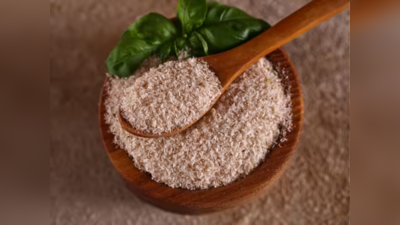
Ahmedabad: A tax tangle has frozen trade at Asia’s largest isabgol market. For over a fortnight, auctions at Unjha APMC have ground to a halt as Gujarat and Rajasthan pull in opposite directions on GST treatment of fresh psyllium seed — leaving processors starved of raw material, exporters staring at stuck shipments, and traders bracing for tax demands that could run into crores.In an order dated May 29, 2026, Gujarat’s Authority for Advance Ruling (GAAR) held that psyllium seed supplied in its natural, raw and unprocessed form, procured directly from farmers through APMC auctions, qualifies as “fresh” isabgol seed and is exempt from GST. After the ruling, trading continued at Unjha for around two months with raw isabgol seed treated as nil-rated. The issue surfaced after traders handling Rajasthan-origin stock raised concerns over the differing tax treatment. Unjha traders now fear that transactions treated as exempt could later attract 5% GST, exposing them to recovery demands.Unjha’s 65-odd processing units handled about 1.9 lakh MT of stock in FY2026, most of it for export. About 1.6 lakh MT came from Rajasthan, 15,400 MT from Gujarat and the remainder from Madhya Pradesh. Industry estimates put the annual value of isabgol trade in Unjha at around Rs 5,000 crore.But with auctions suspended, raw material supplies to Unjha have been disrupted. “The differing position in Rajasthan has left traders seeking clarity on the GST applicable to APMC transactions. With trading halted, raw material is not reaching Unjha, export commitments are getting stuck, and processors continue to bear factory and labour costs without adequate supplies,” said Yunesh Patel, processor and exporter.“There is a discrepancy between Gujarat and Rajasthan in the taxation of isabgol. Traders need clarity and are demanding a uniform tax structure for smooth business. Traders have decided not to continue isabgol trading until the issue is resolved. However, govt has assured us that taxation will be streamlined, and we believe trading will resume soon,” said Unjha APMC chairman Dinesh Patel.Industry representatives have approached finance ministry over the issue, sources said. However, a formal clarification is likely only at the next meeting of GST Council.The disruption has also come at a critical time, coinciding with the isabgol sowing season. “Traders are worried about having to pay 5% GST if it is later recovered from them.This is also the sowing season for isabgol, so the uncertainty is affecting farmers as well as traders,” said Jayanti Patel, an isabgol trader at Unjha APMC.Isabgol traders and processors are seeking a uniform GST framework across Gujarat and Rajasthan to allow interstate movement, trading and processing to resume without the risk of retrospective tax demands. The uncertainty is also affecting farmers who depend on the normal market channel to sell their produce and procure seeds and fertiliser.