









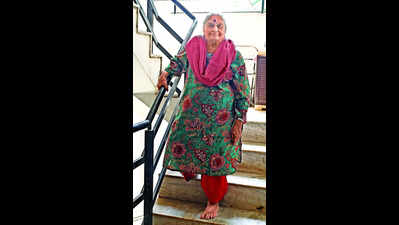
In a world that lives for wins worth broadcasting and basking in, these elders measure victory differently. A long life has taught them that the things worth holding on to are the freedoms that are often taken for granted — cooking a meal, climbing the stairs, and packing a bag for another trip. So, when a knee finally gave out or a hip cracked, they didn’t take it as the end of the road. They got it fixed and got back up. Not that this is for everyone; the surgeons who do these operations are the first to say so, and they think hard about each case. But age, they will tell you, is no longer the barrier it used to be.94 and climbing stairsTake Anasuya Jhaveri, for example. At 94, the former principal of the GLS kindergarten section, has had both knees replaced — one at 70, the other at 86 — and now a hip as well. “I like to stay occupied. I want every day to have a purpose: to be of use to myself and to others,” she says. She stayed on as principal until she was 86, then sat for an interview to head another school, and even got selected. But her children talked her out of taking up the job and advised her to get some rest instead. That was the kind of appetite for work she had.The hip surgery was performed after a recent fall, when a scan revealed a crack. For someone who lives on the third floor of a building with no lift, staying mobile was never negotiable. “We took many opinions before the surgery because of her age. But she had faith she would pull through, and she did,” says Vaidehi, her daughter. Anasuya has never been one to sit idle — she still cooks for herself and her daughter, reads three papers, finishes the Sudoku and the crossword, and keeps up with her shows on OTT. Dr Vikram Shah, joint replacement surgeon, and founder and CMD of Shalby Hospitals, isn’t surprised by any of this. On average, he now replaces joints in three patients over 90 each month. His take is blunt: “You only live once. And to live, you have to stay mobile.” People are living longer now, he says — before Independence, life expectancy was under 50; now it is past 70, with a good 10 per cent reaching 90 or more. And those who get that far, he finds, are a hardy lot — a fitter generation of light eaters who neither overeat nor overthink, largely free of serious illness, which is why they come through surgery so well. “They make good patients. They are motivated to recover, and ready to listen,” he says.Made of sterner stuffThen there’s Uttamchand Raigandhi, 85, whom the family calls “Dhurandhar”. The Shyamal resident had his left knee replaced a week ago and is already up and about. “Until I am alive, I will not depend on anyone. Not even for a glass of water,” he says.Anyone in his position might have thought twice about going under the knife. He’d had an angioplasty in his 40s. His right knee was replaced eight years ago. This time, his haemoglobin was barely above 8 — which made him too weak for a surgery. He needed iron injections, and the all-clear from a cardiologist and a physician, before he could go ahead.
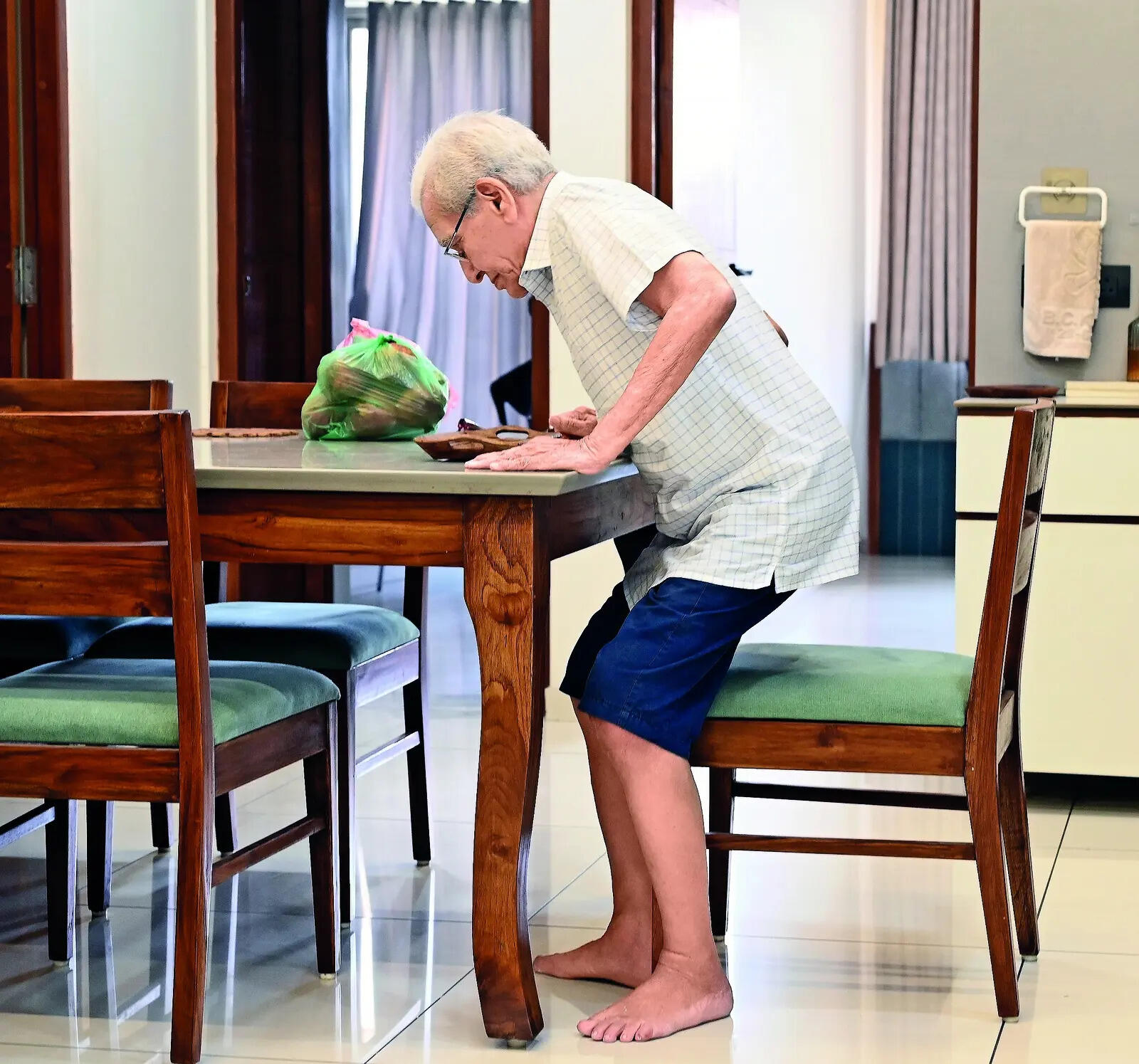
Uttamchand Raigandhi, 85, had his left knee replaced a week ago and is already up and about
He had spent his working life on the move. A chemical engineer, he was associated with textile mills across India for decades before starting a garment business with his son. Last year, he spent three months in the US. Now he and his wife are planning a pilgrimage to Shankheshwar and Ambaji. In his case, though, the surgery almost didn’t happen, because the sons were against it. But his wife stood by him. “My mother said the responsibility for the outcome would be hers alone, and that there was nothing to fear. That settled it,” says Alka, the daughter.Families are right to weigh the risks carefully, and surgeons say so themselves. “The joint replacement may be successful, but advanced age brings its own complications, often involving the heart, lungs or kidneys. So we counsel the family too, on the dos and don’ts,” says Dr Satish Patel, orthopaedic and joint replacement surgeon at Zydus Hospital. Many of his patients are past 90, he says, and what brings them in is the desire to get back outdoors, to be rid of the constant ache, and to live a little better.The secret she wasn’t toldTija Mali, 107, a mother of five children aged between 64 and 79 years, lives in Meghaninagar with her son Gordhan. She was 102 when she underwent hip replacement surgery. She has been a fit person all her life and, as Gordhan tells it, had never once taken a pill on her own. Then one day she fell and went to a hospital for the very first time.
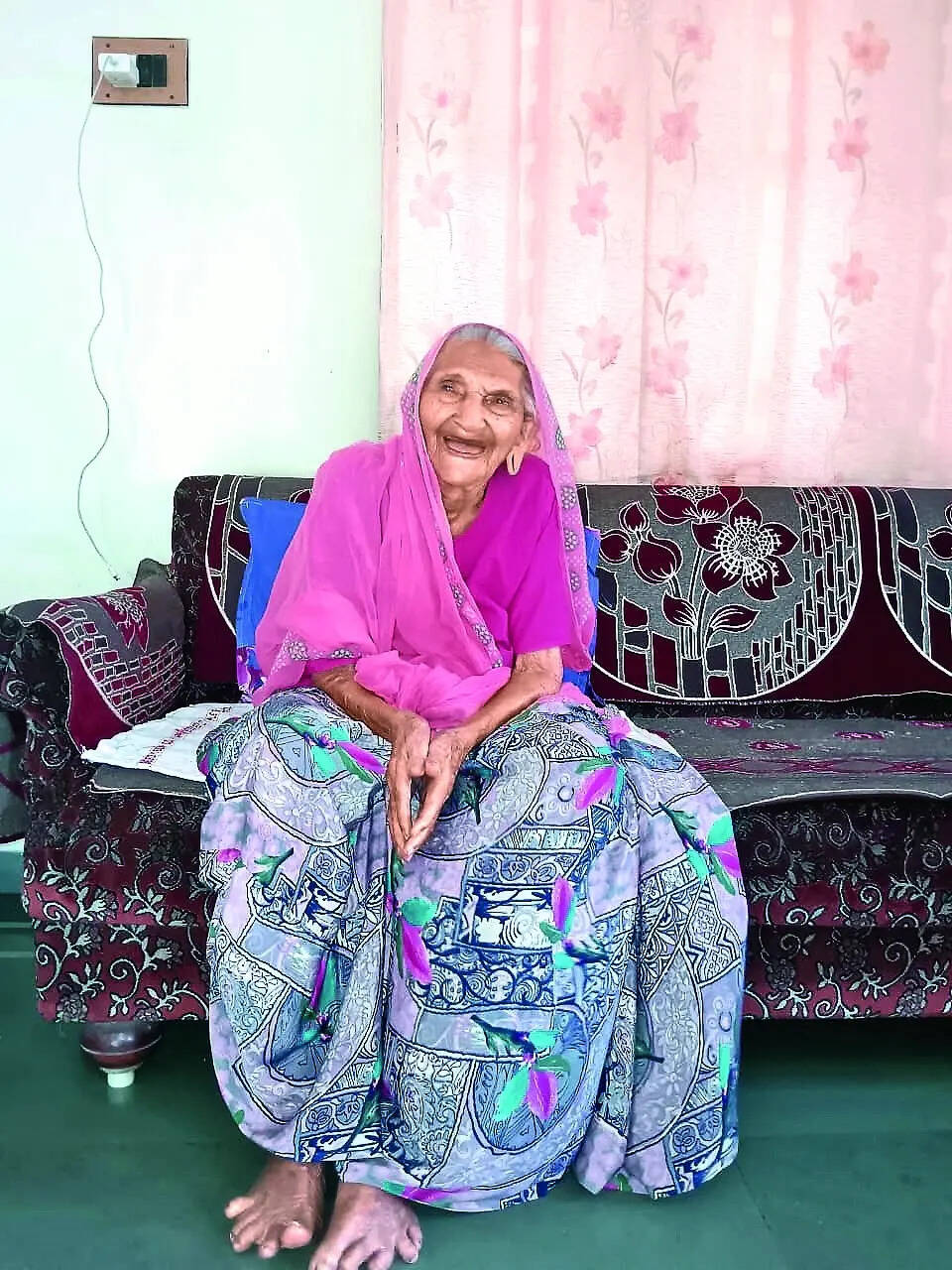
Tija Mali, 107, was 102 when she opted for a hip replacement surgery
Doctors found she had broken her hip. Given her age, many felt surgery was too big a risk to take. But she was fit otherwise — blood pressure fine, sugar in check, haemoglobin healthy. The family realized that without the surgery, she would be confined to bed and left in pain. And that was something they could not accept. She had always been active, helping cut vegetables and lending a hand in the kitchen. So they told her she was going to the hospital for a bandage, and went ahead with the surgery. “She was on her feet again within 15 days,” Gordhan says. She has a new hip, but she does not know it. “Her recovery was faster than any of us expected. Sometimes, ignorance is bliss,” he adds. If stories like hers are becoming more common, the doctors are careful to explain why. “The question is how fit you are,” says Dr Ateet Sharma, senior joint replacement surgeon at KD Hospital. “The surgery and the aftercare have both improved, yet we go ahead only when the patient is genuinely fit for it.” Dr Daria Singh, orthopaedic and joint replacement surgeon at Apollo Hospitals, recalls that one of his oldest knee replacement patients was a 92-year-old practising lawyer. “For him, staying mobile was both a professional need and an expression of joie de vivre. We are seeing a steady rise in such patients. The risk is on a par with that in any other case, and with proper care, patients can regain movement,” he says. She will soon be flyingRekha Shah is exactly that kind of patient. At 90, the Valsad resident had her knee replaced three weeks earlier and is already walking without support. Until recently, the pain kept her from moving freely. And now she is planning to fly halfway across the world.
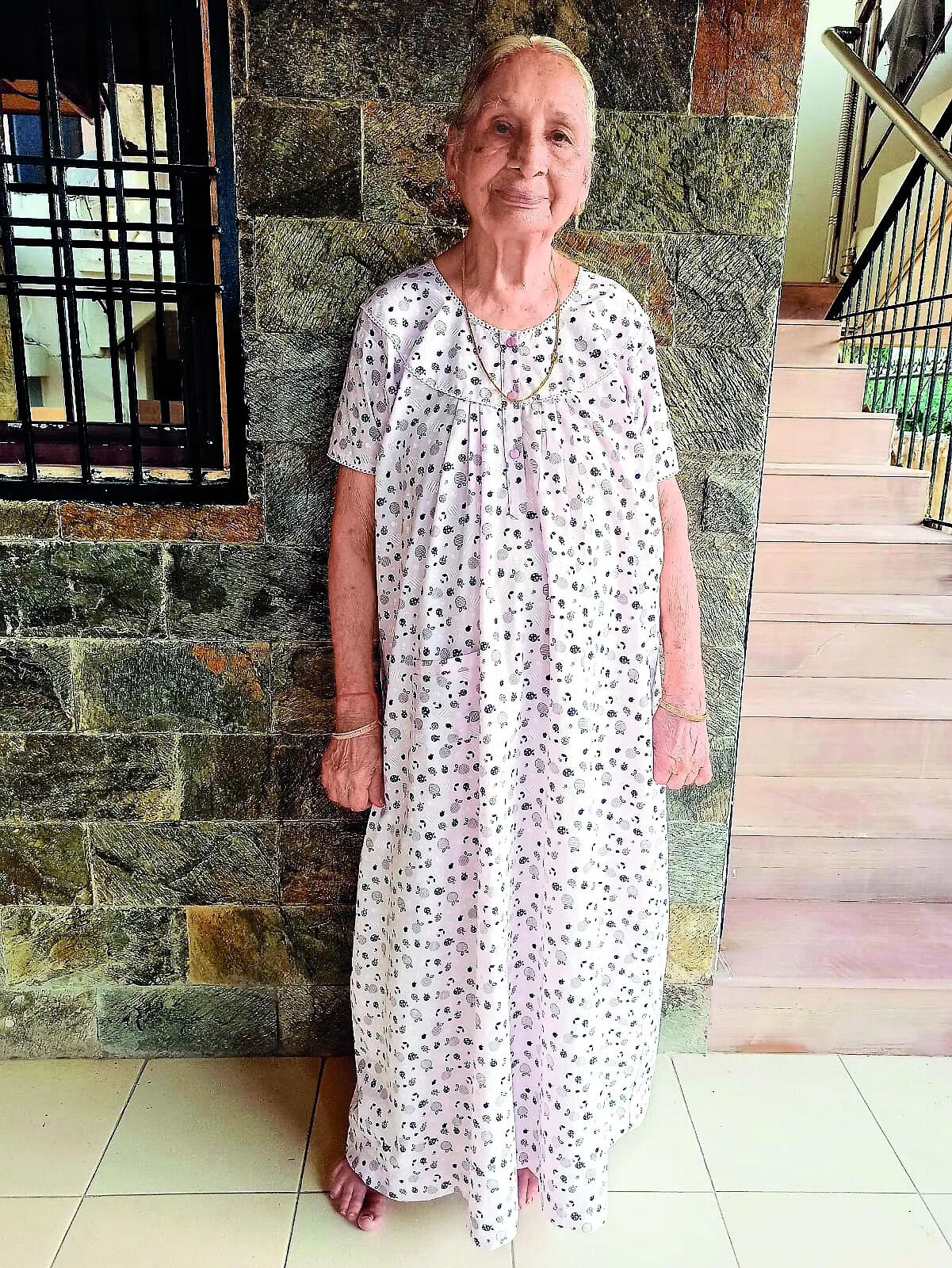
Rekha Shah, 90, had her knee replaced recently and is walking without support
“Once I recover, I will visit my son in New Jersey,” she says. At this age, she still runs her own day, cooking included. And that is exactly the life she wants to lead. The confidence that led her to say yes to the surgery, her family says, is what has her recovering so fast.Her son, Dr Pankaj Shah, medical superintendent at Kasturba Hospital, SEWA Rural, in Jhagadia, Bharuch, fills in the rest. “Her first knee was replaced 12 years ago. The other gave no trouble then, but this time it was the one in pain, and neither exercise nor medication helped,” he says. Dr Sanket Diwanji, a joint replacement surgeon, sees more cases like hers all the time. “After 90, a knee replacement is worth it if it improves quality of life. More and more fit patients in this age group are choosing it these days,” he says.Round two next monthKaila Padhariya, 90, from Rajkot, had one knee replaced last month and is ready to have the second replaced next month. Apart from mild hypertension she has remained in good health, though the knee pain had limited her movement.
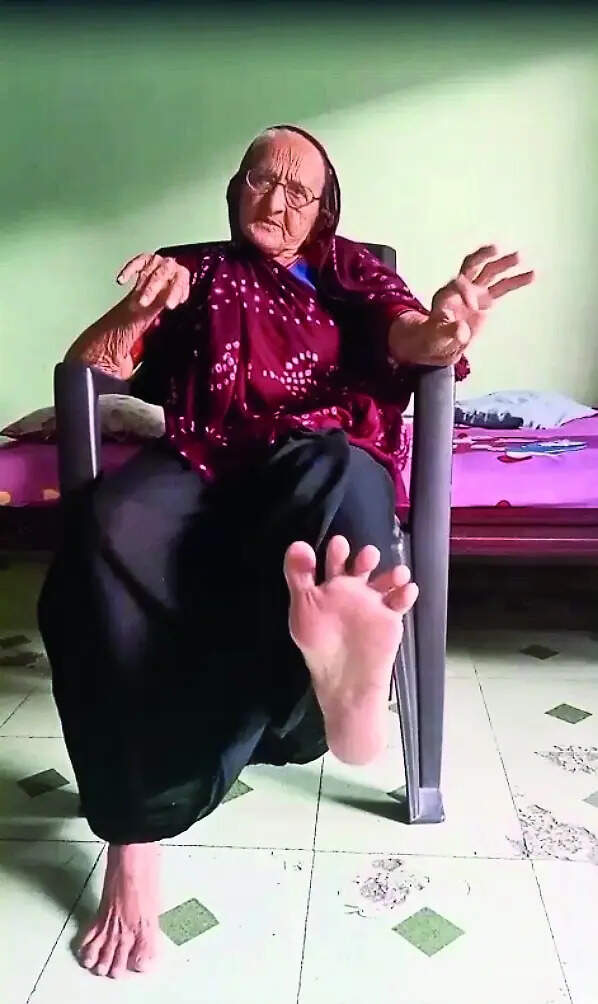
Kaila Padhariya, 90, had one knee replaced in April and will have the second replaced next month
“She was finding it hard to walk and climb stairs. A few doctors told us not to risk it at her age, but she refused to be bedridden. She wants to keep doing her own work till her last breath,” says her son Ruda. The surgeon who operated on her, Dr Hiren Kothari, says, “If a patient is mobile, wants to stay active, and the reports are normal, then the years do not have to stop them.” Age, more and more senior citizens are deciding, is just a number — not a finish line.