





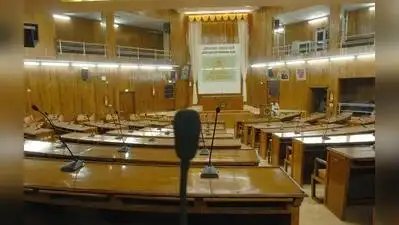
Bengaluru has gone six years without an elected civic council, after the term of the erstwhile Bruhat Bengaluru Mahanagara Palike (BBMP) council ended on Sept 10, 2020. The administrative machinery has continued to run the city, but a key layer of local governance has been missing: elected representatives whose mandate is to speak for individual wards.Councillors were the first political point of contact for residents, following up on complaints, identifying local needs, monitoring works, and pushing for funds. Their absence has increasingly drawn MLAs into neighbourhood-level issues, even though legislators have a wider mandate and primary responsibility for lawmaking.The gap extends beyond individual complaints. It raises questions about who supervises civic officials at the ward level, how local priorities are translated into projects, how civic money is monitored, and whether residents have a meaningful role in deciding what gets done in their neighbourhoods.With chief minister DK Shivakumar saying elections to the city’s five corporations will not be delayed further, attention is now turning to when Bengaluru will regain an elected local govt. There is also uncertainty over whether the ward-level political map could change following the Special Intensive Revision (SIR).Missing Third TierLocal govt is the tier closest to citizens. Its significance lies in being able to deal with problems that are too localised for state-level political representatives but too important to leave entirely to officials. Former mayor Gangambike Mallikarjun questioned why local elections could remain pending for years when elections to Parliament and state legislatures are held on schedule.Former Hoodi corporator AC Hariprasad pointed to the original logic of decentralisation: local representatives are physically closer to residents and can respond to everyday concerns such as water supply and garbage.The absence of this political layer also means residents have fewer avenues for participating in decisions about their own neighbourhoods.No One To ApproachFor a resident dealing with a blocked drain, overflowing garbage, a damaged road or a missing streetlight, the difference is practical: there is no councillor responsible for taking up the issue.A councillor’s role was not limited to receiving complaints. Regular visits to different parts of a ward allowed problems to be identified before they became complaints, while follow-up with officials helped push them towards resolution.The deterioration of solid waste management illustrates the problem. The lack of a regular political presence, Gangambike Mallikarjun said, has made it harder to monitor garbage collection across neighbourhoods.Padmanabhanagar resident Lalitha Rao said the disconnect is also visible in the choice of civic works. Projects proposed by the govt may proceed, she said, but there is no equivalent mechanism for identifying and pushing for what a particular neighbourhood needs.110 Villages, Bigger NeedsThe problem becomes more pronounced in the 110 villages that were brought into the erstwhile BBMP in 2008.Many of these areas entered the civic system with substantial deficits in basic infrastructure. Roads and water supply remain among the concerns, while the scale of the requirement often calls for sustained intervention rather than individual fixes.Hariprasad said this was precisely where ward-level representation mattered most. Councillors could identify gaps, make a case for projects and seek funds for neighbourhood infrastructure, including parks and lakes.Who’s Watching Officials?The missing councillor is also a missing layer of oversight. According to Hariprasad, ward engineers, health inspectors and solid waste management supervisors earlier came under the direct supervision of elected representatives. That relationship gave residents someone who could be held responsible for following up when officials failed to respond.There was another, less formal incentive: competition between councillors. Hariprasad said representatives competed to secure funds and complete works in their wards, and this pressure could translate into better outcomes.The question extends to money as well. Former Malleswaram corporator Manjunath Raju said the absence of elected representatives has made it less clear who is monitoring civic budgets and what criteria are being used to decide which works receive priority.Local Govt’s Wider RoleThe ward-level representative is also part of a broader system of local social and economic planning. Civic Bangalore founder Kathyayani Chamaraj said the local govt has a role in identifying people who need ration cards, pensions and other welfare measures, apart from planning for economic development and social justice.She also pointed to the loss of area sabhas under the GBA Act, which had provided a mechanism for residents to participate in planning and monitoring works. The issue, therefore, is not simply whether a road gets repaired or garbage gets cleared. It is whether residents have an elected institution through which their priorities, welfare needs and local concerns can enter the decision-making process.Question B’luru Is Left WithBengaluru’s civic administration has not stopped functioning. What has disappeared is the elected intermediary between that administration and the people it serves.That distinction is at the heart of the debate over the long-delayed polls: who identifies what a ward needs, who presses officials to deliver it, who scrutinises the spending and, ultimately, who answers to the people living there?Bengaluru’s civic elections: A history of interrupted termsAn analysis of Bengaluru’s civic election history since 1970 shows a recurring pattern: polls have rarely followed a predictable cycle, with successive state govts allowing elected terms to lapse, and changes to the city’s boundaries and governance structure repeatedly resetting the electoral process.■ 1970 | Civic polls held: Elections to the then Bangalore City Corporation (BCC) were held. Successive state govts did not conduct subsequent polls on time■ 1983 | Polls return: BCC elections were held within months of Ramakrishna Hegde becoming CM■ 1989 | Corporation expanded: BCC was expanded and became Bangalore Mahanagara Palike (BMP)■ 1990 | First expanded BMP election: Elections to the expanded BMP held■ Oct 1996 | Another election: BMP elections were held, but the next regular cycle would again be disrupted■ 2007-08 | BBMP takes shape: Bruhat Bengaluru Mahanagara Palike (BBMP) was formed by bringing together BMP, seven CMCs, a TMC and 110 villages■ 2010 | First BBMP election: First election to the newly formed BBMP was held for 198 wards■ 2015 | Second BBMP election: The second and last BBMP election was held for 198 wards■ Sept 10, 2020 | Elected council ends: The term of elected BBMP council expired. No subsequent civic election held■ 2022 | 243-ward plan: The 198-ward BBMP was restructured as govt took up delimitation for 243 wards■ 2023 | Another reset: Govt scrapped the 243-ward plan and undertook fresh delimitation for 225 wards■ 2025 | Greater Bengaluru framework: Greater Bengaluru Governance Act came into effect, paving the way for Greater Bengaluru Authority and five city corporations with 369 wards■ 2026 | Still no elected council: Bengaluru remains without an elected civic council. Elections are now due for the five corporations under the GBA frameworkStakeholders Speak‘Maneyolage maneyodeya iddano illavo…’ This vachana by Basavanna, which metaphorically talks about how a house accumulates waste in the absence of its owner, sums up the situation in today’s wards. Even as the Bengaluru development minister has taken up initiatives, the essential local-level coordination could have been achieved by corporators: Gangambike Mallikarjun, former mayor.Ward engineers, health inspectors and solid waste management supervisors were under the direct control of the corporator. In the absence of corporators, we often see poor response from officials when the public approaches them. There was also a healthy competition among corporators to obtain funds and get works done in their wards. That competition benefited the city: AC Hariprasad, former corporator, Hoodi.Citizens don’t know whom to approach with their issues. MLAs cannot take care of everything as they are primarily meant for legislation, and they aren’t always approachable. With no elected corporators, there is also no clarity on who is monitoring budgets and what parameters are being considered for implementation: Manjunath Raju, former corporator, Malleswaram.The GBA Act has done away with area sabhas, where every voter could participate in planning and monitoring of works. The third tier of govt is not just about civic issues, but also about planning for economic development and social justice as a local self-govt: Kathyayani Chamaraj, founder, Civic Bangalore.There’s nobody to approach with our complaints. Generally, what govt proposes as work is being done, but nobody is looking at the local requirements and proposing projects or interventions accordingly: Lalitha Rao, resident of Padmanabhanagar.