






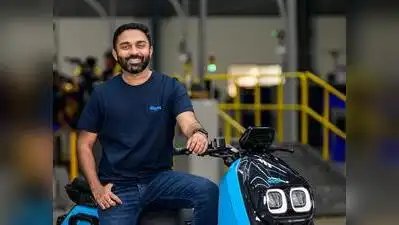
Bengaluru: Electric scooter maker River Mobility on Wednesday said it has raised $120 million in a funding round that will help it expand manufacturing capacity, widen its retail footprint and launch new products.The round comprises equity led by Elev8 Venture Partners and Claypond Capital, with participation from Singularity AMC, Anicut Capital, 360 ONE Asset, JIF Capital and HDFC AMC. Existing investors, including Yamaha Motor Corporation, Al Futtaim Group and Mitsui, also participated, alongside venture debt firms Alteria Capital, InnoVen Capital and Stride Ventures.Chief executive and co-founder Aravind Mani told TOI the funding will primarily support the company’s next phase of growth after it scaled rapidly over the past two years.“We sold our first scooter in October 2023. At that point, we didn’t have a single store. Today, we’ve grown from selling five scooters a month to around 6,000 and built a network of more than 75 stores. We are now entering the next phase of growth,” he said.About half the fresh capital will be invested in research and development, new product development and a greenfield manufacturing facility, while the remainder will fund operations and network expansion. River’s existing factory has the capacity to produce 10,000 vehicles a month, but Mani said the new plant will be “seven to eight times” larger.The Bengaluru-based company has positioned itself away from the mass-market electric scooter segment by focusing on premium utility scooters.“We market our vehicles on utility. We call it a serious scooter. Our products are priced at around Rs 1.2 lakh, and our customers typically upgrade from 125cc petrol scooters or even motorcycles. Someone considering an Ola is generally not our buyer,” he said.River currently operates more than 75 stores and plans to expand to over 200 outlets by March 2027 and more than 400 by March 2028. It also plans to launch a new product in 2027 after expanding its manufacturing capacity.“We will continue to stay in the premium utility segment. We see ourselves closer to brands like Royal Enfield and Mahindra — focused, differentiated brands — rather than chasing the mass market,” Mani said.