










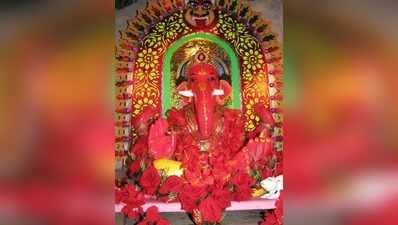
Keri: During Chaturthi, only a few families in Goa worship clay idols of Ganesha painted red. The Sardesais of Savoi Verem are among them, with the distinctive idol symbolising the family’s long association with warfare and its warrior ancestry.Villagers offer obeisance to Ganesha during the one-and-a-half-day celebrations at the Sardesais’ 300-year-old ancestral house. The house is believed to have been built between 1720 and 1725 by Ramajirao, whose death is recorded in the family tree in 1751 AD.Heritage enthusiast and Sardesai family member Sanjeev Sardesai said the family traces its origins to Bhatagram in Amona. “Over generations, Suryarao Sardesai’s family sub-divided into five main houses – Verekar Desai from Savoi Verem, Lamgaonkar Desai – Lamgao, Vishwasrao Desai – Bicholim, Murdikar Desai – Murdi and Virdikar Desai – Virdi. Our family might have been residing in Savoi Verem since the first quarter of 1700 AD,” he said.“Even today, involvement of villagers during the aarti shows it was a unified ritual, encompassing all,” he added.“Our joint family, comprising 40 families scattered in various parts of Goa, participates in the festival. The idol is procured from a local artisan. Villagers accompany us during installation and immersion too. The red colour of the idol is explained as we are considered Brahmins wielding swords. We are Khetris – Khetr symbol on wall is appeased with a sacrificial ritual on Dussera, which reflects our warrior ancestry,” said Sardesai.The family was entrusted with village administration and conferred the title of Sardesai by the Adilshah of Bijapur. The title eventually became associated with their surname, while the red Ganesha continues to reflect their distinctive family tradition.