









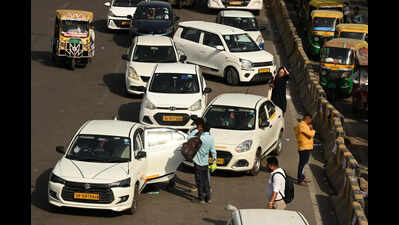
Noida: Four rounds of CNG price increases since mid-May have begun showing up in the daily travel bills of NCR commuters.Rates in Delhi have risen cumulatively by nearly Rs 6 per kg over the past two weeks, pushing prices above Rs 83 per kg — and the effect is being felt most acutely by those who commute between Noida, Ghaziabad and Delhi or Gurgaon every day.For Akriti Bansal, 29, the change crept up on her. The service manager, who commutes daily from Sector 52 to Defence Colony in Delhi, noticed her cab fares climbing from Rs 240–250 to nearly Rs 350 over the past fortnight. “At first I thought it was traffic or peak-hour surge,” she said. “But when fares stayed high regardless of the time, I realised it was the CNG hike reflecting directly in the price.”The additional monthly outgo — she estimates Rs 2,500 to Rs 3,000 more — has prompted her to cut back on smaller expenses.“Fewer food deliveries, less shopping. Things I didn’t think twice about before,” she said. She has also started taking autos more often to save money, even through the summer heat, finding the metro too crowded to be a practical option.Ajay Verma, 34, an executive who commutes from Ghaziabad’s Patel Nagar to Gurgaon, said his daily cab fare has gone from Rs 500–700 to Rs 650–800.“A difference of Rs 150 a day doesn’t sound dramatic, but when you add it up, it comes straight out of your salary,” he said. Aditya Dhull, a lawyer commuting from Sector 44 to the Delhi high court, has seen a similar jump — from Rs 257 to Rs 340 per ride — though in his case, fares are reimbursed and the impact on his own pocket is limited.For auto and cab drivers, the picture is more complicated.Ramesh Kumar, a Rapido driver from the Shahibabad area who has worked in the city for six years, said his daily earnings have dropped from around Rs 2,000 to Rs 1,200–1,500. “Passengers do not want to pay higher fares, but we are left with very little savings,” he said. With school holidays ending soon, he is already worried. “Once school reopens, my children will have demands. I don’t want them to be neglected,” Kumar said.However, drivers on app-based platforms said the fare hike has not translated into better earnings. Bookings have declined, and pooled rides — where multiple passengers share a cab to the same destination — have become more common, limiting what drivers take home even as fuel costs rise.Many commuters said the cumulative burden is hard to ignore. “It is easy to say it’s just Rs 100 extra,” said Priya Sharma, a call centre employee from Shalimar Garden who commutes to Noida daily. “But add it all up and it’s Rs 5,000 a month. Someone has to step in,” Sharma said.The hikes have been attributed to higher domestic gas prices and supply constraints. With no relief in sight, daily commuters are left managing the gap on their own.