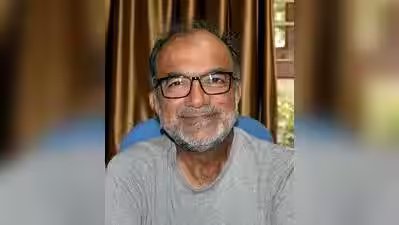









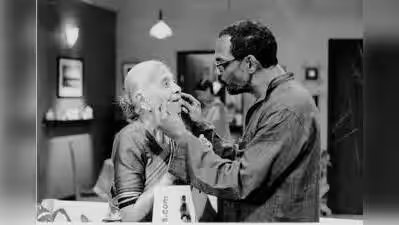
Kolkata: Though he never stood before a camera for a single Bengali film, Nana Patekar’s bond with Bengal ran deep through his unforgettable work in Hindi cinema. That rare, unspoken connection blossomed through cinematic collaborations with directors like Tapan Sinha and Goutam Ghose, and by sharing screen space with actors like Arjun Chakraborty, leaving those who crossed paths with him with lasting recollections. Their thoughts are now consumed by the many shades of Nana: the uncompromising perfectionist who demanded the smallest prop be arranged at the crack of dawn, the fierce artist capable of raging at an assistant director if it failed to arrive on time, and the deeply vulnerable soul who would quietly return the next day to apologise by cooking a meal for the entire unit.Though Ghose had known him since the 1990s, he offered Nana his Hindi film ‘Yatra’ in 2005. “I am glad that NFDC is now restoring the film. Nana had jumped when I first narrated to him his role of celebrated writer Dasrath Joglekar. On the one hand, he was a caring husband and a father of two children. On the other hand, he also transformed into the characters that he had written. Rekha had played Nana’s muse while Deepti Naval had played his wife. At that time Nana’s remuneration was approximately a crore. But he was so excited that he said a token of Rs 5 lakh would be good enough for him.”That, Ghose said, was a signature style of a serious actor who is excited when offered a good role. To understand the layers of his character, Nana would ask many questions. He would even debate over costumes with Ghose’s wife, Neelanjana, sharing dynamic bouts of tiffs and friendship. “Nana called me after Neelanjana passed away last Oct,” Ghose said.Stories regarding Nana’s temper have frequently circulated, but Ghose and the producer of his film with Tapan Sinha offer a different perspective. In 1987, Sinha cast Nana in ‘Aaj Ka Robinhood’, prompting Nana to shoot in Kolkata with his family. This was his first Hindi project in Bengal and co-starred Utpal Dutt, Satish Shah and Anil Chatterjee, among others. Recalling the experience, Gaurang Jalan of Gaurang Films—the production house behind the project—shared: “We would often meet after shooting was over. He came home, along with his family, to spend time with us. Contrary to reports of him being a difficult actor, we never had any issues while working with him in this children’s film.”Ghose views Nana’s “mercurial reaction” as the intense expression of a perfectionist who grew distressed when reality fell short of his vision. Recalling a tense moment on set, Ghose shared: “Early one day on the sets when I wasn’t around, he screamed at my assistant director, Arun Guhathakurta, since a prop wasn’t available in his shot with Rekha. Arun-da was so upset that he wanted to leave.”After Ghose scolded him later, Nana’s remorse manifested in a quiet, humbling gesture: the next morning, he went to the hotel’s kitchen and cooked ‘poha’ for breakfast for everyone, walking up to Guhathakurta with a simple “I am sorry.” “He was so invested in a character that he got impulsive if he didn’t get what he thought would elevate his performance,” Ghose reflected.Beyond the storms on set, there were tender bonds. One was his deep affection for veteran actress Bharati Devi, who portrayed his mother in ‘Yatra’. “Bharati Devi spoke Hindi well and had done many Hindi films before. Nana would eagerly rush to her side, hanging on to her stories of personal life and her days in Mumbai,” Ghose said.That enduring bond with his co-actors stayed steadfast until the very end. Just 10 days prior, actor Arjun Chakraborty—his co-star in N Chandra’s ‘Ankush’, a film about four lower-middle-class unemployed young men in Mumbai—recalled a final conversation. “He told me that Kolkata will not give me good roles and that I should shift to Mumbai and stay with his son, Malhar. I can’t believe Nana is no more,” Chakraborty said.Reflecting on his craft, Chakraborty analysed him as an “intelligent and calculative actor”. “The moment he had a script in hand, he could gauge where he could score. He ensured that he left his own signature. Nana would not give an inch to any co-actor. Among the four of us in ‘Ankush’, Nana delivered the most natural performance. He knew his position and refused to deviate from it. We were friends off camera but in front of it, he would not give room to anyone else. Later, however, he sadly grew caged within his own mannerisms.”