









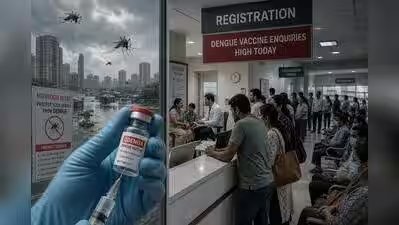
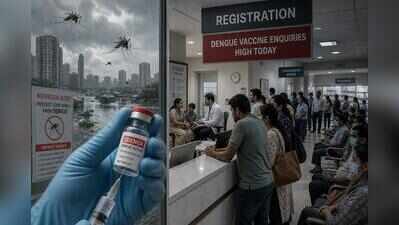
Lucknow: With dengue risk rising during the monsoon, approval of Japan-based Takeda’s QDENGA — India’s first approved dengue vaccine — has triggered a surge in enquiries at city hospitals and clinics.Though the vaccine is yet to be launched commercially, healthcare providers say they are receiving around 50 enquiries a day about its availability, eligibility, dosage schedule and expected cost.The Drug Controller General of India (DCGI) granted market authorisation to QDENGA for people aged 4-60 years. Doctors said the approval has boosted interest in vaccination ahead of the dengue season peak.Dr Anil Kumar Awasthi, director, internal medicine, Max Super Speciality Hospital, said the hospital receives up to five to six enquiries every day, with interest typically rising during the monsoon.Other private hospitals and clinics reported a similar trend. Most enquiries are from parents of schoolchildren, people who have previously contracted dengue and elderly residents.Jai Arora, a vaccine distributor, said hospitals, doctors and distributors have begun preparations for the launch. Studies have shown efficacy of about 91%, while the final dosage schedule will be confirmed at launch, he said.“Commercial rollout is expected later this quarter of this year. An Indian drug manufacturer from South India is likely to market QDENGA in India, while Takeda has signed a technology transfer agreement with Biological E for future domestic manufacturing,” he added.Arora said the vaccine completed Phase I, II and III clinical trials in India and could be launched around Sept-Oct. Pricing has not been announced yet.A senior KGMU official, who was involved in the Indian trials, said studies have shown strong efficacy, with protection appearing to last two to three years. He said KGMU enrolled a large number of adult participants and observed efficacy of 80-90% or higher.Doctors stressed that vaccination should complement, not replace, mosquito-control measures such as preventing water stagnation, using repellents and nets, and seeking prompt medical care if symptoms develop.