


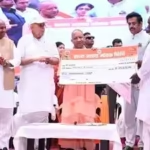


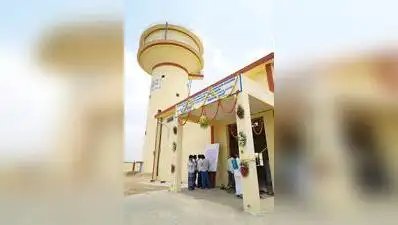
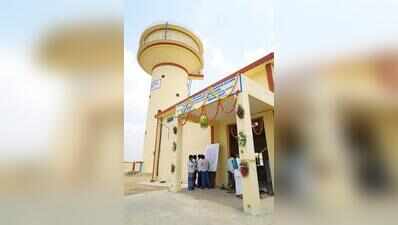
Bengaluru: Rural communities across Karnataka can now have a clearer way of knowing whether drinking water projects sanctioned in their regions and villages actually exist on the ground, with rural development and panchayat raj (RDPR) department introducing a GIS-based mobile and web application to track water assets and curb bogus bills, duplicate works and false claims.The GIS application, launched by RDPR minister Eshwar Khandre on Thursday, will geo-tag every rural drinking-water asset and record its location, physical condition, as well as its operation and maintenance status. The move is aimed at addressing a long-standing concern in villages — bills being raised for works that are either incomplete, duplicated or not carried out at all.Karnataka has more than 3 lakh rural water assets, all of which will be digitised by the end of September. According to the minister, more than 70,000 such assets have already been mapped and documented during the first phase of verification.As part of the new system, every water asset, including overhead water tanks, open wells, borewells, hand pumps, water purification units, pump houses, lakes and ponds, balancing reservoirs, check and vented dams, pipeline networks and jack wells, will be digitally mapped. This will make it easier for officials and auditors to verify whether a facility claimed in govt records actually exists at the stated location.“Post the digitisation of these assets, contractors or agencies cannot simply claim that a borewell was drilled, a tank was constructed or equipment was installed without the work being physically verified and linked to a geographical location. This will put an end to such malpractices,” Khandre said during the launch. The application has been developed in collaboration with Karnataka State Remote Sensing Applications Centre (KSRSAC) and can record locations with an accuracy of up to five metres.
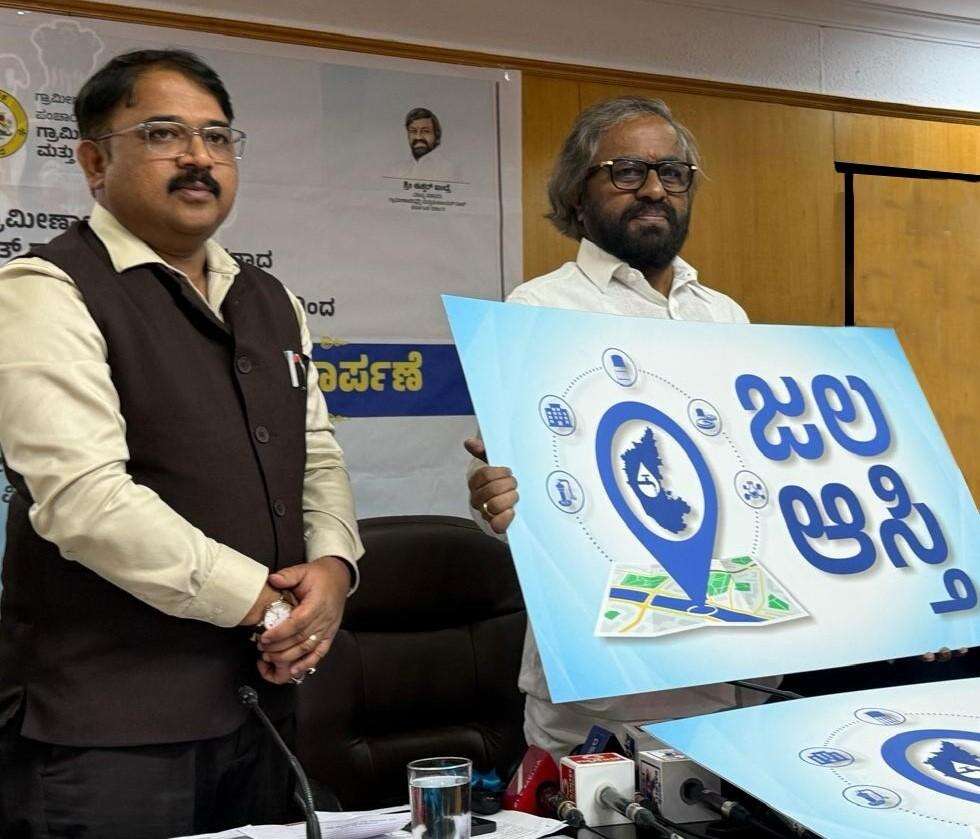
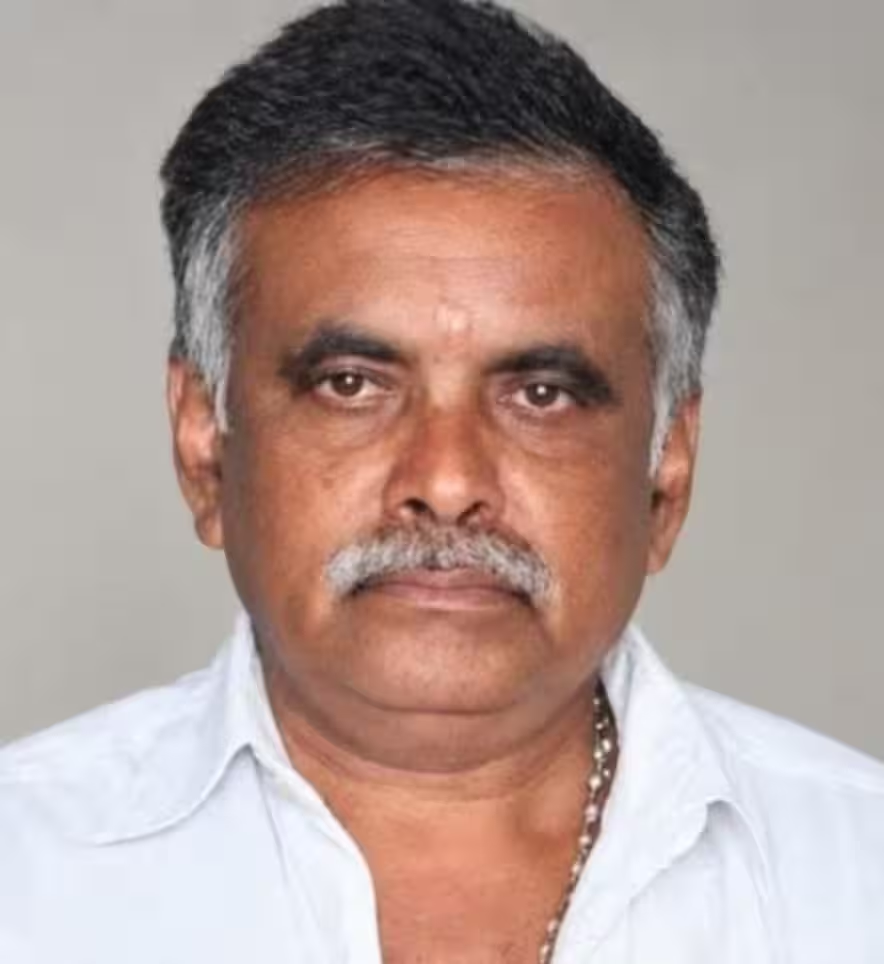
RDPR minister Eshwar Khandre launches the GIS-based mobile and web application to geo-tag and digitally track rural drinking-water assets across Karnataka in collaboration with Karnataka State Remote Sensing Applications Centre (KSRSAC)
To facilitate the mapping of these assets, the department has introduced a three-stage verification process. The first involves 100% physical inspection, with assistant engineers, junior engineers and support engineers visiting the facilities and checking their functioning. This will be followed by random checks by assistant executive engineers, who will inspect 5% of the assets. If discrepancies are found, the contractors concerned and the engineers responsible will be held accountable. In addition, executive engineers at the taluk level will randomly inspect another 2% of the assets to ensure that what is claimed on paper matches what exists on the ground.Borewell drilling will receive special scrutiny, with the application recording the location, depth drilled, depth at which pipes were installed and horsepower (HP) of the motor fitted. “This can help detect cases where contractors claim to have drilled deeper than they actually did, duplicate borewell works are shown at the same or nearby locations, or payments are made for infrastructure that does not match the work executed on the ground,” the minister said.Geo-tagging will also make third-party inspections easier and help establish whether an asset exists at the location for which the bill was raised. The minister has directed that all existing rural drinking-water assets be geo-tagged and documented. New and ongoing works will also have to be geo-tagged.Khandre has also directed zilla panchayat CEOs to disconnect electricity connections and remove pump sets from defunct borewells so that the govt does not continue paying electricity bills for non-functional assets. At the same time, the department is attempting to revive usable borewells. So far, 7,700 borewells have been recharged, with officials collecting data on govt-drilled borewells, those that have become defunct and those that can potentially be revived.The minister said the ultimate objective is to make rural drinking-water schemes more people-friendly and ensure that public money results in functioning infrastructure rather than merely paperwork. Stating that there is no shortage of funds for potable water supply, Khandre said, “There is no shortage of funds for drinking water. An advance of ₹117 crore has been released, while the CM has sanctioned ₹1 crore per Assembly constituency for drinking-water requirements.”