









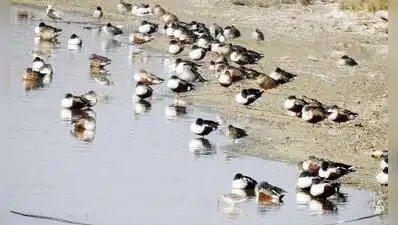
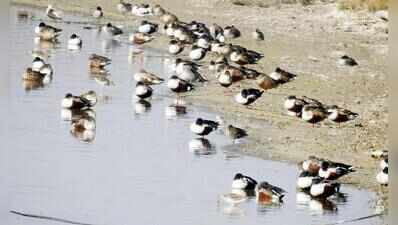
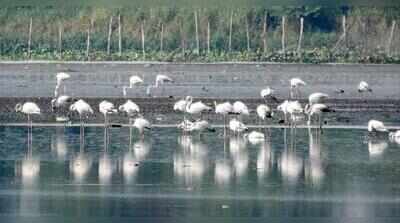
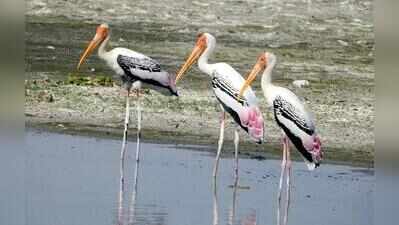
Gurgaon: Major parts of Najafgarh wetland, spread across Delhi and Haryana, are almost dry. Most of it “could dry up within a month”, potentially affecting the diversity and numbers of birds that depend on it, ecologist and ornithologist TK Roy has warned.Roy’s observations during a field visit to the wetland on Oct 7 come amid concerns over the loss of feeding grounds and habitat just as the winter migration season begins. The wetland — a key wintering ground for migratory waterbirds in Delhi NCR —was fully covered with water in Aug following good rainfall. However, large-scale illegal fishing was taking place at the time, disturbing waterbirds and prompting greater flamingos to leave the area. As water levels receded, villagers began cultivating the dried-up portions and large-scale fishing stopped.The receding water, however, has raised concerns about whether the wetland will retain enough suitable habitat to support resident birds and winter migrants in the coming weeks. Oct usually marks the arrival of long-distance migratory waterbirds. But Roy recorded only 15 migratory waterbird species and 15 resident species, both in small numbers, during his latest visit. He attributed the delayed arrival of winter migrants to climate change and expressed concern that further arrivals could be limited if the wetland continues to dry up.The migratory birds recorded included northern shoveler, northern pintail, garganey and gadwall, with around 400 ducks in total. About 350 waders were recorded, including little stint, wood sandpiper, marsh sandpiper, common sandpiper, green sandpiper, pied avocet, Eurasian marsh harrier and common coot. Around 40 wagtails, including grey, yellow and citrine wagtails, were also recorded.Resident species included Indian spot-billed duck, red-wattled lapwing, painted stork, greater flamingo, black-headed ibis, glossy ibis, Indian pond heron, grey heron, purple heron, little egret, cattle egret, great egret, black-winged stilt, white-breasted waterhen, purple swamphen and common moorhen.Roy’s observations come against the backdrop of a wider decline in migratory bird populations. Citing BirdLife International’s State of the World’s Birds report, he said 45% of migratory bird species globally had declining populations and 58% of important sites for migratory birds with available monitoring data were in poor condition.He also cited global conservation assessments indicating that 17% of waterbird species were threatened and 56% were actively declining. In Asia, he said, 60% of waterbird species were decreasing, while 52% of species in the duck, goose and swan family (Anatidae) were experiencing population declines. He attributed the trend to factors including climate change, habitat loss and inadequate conservation.Roy said Najafgarh wetland’s own bird counts reflected year-to-year variations and declines in the diversity and population of winter migratory waterbirds recorded during the Asian Waterbird Census, conducted annually in January by Wetlands International.He said the wetland had recorded high diversity and numbers of winter migratory waterbirds in Delhi NCR over several years. Continued drying could reduce its importance as a wintering ground and threaten habitat for resident species. The wetland’s condition also raises questions about the need for sustained conservation and management, particularly as its water levels recede during the period when migratory birds are expected to arrive.