








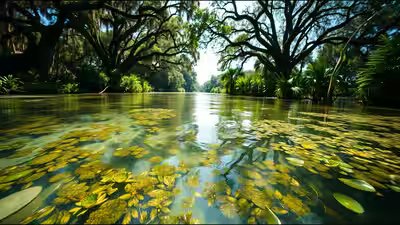
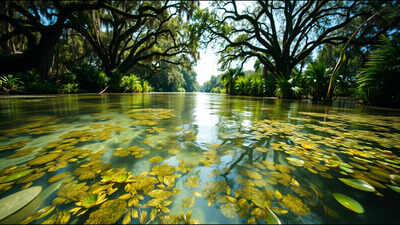
A stretch of the Saint Sebastian River in Indian River County, Florida, is getting its native vegetation back. Staff from the Peninsular Florida Fish and Wildlife Conservation Office are continuing a multi-year project with Indian River County, Friends of the Saint Sebastian River and local environmental groups to restore fish habitat along the river. The U.S. Fish and Wildlife Service says the work is taking place alongside Cypress Bend Community Preserve, a former citrus grove purchased by the county that borders the Saint Sebastian River. An earlier planting put 1,500 emergent and submerged plants directly into the river, while a later planting added 2,000 bare-root smartweed plants along the riverbank and another 8,000-plus riparian and upland plants. Smartweed is especially important because the Fish and Wildlife Service says it is the top habitat for the opossum pipefish, an imperilled fish found in the Saint Sebastian River.
Saint Sebastian River habitat restoration: invasive plants have crowded out native fish habitat
Fish and Wildlife Conservation Office staff used historic survey data and more recent monitoring to identify areas where the species had historically been found. Many of those areas were choked with invasive aquatic vegetation, according to the Fish and Wildlife Service. The agency says invasive plants crowd out native vegetation that fish use for cover and food, while their spread has coincided with a rise in nonnative fish species using the same habitat. The agency also says healthy native vegetation along the riverbank helps stabilise the shoreline and filter runoff before it reaches the Indian River Lagoon downstream. The opossum pipefish faces several other pressures. A federal assessment identifies habitat destruction, water-control structures, degraded water quality and disease among factors associated with the species’ decline. The Fish and Wildlife Service’s own account of the pipefish says drastic declines in habitat quantity and quality have contributed to its decline.The land beside the river has its own restoration history. Indian River County says Cypress Bend Community Preserve was acquired in 2006 and that the county developed a management plan covering habitat restoration and public access. The county describes the former citrus grove as dominated by ruderal vegetation and says most of the old grove requires extensive restoration to establish native vegetative communities. It has carried out roller chopping in the uplands and treated invasive plant species as part of its management of the preserve.
Native plant restoration in Florida: smartweed and other native vegetation return to the river
The Fish and Wildlife Conservation Office assisted with the removal and treatment of invasive aquatic vegetation before the restoration plantings. During the first planting trip, crews put 1,500 emergent and submerged plants directly into the river to rebuild habitat structure, along with additional riparian and upland plantings on the bank. A second planting added 2,000 bare-root smartweed plants along the riverbank and another 8,000-plus riparian and upland plants as part of the broader scrub restoration.Smartweed is the plant most directly connected to the pipefish. The Fish and Wildlife Service describes Polygonum, or smartweed, as the opossum pipefish’s “#1 habitat” and says the fish seeks the kind of structure it provides. The restoration crew used a small johnboat to carry smartweed upriver to the planting site. Photographs published by the agency show smartweed flowering following the restoration planting. The restoration also extends onto the land beside the river. Indian River County says the uplands at Cypress Bend do not currently contain native communities but provide habitat for Florida gopher tortoises. The county says many tortoises and active burrows can be observed at the preserve. Its management work has included roller chopping the uplands and treating invasive plants.
Opossum pipefish and smartweed: why native vegetation matters
The connection between smartweed and the opossum pipefish is central to the river restoration. The Fish and Wildlife Service identifies smartweed as the species’ top habitat and explains that the plants break the water’s surface while their roots remain submerged. The agency’s account says opossum pipefish can be found among this emergent vegetation. The same Fish and Wildlife Service account identifies the bigmouth sleeper, river goby and mountain mullet as native fishes that live in communities alongside the opossum pipefish. It does not need to establish that each of those species has the same conservation status as the pipefish for the habitat work to be relevant. The agency says replanting native emergent vegetation, limiting herbicide treatments in certain areas and at certain times of year, and learning more about these understudied fish are among the measures that can help.The project is still being monitored. The Fish and Wildlife Conservation Office says it will continue monitoring both native and invasive fish and plant species and is looking at additional sites where invasive removals and restoration plantings could benefit native fish. The agency has not reported a population increase for the opossum pipefish as a result of this project, so its effect on fish numbers remains to be measured. What is documented is the removal of invasive aquatic vegetation, the planting of native vegetation along the Saint Sebastian River, and the addition of smartweed specifically because of the habitat it provides to the pipefish.