





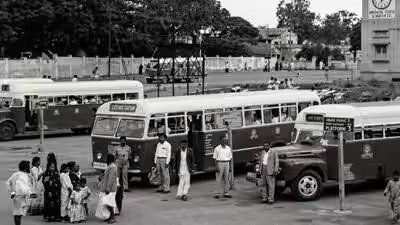
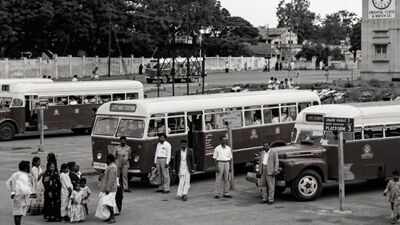
Bengaluru’s roads were still dominated by horse-drawn vehicles and other traditional forms of transport when a new machine appeared at the beginning of the 20th century. In 1901, the city recorded its first reported sighting of a car, marking the arrival of motorised transport on its roads. The change was remarkably quick. By 1903, cars were being seen regularly on Bengaluru’s streets, although they remained out of reach for most residents. At the time, owning a motor car was largely limited to the Mysore royal family, wealthy households and senior government officials.
A new machine arrives on Bengaluru’s roads
The reported 1901 sighting came several years after cars had appeared in some other major Indian cities. Calcutta had recorded a car sighting in 1897, while Bombay saw one in 1898. An earlier sighting had also been reported in Chennai, although that account was unconfirmed. For Bengaluru, the arrival of the automobile came at a time when the city was beginning to acquire several features of a modern urban centre. The railway had already connected Bengaluru to the wider network, with the first railway line linking the Cantonment to Jolarpettai opening in 1864. The car represented another change: unlike a horse-drawn carriage, it did not depend on an animal to move through the city.
Cars were initially for the privileged
The first automobiles were not vehicles that ordinary Bengaluru residents could simply buy or use for daily commuting. According to an account of the city’s transport history, cars in the early years were mainly owned by the royal family, a few affluent families and senior bureaucrats. Their limited ownership reflected the cost and novelty of the machines. The roads themselves also posed problems. An account of Bengaluru’s early motor cars says the city’s roads were not well suited to them, leading to frequent breakdowns and punctures. In other words, the arrival of the automobile did not immediately mean that Bengaluru had roads designed for motor traffic. The new machines had arrived before the city’s infrastructure had fully adapted to them.
From a curiosity to a regular sight
What makes the period particularly striking is the speed of the transition. The first reported sighting was in 1901. By 1903, motor cars had become a common sight on Bengaluru’s roads, according to the transport-history account. A separate chronology of Bengaluru also records 1903 as the year the first motor cars were seen on the city’s roads. It notes that the Maharaja of Mysore, the Dewan and some European officials were among the early users. The automobile was therefore still associated with a small section of society, but its presence was becoming increasingly visible. For residents accustomed to horse carts and other forms of transport, the sight of a self-propelled vehicle moving through the city would have represented a very different kind of urban mobility.
Bengaluru begins building a car ecosystem
The automobile’s arrival did not remain limited to imported vehicles and private owners. By 1906, cars were reportedly being made in Bengaluru at a factory that employed about 150 people and built both cycles and cars. One vehicle produced there was later placed at the disposal of the Prince of Wales. It was described as a three-seater with a 6.5-horsepower, water-cooled engine and a claimed top speed of 30 miles per hour. This was only a few years after the first reported car had appeared on the city’s roads. The development suggests that Bengaluru was moving from simply seeing automobiles to developing businesses and skills around them.
The first showroom came a decade later
The city’s automobile trade became more organised in the following decade. In 1911, the first car showroom and workshop was established in the Kannan Building on South Parade Road, now MG Road. It was set up by Englishman HE Ormerod, a mechanical engineer and automobile enthusiast. Ormerod became the sole agent for Calthorpe and Empire automobiles and also displayed models from manufacturers including Ford and Studebaker. The showroom reportedly attracted crowds who came to see the new machines. By then, the car was no longer merely an unusual sight on Bengaluru’s roads. An ecosystem of sales, servicing and automobile businesses was beginning to take shape.
From horse carts to motor cars
The transformation did not happen overnight. Horse-drawn transport continued to be an important part of Bengaluru’s mobility for decades. But the first car sighting in 1901 marked the beginning of a change that would eventually reshape the city’s roads. Within just a few years, Bengaluru had moved from seeing its first reported automobile to having cars regularly on its streets, early local manufacturing and, by 1911, a dedicated showroom and workshop. More than a century later, the contrast is striking: a city now known for its enormous volume of motor traffic once regarded the automobile as a new and unusual sight on its roads.