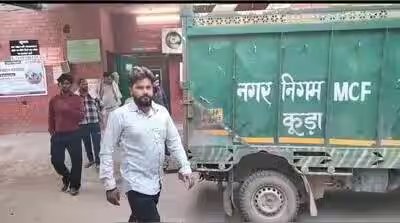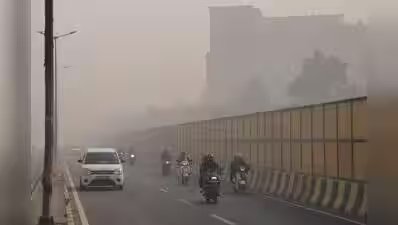








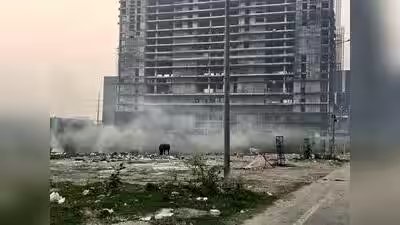
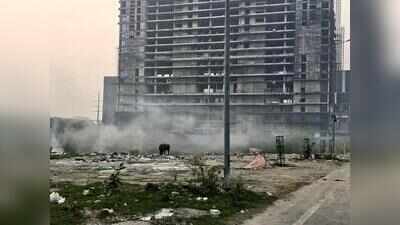
Gurgaon: With winter setting in and air quality under pressure across NCR, Commission for Air Quality Management (CAQM) has directed municipal bodies in Gurgaon, Faridabad and five other Haryana cities to deploy dedicated personnel at vulnerable locations, including marketplaces, to prevent open burning of waste and biomass.The directions were issued during a review meeting chaired by CAQM member secretary Tarun Kumar Pithode with urban local bodies of Gurgaon, Faridabad, Sonipat, Rohtak, Karnal, Panipat and Manesar on Friday.The commission asked civic bodies to ensure complete removal of waste from streets and public spaces, expedite the remediation of legacy waste at dumpsites and take measures to prevent landfill fires. It also stressed the need for effective implementation of its directions on municipal solid waste management.A key focus was preventing open fires during winter, when people may burn wood, leaves and waste to stay warm during the night. CAQM asked municipal bodies to provide heaters at night shelters and ensure security guards and workers are discouraged from resorting to open fires. It also directed civic bodies to strengthen community participation for prompt waste removal and visible corrective action.Separately, Haryana State Pollution Control Board’s (HSPCB) regional office in Gurgaon (north) conducted an awareness drive at Sector 14 market, urging shopkeepers and traders to stop burning waste in the open and discontinue the use and sale of banned single-use plastic items.During the drive, assistant environmental engineer Kamesh and junior environmental engineer Raghvendar explained the harmful effects of open waste burning on air quality and public health. Traders were warned that violations could invite legal action. They were also asked to switch to alternatives such as cloth, jute and paper bags, hand over waste only to authorised collectors, and keep their shops and surrounding areas clean.The drive was organised as part of the board’s ‘Together for a Clean, Green Haryana’ campaign.Open burning of mixed municipal waste and biomass releases particulate matter and other harmful pollutants. Burning waste containing plastic can also release toxic emissions. The impact can be more pronounced during winter, when lower temperatures, reduced mixing heights, temperature inversion and stagnant winds can restrict the dispersion of pollutants, allowing emissions from multiple sources to accumulate closer to the ground.While CAQM’s directions focus on improving municipal waste collection, landfill management and surveillance at vulnerable locations, HSPCB’s awareness drive seeks to curb open burning and the use of banned plastic items at the source. Sustained monitoring, timely waste collection and action against violations will be crucial to ensuring these measures have a lasting impact.