







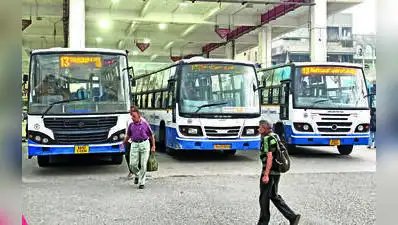
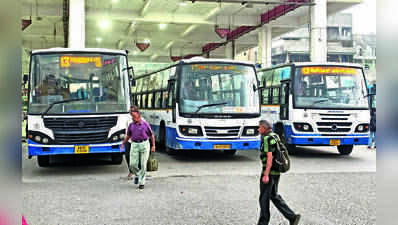
BENGALURU: The Karnataka govt’s decision to increase BMTC bus fares has triggered widespread resentment among regular commuters, many of whom say they feel “betrayed” for choosing public transport over private vehicles.Commuters argue that the hike disproportionately affects short-distance travellers, who will now have to pay at least Rs 10 more even for journeys of one or two stops. They fear the increase could discourage bus usage and push more people towards two-wheelers, carpooling and private transport, further worsening Bengaluru’s already severe traffic congestion.Several passengers have also questioned the rationale behind the fare revision at a time when households are grappling with rising living costs and stagnant incomes. Many have linked the hike to the financial burden of the govt’s welfare guarantee schemes, arguing that regular fare-paying passengers are being made to bear the cost.
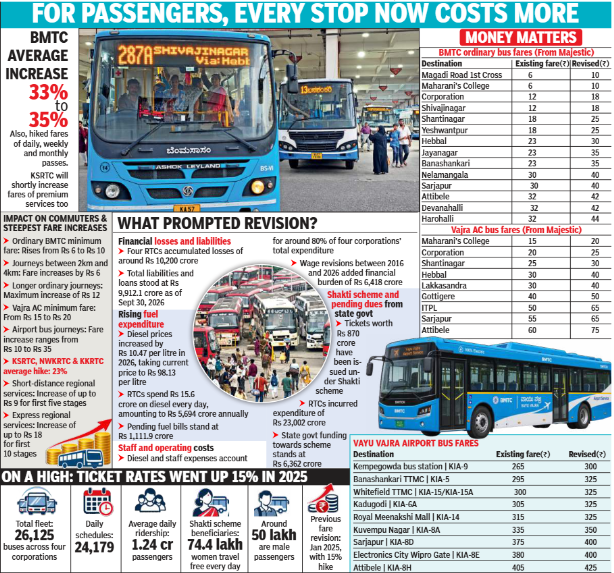
Commuters have also pointed to persistent problems with BMTC services, including overcrowding, inadequate fleet strength and insufficient bus frequency on several routes. They say the fare increase is difficult to justify when the quality and availability of services remain major concerns.“A lot of us who have bought monthly bus passes find that there are no buses on several routes in the evenings, particularly on Saturdays and Sundays. Despite having a pass, we are forced to take an AC bus and pay extra or hire an autorickshaw, which means spending again,” said a commuter.Ashwin, regular BMTC commuter (Chikkabanavara–Peenya)On some routes, such as Majestic to Banashankari, BMTC fares are now comparable to Metro fares. This move will only drive people away from buses. For someone travelling just one or two stops, spending Rs 12 to Rs 15 on a ticket is unreasonable. Short-distance commuters will be among the worst affected. At a time when the job market is already under pressure, this is another financial burden on the middle class.A G Rangarajan, commuter (Battarahalli–Jayanagar)The fare hike will only push more commuters away from public transport. Many will shift to private buses, carpooling and personal vehicles, defeating the very purpose of strengthening BMTC. Instead of burdening fare-paying passengers, the govt should review its free-travel policy. Govts cannot keep passing on costs to ordinary commuters. People are tired of repeatedly raising these concerns without receiving any response.Narasimhappa T V, advocate and daily commuterThis is the wrong time for such a decision. Prices of almost every essential commodity have increased, but salaries have not risen proportionately. People are already struggling with mounting household expenses. The govt should have considered the impact on ordinary citizens before taking this decision. The fare hike is frustrating and could influence public opinion in the future.Vinay Sreenivas, Bengaluru Bus Prayanikara VedikeThe govt should roll back the hike. Most bus users belong to the working class, and this increase will make their daily commute even more difficult. Thousands of crores are being spent on infrastructure projects that primarily benefit private vehicle users, while bus commuters are being penalised. The hike is both unjust and unscientific, as it could encourage greater use of two-wheelers and cars, adding to congestion and pollution.S Babu, president, Vijayanagar Street Vendors’ AssociationThis fare hike is completely unscientific. Today, a commuter travelling from Vijayanagar to Majestic can reach the destination in eight to 10 minutes by Metro, paying around Rs 19 with a Metro card. In comparison, a BMTC bus journey now costs about Rs 25 and takes more than 30 minutes. Naturally, commuters who are aware of this difference will shift to the Metro. Instead of attracting passengers, BMTC risks driving them away and suffering further losses. The govt cannot keep increasing bus fares and the prices of essential commodities without a corresponding rise in wages. Every such hike makes life more difficult for ordinary citizens and the working class.WHAT COMMUTERS FEAR THE HIKE WILL LEAD TO*More commuters shifting to private vehicles and two-wheelers.*Reduced bus usage, particularly for short-distance journeys.*Increased traffic congestion on Bengaluru’s roads.*Higher pollution levels due to greater dependence on private vehicles.*An additional financial burden on middle-class and working-class households.*Growing public resentment over the govt’s transport policies.*Possible political backlash from daily commuters.