





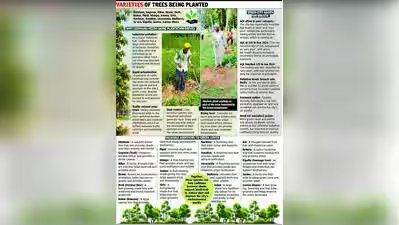
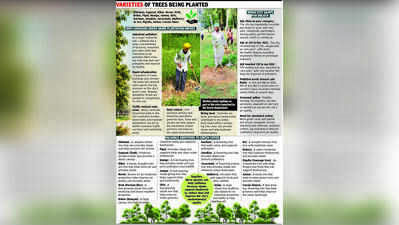
Payal.DhawanLudhiana: If all goes well, Ludhiana may get a significant dash of green to break the severe grey of its industrial landscape. This year, the divisional forest department is going big with the monsoon plantation drive. The target is to plant about 12 lakh saplings. Of these, the forest department is providing around 7 lakh to NGOs and other public sector offices and planting the remaining on its own.The green drive won’t end here. The forest department also plans to build micro-forests in judicial complexes and hospitals/clinics under the govt land category. It has identified six judicial complexes and 10 hospitals/clinics for this.As of now, things seem optimistic. According to data of plantation drives conducted previously, the survival rate of saplings for the year 2025 is 90%. It was 82% for 2024 and 2023.Divisional forest officer (DFO), Ludhiana Rajesh Kumar Gulati told TOI, “This monsoon, the dept aims to plant about 12 lakh saplings in Ludhiana. The forest department also provides saplings to other govt departments and NGOs. Such plantations are supervised by the deputy commissioner. Besides, the department plants saplings near canals, highways and on forest and non-forest land.”He explained that forest land means areas designated as such in revenue department records, such as the Mattewara forest area. Under the non-forest land category, the department organises plantation drives in schools and industries.Elaborating on the sapling survival rate of 90% in 2025, Gulati said third-party monitoring confirmed this. He said the plants are geo-tagged to keep records and check survival.Officials further added that the department would plant about 1.1 lakh saplings on non-forest govt land and about 3.5 lakh on forest land.Box: Varieties of trees being plantedShisham, Sagwan, Kikar, Neem, Drek, Bohar, Pipal, Mango, Jamun, Siris, Kachnar, Amaltas, Jacaranda, Mulberry, Arjun, Bel, Behera, Kigelia, Jamoa, Cassia Gluca.WHY LUDHIANA NEEDS MORE PLANTATION DRIVESIndustrial pollution: As a major industrial hub, Ludhiana has a large concentration of factories, foundries and other units that contribute to air pollution. More trees can help trap dust and pollutants and improve air qualityRapid urbanisation: Expansion of roads, buildings and commercial areas has reduced open spaces and put pressure on the city’s green cover. Regular plantation drives are needed to compensate for this lossTraffic-related emissions: Heavy vehicular movement adds to the city’s pollution burden. Green belts and roadside plantations can act as buffers between traffic corridors and residential areasDust control: Construction activity and industrial operations generate dust. Trees and shrubs can help reduce the movement of dust particles and improve the urban environmentRising heat: Concrete surfaces and dense construction contribute to the urban heat-island effect. Increasing tree cover can provide shade and help moderate temperaturesBENEFITS OF TREES TO BE PLANTEDShisham: A valuable timber tree that also provides shade and helps prevent soil erosionSagwan (Teak): Produces durable timber and provides a dense canopyKikar: A hardy, drought-tolerant tree that helps bind soil and provides shadeNeem: Known for its medicinal properties; helps improve air quality and provides shadeDrek (Persian lilac): A fast-growing shade tree with medicinal and insect-repellent propertiesBohar (Banyan): A large canopy tree that provides extensive shade and supports biodiversityPipal: Provides shade and supports birds and other urban biodiversityMango: A fruit-bearing tree that provides shade and supports pollinators and wildlifeJamun: A fruit-bearing, shade-giving tree that helps support birds and biodiversitySiris: A fast-growing shade tree that helps improve urban greeneryKachnar: A flowering tree that adds colour and supports pollinators.Amaltas: A flowering tree that provides shade and attracts pollinators.Jacaranda: A flowering avenue tree that provides shade and enhances urban landscapesMulberry: Provides fruit and supports birds and other wildlifeArjun: A large shade tree traditionally valued for its medicinal properties and ability to help stabilise soil.Bel: A drought-tolerant fruit tree with medicinal valueBehera: A native medicinal tree that supports biodiversity and provides shadeKigelia (Sausage tree): An ornamental tree with large flowers and fruits that can support biodiversityJamoa: A hardy tree that adds to urban green cover and provides shadeCassia Glauca: A fast-growing, flowering tree that adds greenery and helps improve the urban landscapeTogether, these species can help Ludhiana increase shade, support biodiversity, reduce dust and improve the city’s environmental quality.