



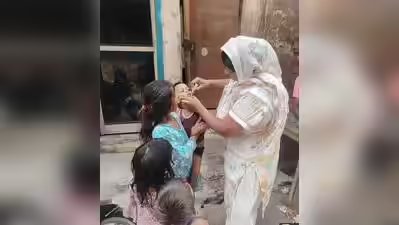
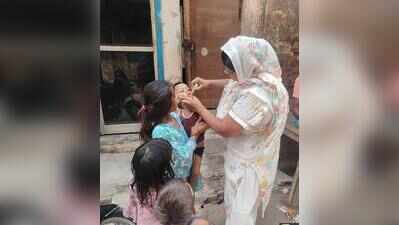
Ghaziabad: The health department has intensified pulse polio vaccination after traces of vaccine-derived poliovirus type 1 were detected in sewage samples collected from Dhundahera sewage treatment plant during a routine environmental surveillance in June.Health authorities have clarified that the detected strain was non-virulent and did not indicate the return of wild polio virus or constitute a public health emergency.According to health officials, the oral polio vaccine contains a weakened, live virus, and vaccinated children can temporarily shed it in their stool. In densely populated areas with poor sanitation, this weakened virus can enter the local sewage network. A positive sewage sample doesn’t mean an outbreak or that wild polio has returned, but serves as an alarm for local authorities to step up door-to-door immunisation drives.India was officially declared polio-free by the World Health Organisation (WHO) in 2014, with the last case of wild poliovirus in Howrah, West Bengal, in Jan 2011. Vaccine-derived poliovirus was reported in NCR in Dec 2015 and later in Kolkata in April 2022.In Ghaziabad, more than 7.11 lakh children have been administered polio drops this year through door-to-door campaigns covering nearly 12.9 lakh households during the five-day drive across the district. Following the June reports, however, more than 100 health teams have been deployed to conduct door-to-door screening of children under 5 years in 12 affected localities, including Shastri Nagar, Raj Nagar, Daulatpura, Ghukna, Hindon Vihar, Kaila Bhatta, Mirzapur, Vijay Nagar, and Kharati Nagar, to plug immunisation gaps and prevent any potential transmission.District surveillance officer RK Gupta said the city will have more than 3,000 vaccination booths, instead of 1,700, this year to ensure that not a single child is left. All urban primary health centres will also provide pulse polio vaccination throughout the year, beyond the routine booth-based immunisation drive.“This year, we have adopted a four-tier structure comprising the medical officer-in-charge, sector in-charge, supervisor and team worker. Around 150 sector in-charges have been deployed across 27 sectors to closely monitor household-level coverage,” Gupta said.Special attention is also being given to children who missed their polio doses during the previous campaign. Official data showed that more than 10,000 households could not be covered last year, leaving several eligible children unvaccinated. This year too, nearly 11,000 households could not be reached during the drive.“In most cases, either the families were not at home, or parents refused to let their children receive the polio drops. We are maintaining a record of all such households, and area in-charges will revisit them to ensure every eligible child is covered. Parents whose children have missed the dose are also being urged to visit their nearest PHC for vaccination,” Gupta said.Chief medical officer Dr Sachin Vaishya urged parents to ensure that children who missed their polio dose are vaccinated without delay. “If any child has missed receiving polio drops for any reason, parents should contact health department teams or visit the nearest health facility. Not a single child should be left out, as the safety of every child is the cornerstone of a polio-free society,” he said.