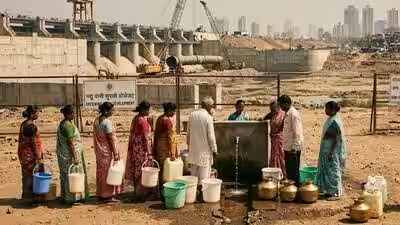









Mumbai: The city is witnessing increasing anxiety as water reserves fall due to the absence of rain, and the BMC enforces strict water cuts as lakes dry up. A comparable situation occurred in 2009. That year, after the monsoon’s delayed arrival, the civic body first introduced a 10% water cut on June 9. When the city still did not receive rain, the cut was raised to 20% eleven days later.It was then pushed up to 30% on July 7 because rainfall remained scanty. The lakes began to replenish towards the end of July and through Aug and Sept 2009. Even by the close of the monsoon, they had not filled to capacity, and the BMC maintained a 15% cut until mid-2010.On July 4, 1966, the then-named Bombay Municipal Corporation declared an unprecedented 50% reduction in the city’s water supply after a prolonged dry spell. At the time, the standard supply stood at 210 million gallons (955 million litres) a day. Mumbai was now close to breaking point.The waterworks department reduced supplies to the Bombay Port Trust, industries along the pipeline, and certain localities in neighbouring Thane and Bhiwandi. The hydraulic engineer D R Bhise said the cuts were required as the rains had failed in the catchment areas. However, this marked only the start of the city’s difficulties. Restaurants, dhobi ghats, laundries and clubs suffered severely. Aarey Milk Colony asked its departments to use less water for bottle-washing.With the water emergency worsening in Mumbai because rainfall was missing in the catchment region, governor of Maharashtra P V Cherian issued an ordinance on July 11, 1966. It armed the state govt with emergency powers to conserve water for domestic purposes and directed any local authority to regulate or prohibit the supply to any undertaking.The BMC set up six squads to act against people illegally drawing water by tapping fire hydrants. Municipal staff were attacked when they stopped some individuals from taking water from the hydrants. Meanwhile, the Tulsi lake level was down to barely 2 ft; Vaitarna was at 6 ft, and Tansa at 5.5 ft.To propitiate the rain God, Varuna, the South Indian Bhajana Samaj arranged Varuna Japa at its Matunga premises for four days in the first week of July 1966. The reverend Longinus Pereira, bishop auxiliary of Bombay, appealed for prayers for rain across all parishes in the archdiocese. He directed “penitential processions”, reported TOI on July 8 that year. Soon after, the state cabinet considered a proposal for voluntary evacuation from Bombay. Yet by the third week of July, 1966, the govt abandoned plans to close industries and educational institutions as the monsoon revived.