







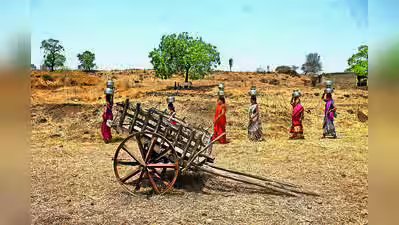
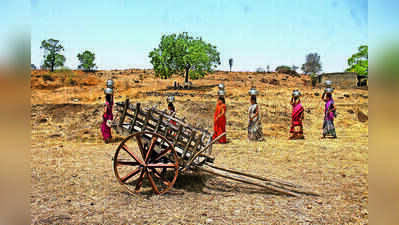
Pune: A drinking water crisis is intensifying in Pune revenue division with data showing 345 villages and 2,071 small hamlets – across four districts – were now completely dependent on water tankers. A total of 391 tankers have been deployed by the administration, officials said, adding that more than 7.3 lakh people and 2.26 lakh livestock were dependent on the vehicles for daily drinking water.Solapur has emerged as the worst-affected district, accounting for 242 tankers, nearly 62% of the total fleet. “The situation is becoming grimmer with each passing day,” said S Karthikeyan, district collector of Solapur.“There’s no hope of groundwater levels recovering here,” he said, adding that another worry was the drop in the number of tanker filling points. “Demand for water tankers is going to increase so we’ll have to have multiple points from where villages are supplied. The water crisis has spread to the entire district. We’ll have to manage operations strategically,” he said.Karthikeyan added the number of people relying on tankers was high. “If this is the number now, we’ll need several more tankers by early next year.”Solapur has 207 villages and 1,126 hamlets – all currently dependent on tanker water. Earlier, most of these areas were using surface water sources for drinking and irrigation, but many of those sources have dried up.Farmers in the district said securing their day’s drinking supply has become a challenge. “The entire day’s routine is affected if even one tanker is delayed. People are rushing to meet the vehicles,” said Sharad More, sarpanch of Tulshi village in Madha tehsil.In Sangli district, where officials have deployed 74 tankers to 66 villages and 479 hamlets, farmers said they were having to choose between water for their livestock and themselves. “There’s very little water available locally,” said Shankar Waghmode, a farmer from Sangli’s Jat taluka, one of the worst-hit regions in Sangli, currently being supplied by 66 tankers, or 90% of the trucks to Sangli district.“The water scarcity has hit our farms and households. We have to split drinking between us and our cattle. Conditions are very bad this year,” Waghmode said.Satara district has 53 tankers supplying water to 60 villages and 328 hamlets. Man taluka accounts for 44 tankers. “We may not be able to hold on to our cattle. We already suffered farm losses and now arranging water for our livestock has become an additional financial burden,” said Sachin Pandhare, a farmer from Man taluka.Kolhapur so far is the only district in the division where water tankers have not been deployed.“It’s the drought-prone regions that have been hit the hardest, especially the rural pockets of Solapur, Sangli and Satara,” said a senior official from the divisional commissioner’s office. “Seven lakh people are now relying on water tankers so the challenge is not deployment of vehicles, but ensuring thousands of people in scattered hamlets have water to drink. This crisis is moving beyond agricultural distress,” the official said.