








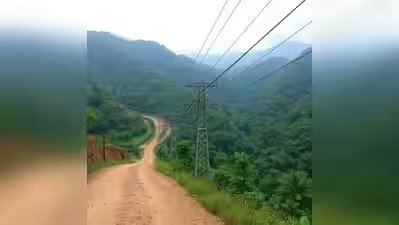
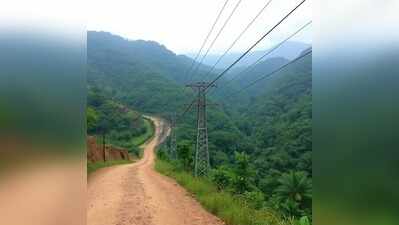
Panaji: The Union environment ministry’s Regional Empowered Committee (REC) has granted in-principle approval for diversion of forest land in Goa and Karnataka for the pending 400kV Goa-Tamnar transmission line project, clearing a key hurdle for the inter-state power link.The project requires diversion of 29ha of forest land in Goa’s Bhagwan Mahavir Wildlife Sanctuary and National Park at Mollem and 32ha in Karnataka’s Kali Tiger Reserve. A total of 7,461 trees will be felled in Goa and 13,954 in Karnataka. Compensatory afforestation for both states has been proposed in Karnataka’s Haveri and Gadag districts.In 2024, Karnataka’s forest department had stalled clearances for the Goa-Tamnar Transmission Project Ltd (GTTPL), citing diversion of Western Ghats forest land. The project requires 77ha of forest land in Goa and 174.6ha in Karnataka. Subsequently, the Goa component secured clearance from the National Board for Wildlife’s standing committee.At its latest meeting, the REC noted that wildlife clearance has also been granted for diversion of 40.7ha within the Kali Tiger Reserve, comprising 32ha of forest land and 8.7ha of buffer area.The transmission line is expected to strengthen Goa’s power infrastructure and reduce dependence on the Western Power Grid. The pending Narendra-Narendra line, which completes the circuit up to Xeldem, forms a crucial component of the project.The 400kV double-circuit quad transmission line will connect the existing grid at Narendra in Karnataka’s Dharwad district to Xeldem in Goa.In Goa, the transmission line will stretch 19.4km, of which 14.4km passes through forest and wildlife areas. Of the proposed 55 towers, 48 will be located within these areas.In Karnataka, 38km of the 85.6km alignment, along with 107 of the proposed 223 towers, will pass through forest and wildlife areas.The REC imposed several conditions while granting approval. It noted that construction, tree felling and transportation of forest produce could disturb wildlife, cause habitat loss, trigger soil erosion and lead to siltation of perennial rivulets, particularly during the monsoon.The committee directed GTTPL to prepare a site-specific soil and moisture conservation plan to address these concerns. It also asked the agency to submit a wildlife mitigation plan, approved by the chief wildlife warden of each state, as endangered species are present in and around the diversion areas.In addition, the REC directed the agency to prepare, in consultation with state forest departments, a plantation plan for dwarf and preferably medicinal tree species within the transmission corridor.The committee also said the actual number of trees proposed for felling and pruning must be verified by both states and uploaded on the Centre’s Parivesh portal.Goa and Karnataka informed the REC that the proposals had been modified in line with recommendations of the Supreme Court’s Central Empowered Committee.The Goa-Tamnar transmission line was one of three centrally backed linear infrastructure projects through Goa’s protected areas that sparked the Save Mollem movement.