







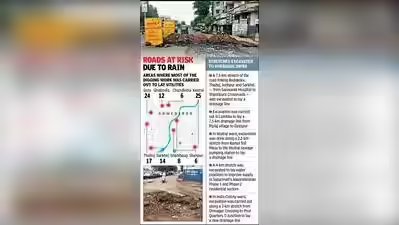
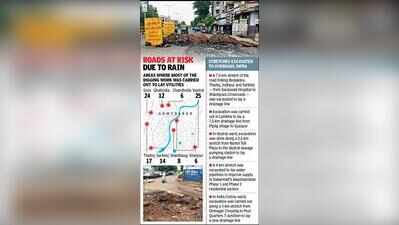
Ahmedabad: Freshly rebuilt roads across Ahmedabad will face their first real test this monsoon. More than 220 roads across Ahmedabad have been flagged by Ahmedabad Municipal Corporation as vulnerable to settlement or cave-ins during the monsoon after extensive underground utility works were carried out over the past two years.The highest concentration of such roads is in Vastral, where 25 stretches have been identified, followed by Gota with 24. Thaltej has 17 vulnerable roads, Sarkhej 14, Ghatlodia 12, Shahibaug eight, and Shahpur and Chandlodia six each. Together, these eight localities account for more than half of the 220 roads where stormwater, drainage and water supply projects required large-scale excavation before being backfilled.Officials fear that the first few spells of heavy rain could cause the soil beneath some of these stretches to settle, leading to depressions or even sinkholes.The list comes as the AMC continues to execute one of its largest underground infrastructure upgrades. Civic officials said over 100 major projects worth more than Rs 3,000 crore are under way across the city, involving new stormwater drains, replacement of ageing drainage pipelines and expansion of the water distribution network.As of March, the corporation is executing 48 stormwater projects worth around Rs 1,080 crore. It is also carrying out more than 30 drainage rehabilitation and replacement projects costing over Rs 1,500 crore, besides water supply works worth more than Rs 600 crore.Once underground pipelines are laid, the excavated stretches are backfilled and resurfaced. However, officials said freshly restored roads remain susceptible to settlement, particularly after the first heavy showers, as the soil beneath continues to compact.The concern has already surfaced this year. Even before the official onset of the monsoon, unseasonal rain triggered road subsidence and sinkholes at a few locations, prompting the civic body to identify vulnerable stretches in advance.As a precaution, the AMC has started installing warning boards at locations where roads were rebuilt after underground utility works. The signs are intended to alert motorists and pedestrians about the possibility of road settlement during the rainy season while officials monitor the stretches and undertake repairs wherever required.