





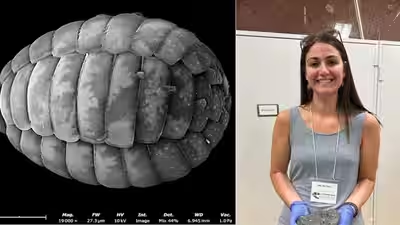
A scientist turned an $80 motel room into a makeshift lab; then she discovered two new species of microscopic amoebae |

A scientist turned an $80 motel room into a makeshift laboratory during follow-up fieldwork in North Carolina after first spotting two unusual microscopic cells on a family vacation. Julia Van Etten, an evolutionary biologist who joined the University of Maryland as an assistant professor in 2026, made the initial discovery in May 2021 while visiting…

Read More

Floating solar panels sharply reduce light reaching the seabed in French Polynesia while having no detectable effect on lagoon water temperature |

Floating photovoltaic (FPV) platforms in a French Polynesian lagoon substantially reduced the amount of light reaching the seabed but produced no detectable change in water temperature, according to a year-long study. Researchers monitored four FPV platforms and a control area in the lagoon of Tumaraa on Ra’iātea from August 2024 to September 2025. The platforms…

Read More

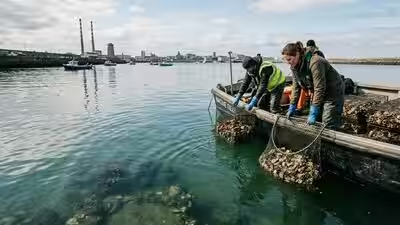
Dublin Bay had no native oysters for 200 years; 18,000 were placed in its harbour as a project began rebuilding a lost reef |

For more than two centuries, native oysters were absent from Dublin Bay. That changed with a restoration project that is now placing thousands of the shellfish back into the harbour at Dún Laoghaire. As reported by Irish Times, in November 2025, more than 18,000 native Irish oysters were introduced in floating baskets along the middle…

Read More

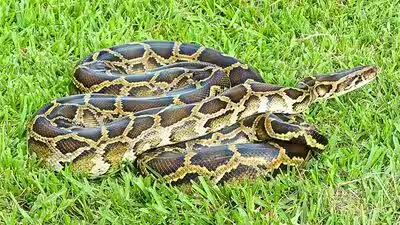
Scientists developed a DNA test for four invasive snakes in Florida; Burmese python DNA was detected in water five minutes after exposure |

Scientists have developed an environmental DNA test that can detect four invasive constrictor snakes in Florida from a single sample. The tetraplex digital PCR assay was designed to identify Burmese pythons, northern African pythons, boa constrictors, and rainbow boas, which overlap in distribution and habitat in South Florida. The study found no cross-amplification among the…

Read More

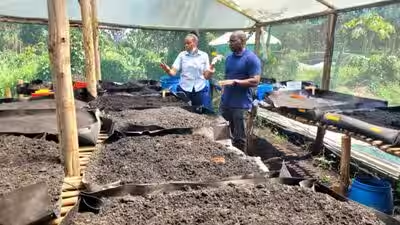
Kenyan researchers are turning human poop from informal settlements into fertiliser; 1,000 farmers could benefit from the unusual waste-to-food cycle |

Hope Ochieng and Charles Midega in the drying greenhouse at KIYA. Image Credit: Rebecca Nelson/Cornell Chronicle Kenyan researchers are turning human excreta collected from informal settlements in Kisumu into an agricultural fertiliser designed to improve soil while reducing pollution. The product, called KIYA Gold, is being developed by Cornell researchers and Kenyan partners as a…

Read More

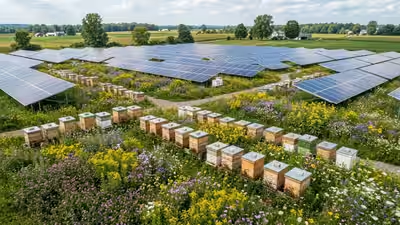
this ohio solar farm is now home to 3 million honey bees across more than 50 hives, turning an energy site into a home for pollinators |

An Ohio solar site is becoming a working landscape for more than just electricity generation. At Big Plain Solar in Madison County, more than 3 million honey bees are being supported across a site that includes solar panels and managed beehives, as reported by Leeward Renewable Energy. The project works with veteran-led beekeeping organisations to…

Read More

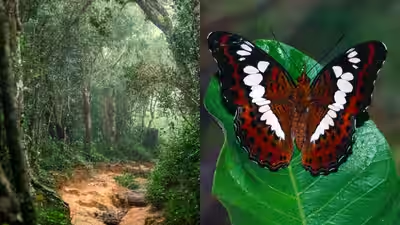
In 2012, scientist Julian Bayliss spotted an untouched rainforest inside Mozambique’s Mount Lico on satellite images; in 2018, a team climbed a 125-metre cliff and confirmed a new butterfly species

According to BBC Earth, Bayliss has spent years using satellite imagery and remote-sensing technology to locate environments that are difficult or impossible to reach on foot. His work has included the discovery of other isolated rainforests in southern Africa, including Mount Mabu. Mount Lico immediately stood out. From thousands of miles above the ground, Mount…

Read More

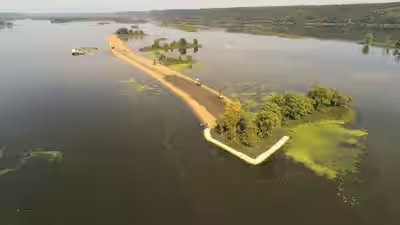
Mississippi River islands near Iowa have been disappearing; a $40 million project is now rebuilding the habitat with dredged material and is designed to protect or restore about 630 acres of river and backwater habitat

Mississippi River islands near Iowa are disappearing; $40M project to restore 630 acres of habitat (Image Credit: U.S. Army Corps of Engineers, St. Paul District) Islands and backwaters along the Mississippi River near Guttenberg, Iowa, have been gradually disappearing as erosion, flooding, wind and waves wear away their shorelines. Now, a major habitat restoration effort…

Read More

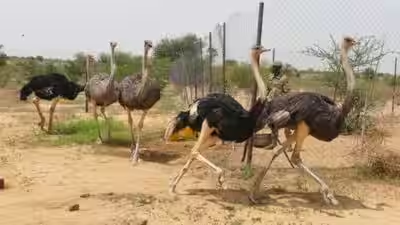
Niger releases 8 North African ostriches into the wild after the species disappeared from the country; the last wild birds vanished in 2004 |

Image Credit: Sahara Conservation Niger has released eight North African ostriches into the wild, bringing the species back to an area where it had disappeared decades ago. On 2 September 2026, 5 females and 3 males were released into the Gadabedji Biosphere Reserve, marking the first reintroduction of the species there. The move follows years…

Read More