









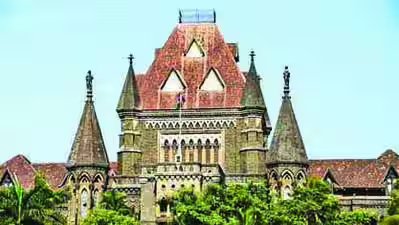
Pune: Bombay high court on Wednesday issued notices to state govt and Pune Municipal Corporation (PMC) on a PIL filed by former Rajya Sabha MP Vandana Chavan and others, challenging key provisions of the Unified Development Control and Promotion Regulations (UDCPR) 2020 that govern floor space index and transferable development rights in Pune.A division bench comprising Chief Justice Alok Aradhe and Justice Advait M Sethna, while hearing the public interest litigation (PIL), observed that the matter warranted consideration. “We have perused the averments in the petition with the assistance of the learned counsel for the petitioner. The matter requires consideration. Issue notice to the respondents, returnable on Oct 29, 2026,” the court stated in its order.The bench also permitted the petitioners to serve the remaining respondents through private notice and directed them to file an affidavit of service before the next hearing.The PIL has sought a stay on, or quashing of, Chapters 6 and 7 of UDCPR 2020, which significantly enhanced development potential through higher floor space index (FSI) and transferable development rights (TDR) provisions. It also urged state govt to undertake a comprehensive carrying capacity study, environmental impact assessment and infrastructure audit before permitting further densification in the city.“The FSI and TDR made available under these provisions are excessive. It will adversely impact the city and its infrastructure, so we have sought their quashing,” Chavan told TOI,pointing out that in transit-oriented development (TOD) zones, the basic FSI could reach four, while incentives under Chapters 6 and 7 could push the permissible FSI to as high as nine in certain cases.The petitioners have sought restoration of the development norms prescribed under Pune’s earlier Development Control and Promotion Regulations (DCPR) 2017 until scientific assessments of the city’s carrying capacity and infrastructure readiness are completed. They have also requested greater participation of PMC and citizens in urban planning decisions.According to the petition, Pune already faces severe infrastructure challenges, including water shortages, inadequate sewage treatment capacity, mounting traffic congestion, weak waste-management systems and rising air pollution. The petition argued that unchecked and unscientific densification under UDCPR 2020 would aggravate these problems, threaten public health and make the city increasingly unliveable.The PIL further contended that the regulations violated provisions of the Maharashtra Regional and Town Planning Act, 1966, undermined the spirit of the 74th Constitutional Amendment that vested urban planning responsibilities with local bodies and infringed the fundamental rights guaranteed under Articles 14 and 21 of Constitution.Describing the regulations as arbitrary, the petition stated that Chapters 6 and 7 were introduced without adequate scientific assessment and in disregard of established environmental principles like Precautionary Principle, Sustainable Development and Public Trust Doctrine.The petitioners have argued that Pune’s buildable potential must be linked to infrastructure capacity, population density and zone-wise carrying capacity. They urged the court to ensure that the contentious UDCPR provisions were implemented only after scientific studies were completed and, until then, that no new development permissions based on the enhanced FSI and TDR regime be granted.