








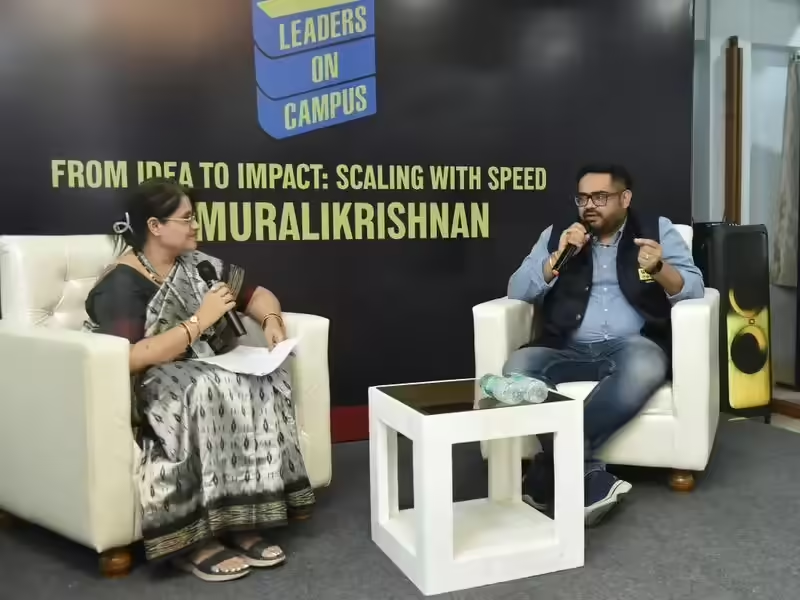
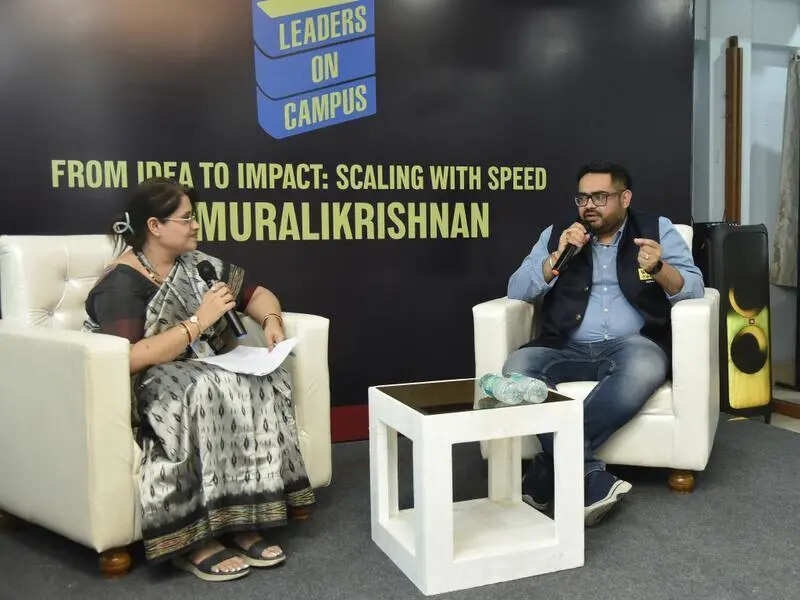
In a session that blended entrepreneurial insight with personal candour, Wow! Momo co-founder and chief marketing officer Muralikrishnan recently interacted with students of Calcutta Public School, Baguiati, under The Times of India’s flagship initiative ‘Leaders on Campus’. The event, themed ‘From Idea to Impact: Scaling with Speed’, drew an enthusiastic audience of high school students eager to learn about entrepreneurship and business-building.Setting the tone for the session, Muralikrishnan told students that the most important ‘E’ in entrepreneurship is not execution or equity, but empathy. “If you don’t build empathy, you cannot build a team. If you cannot build a team, you cannot build an empire,” he said, earning loud applause from the audience.Reflecting on the journey of Wow! Momo from a modest 30-square-foot kiosk at Spencer’s Kolkata to a brand with more than 850 outlets across 90 cities, he outlined four key routes to entrepreneurial discovery — solving personal pain points, addressing societal needs, identifying market gaps, and leveraging technological disruption.Speaking about risk-taking, Muralikrishnan stressed the importance of practicality and purpose-driven leadership. “Risk is only risky when you are not practical about the result,” he said, while recalling how the company chose to retain all 8,500 employees during the Covid-19 pandemic despite the financial strain. He also emphasised that customer delight should remain the central focus in the early stages of any venture, dismissing buzzwords like SCM and scale as premature distractions. “Make one restaurant so good that you can open another. Nothing else matters at the start,” he said.The interactive session concluded with a lively Q&A, during which Muralikrishnan spoke about the origins of Wow! Momo, the effectiveness of product sampling as a marketing strategy, and the importance of confidence without arrogance. In his final message to students, he encouraged them to travel, observe, and understand the people they hope to serve in the future. “See the people you will be building for. Identify their problems. Understand what they think,” he said, adding that meaningful business ideas can only emerge from a genuine understanding of people’s lives.