









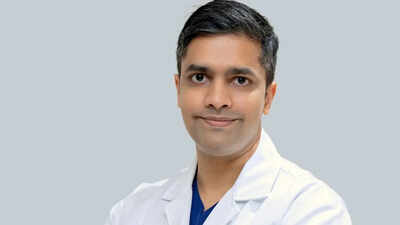
BENGALURU: A 15-year-old girl from Bengaluru has survived a life-threatening vascular emergency after undergoing a rare and complex surgery for a rupturing aortic aneurysm caused by Behçet’s Disease. The teenager, who had been living with the chronic inflammatory condition since 2018, developed a rapidly expanding 5 cm aneurysm in the abdominal aorta—the main artery supplying blood to the body. The condition put her at imminent risk of rupture and internal bleeding.The high-risk procedure was performed on January 10 at Narayana Health City by a multidisciplinary team.Explaining the disease, Dr Varun Shetty, Senior Consultant Cardiac Surgeon at Narayana Institute of Cardiac Sciences, said, “Behçet’s is a very rare autoimmune disorder where the patient’s own immunity acts against her blood vessels. Most commonly, patients develop mouth ulcers, eye involvement, or skin issues, but in very rare situations, it can affect the aorta, which is the main artery of the body. When that happens, it becomes extremely dangerous because the vessel can weaken and form an aneurysm.”The girl initially sought treatment elsewhere, where a stent was placed. However, her condition deteriorated soon after. “She continued to have severe back pain, and her haemoglobin kept dropping because the aneurysm was expanding and leaking internally. By the time she came to us, she was in a very bad state—weak, pale, and unable to even sit because of the pain,” he said.Given the risks associated with operating on an active autoimmune condition, the team first focused on stabilising her. “This is not just a surgical problem. The disease itself has to be controlled before we operate. There is always a high chance that even after surgery, new aneurysms can develop elsewhere. So it requires a full team approach, including rheumatology support to suppress the immune activity,” Dr Shetty explained.Once stabilised, the team undertook the complex procedure. “We had to remove the previously placed stent, replace the damaged portion of the aorta with a graft, and reconstruct multiple vital arteries, including those supplying the kidneys. It is a very demanding operation, especially in a young patient with an active inflammatory disease,” he said.The outcome, however, was encouraging. “After surgery, her back pain improved significantly, her haemoglobin stabilised, and she recovered well enough to be discharged within a week. When I saw her a few months later, she was doing well and even asked if she could go back to school and ride her cycle,” he added.Highlighting the need for awareness, Dr Shetty said, “Symptoms like persistent back or abdominal pain, unexplained weight loss, or a sudden drop in haemoglobin should not be ignored. The challenge is that this disease is so rare that many people—and even some doctors—may not immediately recognise it.”Globally, fewer than 50 such surgical cases linked to Behçet’s vascular complications have been reported according to Dr Shetty.