




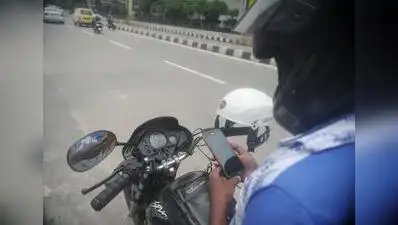
Bengaluru: In its now-dismissedappeal before the Supreme Court, Karnataka govt had challenged the high court order that allowed bike-taxi operators and individual motorcycle owners to seek permits for running two-wheelers as taxis. The state argued that the judgment wrongly treated motorcycles as passenger transport vehicles and curtailed the discretion of transport authorities under the Motor Vehicles Act. The petition cited the absence of a dedicated regulatory framework, passenger safety risks, insurance gaps, congestion and pollution concerns as grounds for opposing bike-taxi operations.No legal recognitionThe state argued that the Motor Vehicles Act does not specifically define or recognise bike taxis as a category of public transport. It also cited the Central Motor Vehicles Rules, 1989, which classify vehicles based on their intended use but do not specifically include motorcycles in the categories meant for commercial passenger transport. According to govt, a motorcycle’s ability to carry a pillion rider did not automatically authorise its use to ferry passengers for hire or reward.Safety & insurance concernsGovt highlighted the vulnerability of two-wheeler passengers, arguing that motorcycles lacked several safety features available in autorickshaws and cars. It also raised concerns about women’s safety and referred to expert material highlighting the higher risk of fatalities in two-wheeler accidents. Insurance was another major concern, with govt questioning whether existing arrangements provided adequate protection and compensation to passengers in the event of fatal accidents. It also pointed to the absence of a clear mechanism for dual registration or converting private motorcycles into commercial vehicles.Congestion & pollutionThe state argued that allowing bike taxis on a large scale could add to traffic congestion, particularly in Bengaluru. It maintained that motorcycles offered limited passenger-carrying capacity compared with buses, Metro trains and other forms of public transport. It also flagged the problem of “dead kilometres” — distances covered by riders without passengers while waiting for bookings, moving towards potential customers or repositioning themselves. According to govt, such trips added to road traffic without delivering corresponding passenger mobility benefits.Livelihood worries rejectedGovt maintained that its opposition to bike taxis did not amount to a blanket restriction on using motorcycles for commercial activities. It argued that riders could continue to earn a livelihood through food delivery, logistics, e-commerce and courier services associated with platforms such as Swiggy, Zomato, Amazon and Flipkart. The state’s objection was limited to using motorcycles to ferry passengers for hire or reward, and not to other commercial uses.Right to frame transport policyKarnataka has maintained that transport regulation, traffic management and public safety fall within the state’s policy and regulatory domain. Govt wants the decision on whether motorcycle-based passenger services should be permitted to remain with the state, taking into account local traffic conditions, road safety and regulatory requirements.Opposition & pressure from unionsStrong opposition from auto and taxi drivers’ unions had been a major factor behind the state govt’s action against bike taxis. There were several incidents of alleged confrontations between auto drivers and bike-taxi riders. In some cases, auto drivers allegedly assaulted bike-taxi riders and snatched their mobile phones and helmets.Pressure from these unions also had an impact. The unions had demanded that govt challenge the high court order lifting the ban on bike taxis. The state eventually approached the Supreme Court amid sustained pressure.There were also political considerations. Autorickshaw and taxi drivers, along with their families, represent a sizeable vote bank, with lakhs of households dependent on the sector for their livelihoods. Bengaluru alone has more than 3.7 lakh autos and over 3 lakh taxis. Political parties are unlikely to ignore the concerns of such a large section of the electorate, particularly when unions are able to mobilise drivers and organise protests.