









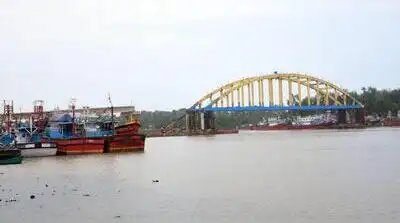
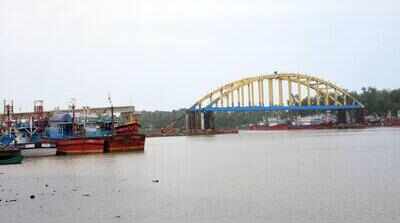
For almost two-and-a-half centuries, Sultan Battery has watched over ships entering Mangaluru through the Phalguni River. Today, as a ₹64-crore bridge rises beside it and promises to transform connectivity across the waterway, the 18th-century watchtower faces a different challenge: neglect, poor visitor infrastructure and uncertainty over how its heritage value will be preserved amid rapid development.Stuck Between History And NeglectConstructed using black stone blocks, the watchtower features openings for cannons, and an underground chamber believed to have been used for storing gunpowder. Protected by the Archaeological Survey of India (ASI), the monument offers a panoramic view of the Phalguni River and the Arabian Sea.However, the area outside the fenced monument presents a picture of neglect. The parking space is riddled with potholes, many filled with stagnant rainwater, while the absence of proper landscaping, seating, lighting, signage and other basic visitor amenities diminishes the site’s heritage appeal.The monument itself has also been at the centre of a conservation debate. Around 15 years ago, the ASI undertook repair works using concrete plaster, a move that drew criticism from conservationists and heritage activists. They argued that the use of concrete compromised the monument’s original black stone appearance and was inconsistent with accepted heritage conservation practices.Beautification and infrastructure development of this area faces another hurdle – Most of the land surrounding the monument belongs to a private organisation. Officials said no action plan has yet been prepared to acquire the land required for comprehensive development of the historic site.Former Panambur Beach Development Project CEO, Yathish Baikampady, said no alterations should be made to the historic watchtower. He cautioned that any plastering work on the structure would diminish its heritage value and suggested beautifying the surrounding area through attractive landscaping. “The history of the monument should be displayed prominently to educate tourists. In fact, Sultan Battery was one of Mangaluru’s oldest coastal settlements, connecting travellers and traders from foreign countries centuries ago,” he said.Untapped Tourism PotentialWith its riverfront location and its rich history, Sultan Battery has the potential to emerge as an important heritage destination. However, experts say unless issues related to access, parking and visitor infrastructure are addressed through coordinated efforts by the tourism department, civic authorities and other stakeholders, the monument is likely to remain an overlooked attraction that falls short of the experience its history deserves.Bridge Set To Transform ConnectivityThe long-awaited Sultan Battery-Tannirbhavi Bridge across the Phalguni is expected to be commissioned in Sept, significantly improving connectivity between Bengre, Tannirbhavi and Mangaluru city. Residents currently depend largely on ferry services to cross the river.Mangaluru Smart City Ltd (MSCL) general manager (technical) Arun Prabha KS said the bridge’s 100-metre bow-string girder is among the largest of its kind in India. “At present, residents primarily rely on ferry services to commute across the river. In the absence of ferry services, they are forced to travel nearly 15 km via Kuloor, with the journey taking around 30 to 35 minutes. Once the bridge is commissioned, the travel time will be reduced to about 8 to 10 minutes,” he said.Future Of The FerryFor decades, the ferry offered residents, students, workers and fishermen fastest access to the city. The five-minute ferry ride is also the shortest route between Sultan Battery and Tannirbhavi Blue Flag Beach. Thousands of visitors heading to Tannirbhavi Beach opt for the scenic river crossing, which has become an integral part of the visitor experience.The bridge connecting Sultan Battery and Tannirbhavi is expected to significantly reduce dependence on the ferry. While daily commuters are likely to shift to the bridge for its uninterrupted, all-weather connectivity, the ferry could continue to attract tourists seeking a unique river-crossing experience.Subhash Kundar, president of the Sultan Battery Mogaveera Sabha, which operates the ferry service, said the bridge is expected to impact its operations. “At present, we provide free ferry service for children. Others are charged Rs 10 to cross the nearly 300-metre-wide Phalguni River, while tourists pay Rs 20. Once the bridge becomes operational, we expect passenger numbers to decline significantly,” he said.Environmental Challenges PersistOne of the major concerns around the historic site is the pollution of the Phalguni River, which flows adjacent to the monument. Ganesh Gulwady, a local resident and president of the Ashoka Park Association, highlighted the issue of sewage flowing into the river from Boloor and surrounding areas. “Many apartments and houses in the Boloor and Sultan Battery areas are not connected to the underground drainage (UGD) network. As a result, sewage flows into the river through open drains. Though there is a UGD wet well in the area, most of the houses are yet to be connected to it,” he said.Commenting on the long-standing concerns over the lack of an underground drainage network in Sultan Battery, deputy commissioner Darshan HV clarified that the issue reflects a larger infrastructure gap across the city. “Nearly 35% of Mangaluru does not have an underground drainage network. We have submitted a proposal seeking more than Rs 1,000 crore from the govt to extend the UGD network to all uncovered areas and are awaiting approval,” he said.As the bridge nears completion, Sultan Battery is standing at a pivotal moment. Whether it emerges as a vibrant heritage gateway to Tannirbhavi or remains a neglected stopover beside a modern bridge will depend on how effectively authorities balance conservation, tourism and infrastructure development.