









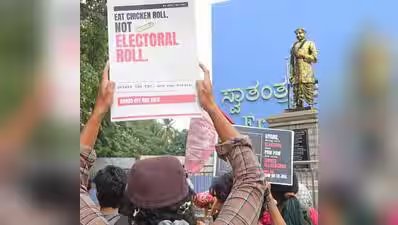
Bengaluru: The routine special summary revision of electoral rolls from Nov 23 will show how many of the nearly 99.3 lakh names struck off the final SIR roll find their way back, and which side — Congress or opposition BJP — gets to claim vindication.Congress had questioned the scale of deletions during SIR, warning that genuine voters, especially in urban seats, could lose the right to vote. BJP defended the exercise as necessary to weed out duplicate, deceased and shifted electors. SSR offers both Congress and BJP an exit from their confrontation over SIR. The draft roll will be published on Dec 1, followed by a claims and objections period and the final roll on Jan 20 next year.If a substantial number of eligible voters return, Congress can say its objections were justified. A trickle would strengthen the Election Commission’s case that most deletions involved ineligible, dead, duplicate or relocated voters.Madhya Pradesh offers a pointer. Its SSR draft roll added 8.19 lakh voters over the final SIR list, though the figure includes new electors and is not a count of wrongly deleted voters restored.An official from the chief electoral officer’s office said unlike SIR, booth-level officers (BLOs) would not visit every household during SSR. Missing voters must approach BLOs or electoral registration officers, or apply online using Form 6. Form 7 is for objections and deletions, and Form 8 for corrections and change of residence. There will be no routine hearings, though officials may seek clarifications.That leaves the burden largely on voters. Finding out why they were deleted and proving eligibility could be hard, especially for migrant workers, tenants and those who moved between cities.The scale is stark. Of the 5.54 crore electors before SIR, 4.55 crore remain. The biggest category was 65.4 lakh voters marked permanently shifted, followed by 16.4 lakh deceased, about 7 lakh duplicates and 19 lakh absent. Removing the dead and duplicates is routine cleansing, but the absent and shifted categories need closer scrutiny to establish whether those voters are still eligible.Bengaluru is the political pressure point. Its four urban districts accounted for 45% of deletions despite holding only about 19% of the pre-SIR electorate. Congress cited this concentration to question the exercise.Political analyst MN Patil said the impact on parties could not be gauged without knowing who was excluded. “It will probably affect all of them equally,” he said, warning that the uncertainty could hurt both democracy and parties.Analyst Vishwas Shetty said credibility would depend on how many deletions were genuine and how swiftly errors are remedied. “The outcome will depend as much on mobilisation as on machinery,” he said. “Congress, BJP and JD(S) will have to trace affected voters, verify booth lists and help them file applications, while the EC must ensure there are no needless hurdles. SSR will not automatically reverse SIR deletions, and additions alone will not prove whether the earlier exercise was accurate. The real measure is how many eligible, previously registered voters return before the next election.”