








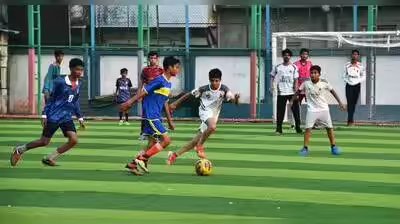
Football was still a young sport on the global stage when the first FIFA World Cup was held in 1930. Yet a small trading town on the banks of Tapi took to the game so strongly that barely 10 years later, it launched an annual tournament of its own. Since 1940, the tournament has largely remained an annual fixture, unlike the World Cup, which comes once every four years. The town is Rander, now part of Surat city, and the tournament is Hansia Shield, 83 editions old.Rander breathes football. For a population of roughly 1.25 lakh, the place has around 40 active clubs, two grounds, and hardly a house that hasn’t produced a footballer. The nicknames, ‘Mecca of Football’ and ‘Mini Brazil’, followed naturally. With the 23rd edition of World Cup underway, Rander is in its element. Conversations at street corners and tea stalls move easily between Ronaldo, Messi, Mbappe, Haaland, Kane, Dembele, Yamal, Vinicius Junior and Bellingham. This is a place that has sent its players to national tournaments for generations and even hosted some of India’s biggest clubs.Found on the way to BurmaSo how did a small South Gujarat town fall this hard for football?The answer, curiously, runs through Rangoon (now Yangon). In the days when Burma (now Myanmar) was a province of British India, Rander’s traders routinely sailed to Rangoon, halting on the way in Kolkata, the main port on that route. Kolkata was also where Indian football was born, with clubs like Mohun Bagan already thriving by the early 1900s. It was during these halts that the traders got their first taste of the game.“Football has been played in Rander for more than a hundred years,” says Abbas Hans, president of the Rander Islam Gymkhana (RIG), which runs one of the locality’s two football grounds. “The Sunni Vhoras of Rander had strong trade links with Rangoon in Burma. On their way there, our ancestors would halt in Kolkata, where our community runs a musafirkhana. That is where they first saw football being played. The game fascinated them so much that they started playing it there and then brought it home. It became so popular that many families here have had four generations of footballers.”A game that never dividedThe love for the game recognises no boundaries in Rander. Alongside Muslims, the Kharwa, Machhi, Mahyavanshi and other communities have been part of its football story for decades. Not even the communal riots of 1992 and 2002 could break this bond.Rander’s 40 big and small clubs carry names full of character, and even its second-oldest tournament, the Engineer Football Trophy, has been running since 1957.Hanif Singwala, secretary of the Rander Sultaniya Gymkhana (RSG), which runs Rander’s other ground, is a third-generation footballer. His son Soyeb now plays for various teams across Gujarat.Where Guj finds its players“Rander’s businessmen have been travelling to Myanmar, the Gulf, Europe and Africa for decades, and that exposure popularised football here,” Singwala says. “They not only played the game themselves, but also got the whole community playing by funding clubs and organising tournaments. At least 40 players from Rander have played in the Santosh Trophy. There have been years when five of the 20 players in Gujarat’s Santosh Trophy squad were from Rander, and junior teams have fielded as many as eight Rander boys in a team of 11. Rander boys dominate the South Gujarat University team as well. Today, more than 40 Surat schools have a football coach from Rander.”The club roster here reads like a scrapbook of its footballing century: Akhtar Sports Club, Sultaniya Club, Golden Club, 5-Star, Dempo, Jayhind, Bengal Sports, Bengal Samiti, Amblipura Club, MMP School, and ONGC, among others.The tournament list is just as long. Beyond the Hansia Shield and Engineer Trophy, Rander has hosted the GM Allu Trophy, Dempo Cup, Teenagers Cup, Sultaniya Cup, Golden Cup, Singwala Trophy, ZI Trophy, the Surat Premier League (SPL) and the YCFL Youth League.These tournaments once drew players from across the country. “We have seen teams and players come from Bengal, Maharashtra, Goa and elsewhere, including Mohun Bagan, Mohammedan Sporting, East Bengal and the Tipu Sultan Football Academy,” says Zakkariya Hans, secretary of RIG. “Our players have gone to other states and even to Africa to play professionally.”Boots on after workWhat keeps the game alive today is persistence. Rander’s footballers drive autorickshaws, work as mechanics and painters, deliver for Swiggy and Zomato, run small carts and shops. Whatever the day job, the evenings belong to football, and this has been a habit handed down like a family heirloom. Anjum Tinwala runs a food cart and owns the 40-year-old Golden Club. “My father founded this club, and my aim is to keep it going,” he says. “Our only rule is to respect talent, no matter which community it comes from. My team has five Hindu players, all of whom are excellent, and we back every good footballer in Rander.”Men who fund the gameThen there are those have never played much themselves but keep the game running. When organisers need money for a tournament, real estate developer Imtiyaz Bombaywala and textile businessman Junaid Orawala are among the first doors they knock on. “I see it as my duty to help keep Rander’s football legacy alive. If we don’t back the game and its players, young men will drift towards drugs and other troubles,” Orawala says.This year, Surat FC, a non-Rander team formed 20 years ago by engineering and medical students, won the Hansia Shield. “Surat FC has twice reached the final and lost. We kept practising at a private facility, and this season we finally won. We are so proud of this victory,” says Prajay Naik, captain of Surat FC. A few tournaments even hold IPL-style auctions, backed by local traders.In a few weeks, the FIFA World Cup will end, but in Rander’s evenings, the ball will still roll.Shield of unityIf one family can explain why football never faded in Rander, it is the Hans-Hansia family. The Hansia Shield, named after Ismail Yusuf Hansia, has been held since 1940. “Even during the riots, we convinced the police and community leaders to let the tournament go ahead in the name of unity, because it has players from every community,” says Abbas Hans. “We have missed two editions — during the 2006 flood and during Covid. Even the World Cup missed two editions during the World Wars. Ours is a running trophy; winners keep it only for a few hours of photos before returning it. Made of wood and silver, it carries the names of every winner, and a replica of the RIG pavilion, which has stood tall through Rander’s heaviest floods.”“Dempo Club took the name from Goa’s famous Dempo SC and registered it in 1988. Since then, we have won the Hansia Shield several times and produced many Santosh Trophy players, a GSFA selector, and an SAG coach. They were all shaped on the Bhanki Grounds in Rander,” says Kamlesh Sailor, joint secy, GSFA and former captain of Rander’s Dempo Club.Anyone can play at Sultaniya GroundThe Rander Sultaniya Gymkhana ground has its own claim to the area’s football legacy: it is open to everyone. Anyone can walk in and play. During the two-month summer vacation, the gymkhana also hires coaches who train more than 100 children for free. “Our only goal is to give a platform to every child who wants to play,” says Singwala. “Children only need a ground. The playing happens on its own. And from all those who play, someday a few will turn out to be special. Whatever our struggles over the years, we have never compromised on keeping that ground available to them.”
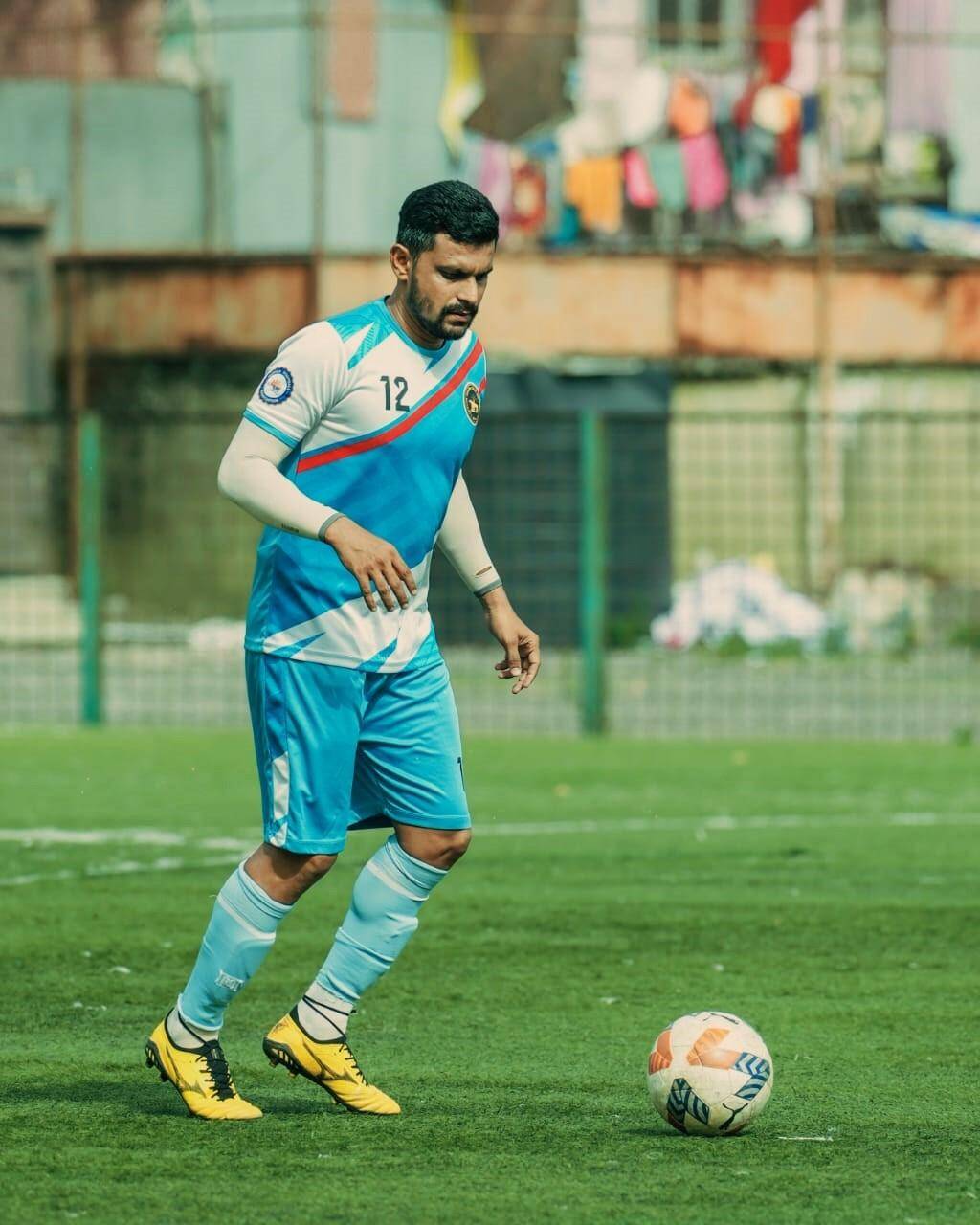
More recently, the Reserve Bank of India recruited Rander’s Hafiz Shaikh on the strength of his game; he now plays for the bank’s team
Rander’s football century has produced a long line of national-level players: Istiyak Jamadar, Firoz Pathan, Ibrahim Kasam Hans, Rashed Kazi, Anant Sarang, Mayank Sailor, Vinod Kanthariya, Narendra Sailor, Mayur Patel, Ismail Ashraf, Ibrahim Bharucha, Hasam Dhupli, Yusuf Dhupli, Gulam Mohammad and Anwar Hans, among others. Ibrahim Hans played for Mohammedan Sporting and Mohun Bagan, and featured in India’s oldest tournaments, the Durand Cup and the Rovers Cup. Kazi played for many state teams and also in South Africa, appearing in the Santosh Trophy, Federation Cup, Durand Cup and Rovers Cup. Anwar Hans, a Santosh Trophy player, went on to become an NIS coach.When the Ginwala family left Burma (now Myanmar) for Gujarat in 1964, they carried very little with them as they travelled 4,000km from their hometown of Maymyo (now Pyin Oo Lwin). But amid the uncertainty and pain of displacement, they held on to their love for football. For Hanif Ginwala and his brothers Salim and Yunus, the game they had learned at St Albert High School in Burma was more than a sport. In Gujarat, where everything from the language to the culture was unfamiliar, the football field became the one place they belonged.
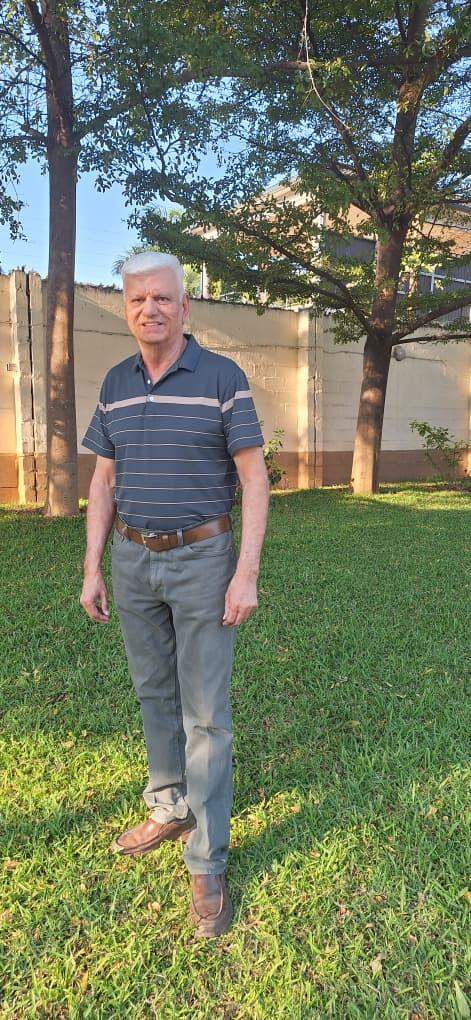
Yunus Ginwala
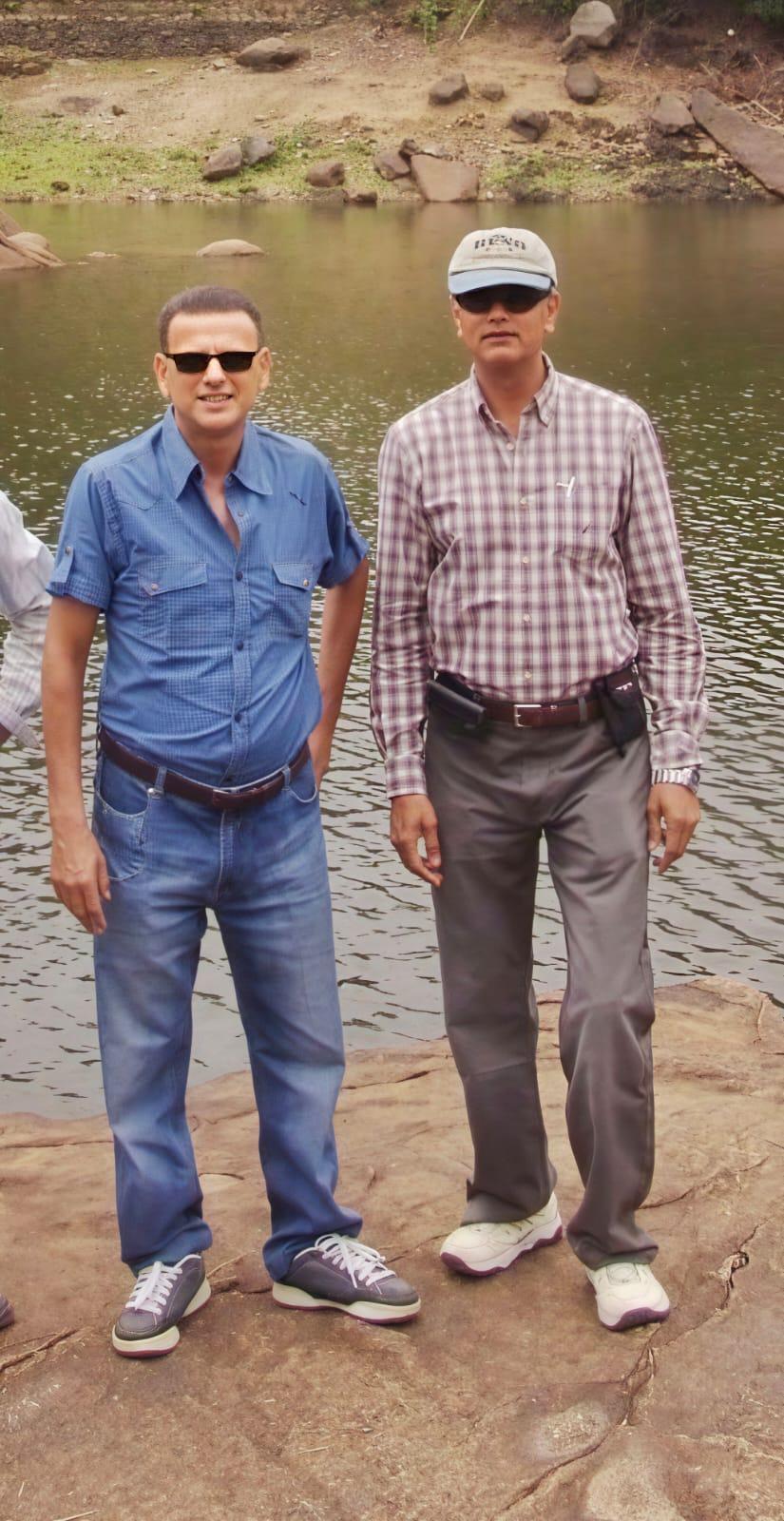
Hanif and Salim Ginwala
“Fortune favoured us too. Football was just finding its feet in Vadodara, with the Baroda District Football Association (BDFA) formed in the 1960s,” said Hanif. The brothers rose quickly, first for their schools and then for local clubs, until the city knew them simply as ‘the Ginwala brothers’. Each of the three went on to captain the Baroda football team, leading it to success in state-level tournaments.Salim’s performances earned him a place in the Indian Combined Universities football team, and, as luck would have it, selection to play in the Indo-Burmese football tournament held in Burma in 1977. “When the local crowd discovered Salim’s Burmese roots, they began cheering for him even though he was playing for the rival team. He cherished every moment on that field,” said Hanif, 67.Life eventually took the brothers down different paths. Salim and Yunus moved overseas for better opportunities, while Hanif stayed to give back to the sport that had rebuilt his life. In the 1990s, he coached MS University football team, and in 2013 became president of BDFA, serving alongside as vice-president of Gujarat State Football Association (GSFA). He remained BDFA president until 2025 and now chairs GSFA’s disciplinary committee.“Football gave us, the brothers, more than trophies or recognition. It gave us courage when we had lost everything familiar, and the confidence to dream again,” said Hanif, who played as a central defender.— By Tushar Tere