







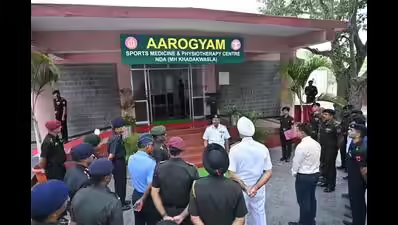
Pune: The National Defence Academy (NDA) inducted the Aarogyam sports medicine and physiotherapy centre at the Military Hospital in Khadakwasla on Saturday to ensure cadets are scientifically treated for various injuries from stress fractures and ligament tears to muscle strains caused by relentless physical training.A senior NDA official told TOI: “The physiotherapy centre will enhance training standards by adopting a scientific approach to injury management and preventive physiotherapy for cadets. These are critical to ensure injuries do not escalate into long-term health issues or disrupt military training.”Experts said modern military academies across the world are increasingly adopting sports science and evidence-based rehabilitation practices to ensure that trainees remain injury free and perform at peak levels. The new facility at NDA is expected to bring a similar approach to one of the country’s most demanding training environments.NDA cadets undergo intense physical activities that include obstacle courses, endurance runs, equestrian training, swimming, team sports and field exercises. Such high-intensity schedules often expose them to stress fractures, ligament injuries, muscle strains and other overuse-related conditions.Additionally, sports medicine experts said dedicated physiotherapy support can reduce the risk of long-term injuries.“Elite military trainees are comparable to high-performance athletes. The physical demands on them are enormous. A specialised sports medicine centre allows early diagnosis of injuries, scientific rehabilitation and continuous monitoring of physical performance,” a sports medicine specialist of the Armed Forces Medical Services told TOI.Physiotherapists said modern rehabilitation is no longer limited to post-injury treatment. It includes injury-risk assessment, biomechanical analysis, recovery management and strength-conditioning programmes aimed to prevent injuries.“The biggest advantage of such centres is preventive care. Physiotherapists can identify movement deficiencies and muscular imbalance early and reduce the likelihood of serious injuries that may interrupt training,” said a Pune-based sports physiotherapist.Globally, military academies have integrated sports medicine into their training systems. The US’s Military Academy at West Point, the Royal Military Academy Sandhurst in the UK and the Australian Defence Force Academy employ sports scientists, physiotherapists and rehabilitation specialists as part of performance-management programmes. These institutions use data-driven approaches to monitor trainees’ physical health, accelerate recovery and improve overall operational readiness.Defence analysts said such facilities not only help individuals recover faster, but improve institutional efficiency by reducing training disruptions and medical attrition.The Aarogyam centre will provide specialised physiotherapy services, rehabilitation protocols, recovery guidance and scientific fitness assessments. It will support cadets through the three-year training period, helping them maintain physical readiness while reducing risk of chronic injuries, said NDA officials.Experts said the initiative reflected a broader recognition that physical resilience is as important as physical strength.“The NDA’s new physiotherapy centre represents a step towards aligning India’s premier military academy with global best practices in athlete and soldier care,” said an army officer earlier posted in NDA.Another officer said the centre should also keep the data of each injured cadet and carry out their testing at regular intervals. “If a particular injury is recurring, the academy can tweak that particular activity scientifically. It would benefit the cadet and the academy too. We should not lose cadets because of injuries,” he added.